
US Soldier Accused of Earning $400,000 Using Classified Info on Maduro Capture (April 2026 Case)
A U.S. Special Forces soldier is charged with insider trading after allegedly making $400,000 by betting on Nicolás Maduro’s capture using classified information. Full details of the April 24, 2026 case.
Raja Awais Ali
4/24/20264 min read
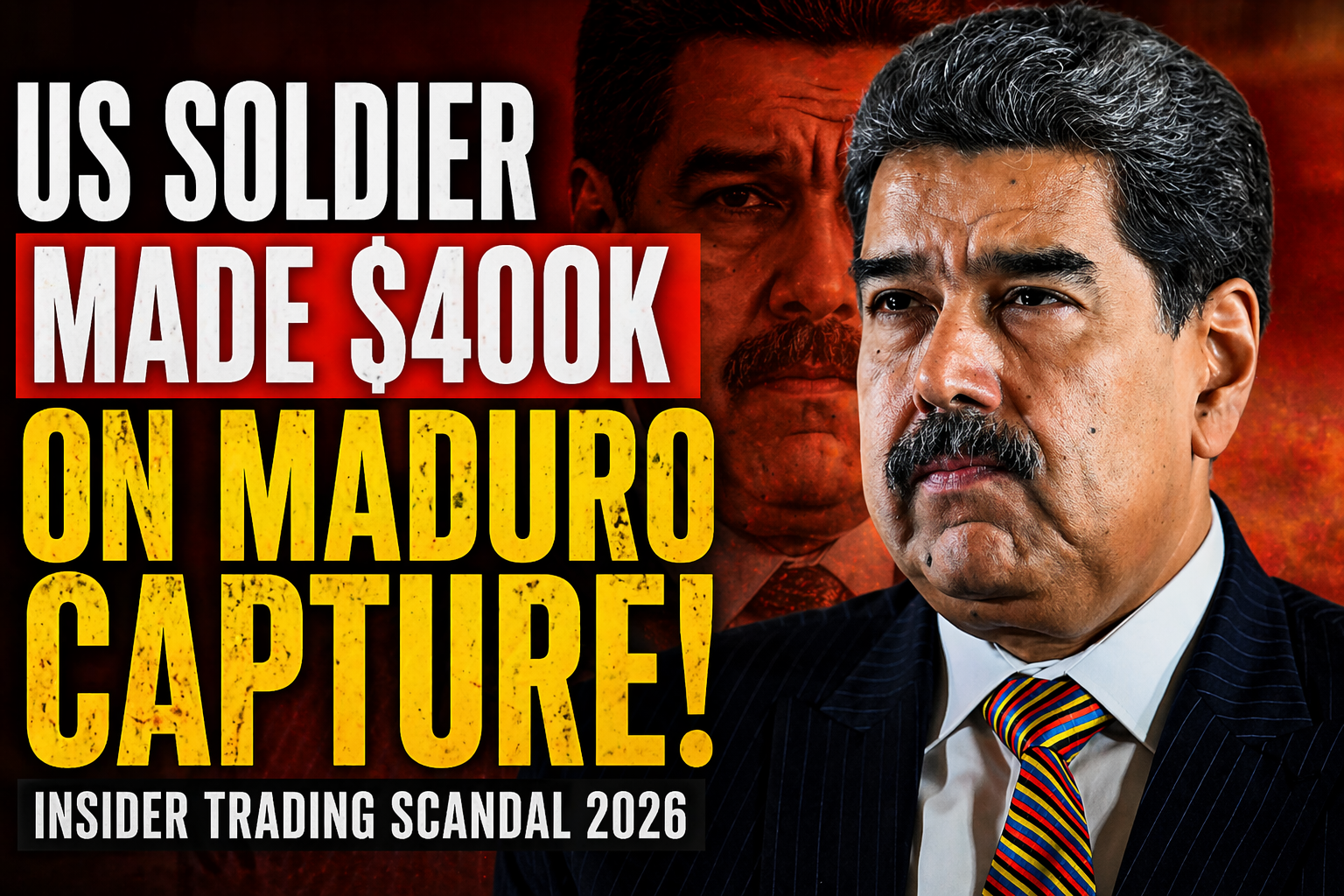
US Soldier Accused of Making $400,000 from Maduro Capture Bets in Major Insider Trading Scandal
On April 24, 2026, a shocking and high-profile case emerged as the U.S. Department of Justice charged an active-duty American soldier with serious financial and criminal offenses. This case goes far beyond individual misconduct, raising critical global concerns about military ethics, the protection of classified information, and the growing influence of digital prediction markets. It is being viewed as a modern and dangerous form of insider trading, where sensitive military intelligence was allegedly used for personal financial gain.
At the center of the case is 38-year-old Master Sergeant Gannon Ken Van Dyke, a member of the U.S. Army Special Forces. He is accused of using classified information related to the capture of Venezuelan President Nicolás Maduro to earn approximately $400,000. According to prosecutors, Van Dyke had advance knowledge of a sensitive military operation, including plans that indicated U.S. forces would enter Venezuela and remove Maduro from power. Using this privileged information, he allegedly placed bets on a digital prediction market platform, Polymarket, and secured significant profits.
Court documents reveal that a federal grand jury in Manhattan has charged Van Dyke with multiple offenses. These include unlawful use of confidential government information for personal gain, theft of nonpublic information, commodities fraud, wire fraud, and engaging in unlawful financial transactions. This case is particularly significant because it marks one of the first major legal actions involving insider trading through a prediction market platform.
The turning point of the case dates back to January 3, 2026, when Nicolás Maduro was captured during a classified U.S. military operation. Following his arrest, he was transported to the USS Iwo Jima amphibious assault ship before being brought to the United States. Maduro is now facing serious federal charges, including drug trafficking, money laundering, and narco-terrorism. Prosecutors state that Van Dyke was directly involved in both the planning and execution of this operation, giving him direct access to highly sensitive information.
One of the key pieces of evidence highlighted in the indictment is a photograph uploaded by Van Dyke to his Google account in the early hours of January 3. The image reportedly shows him standing on the deck of a military ship at sunrise, dressed in U.S. military gear and carrying a rifle alongside other soldiers. This image strongly supports claims that he was physically present during the operation, further strengthening the case against him.
Polymarket, the platform where the bets were placed, responded by stating that it had identified and reported the suspicious activity to authorities. The company emphasized that insider trading has no place on its platform and described the arrest as proof that its monitoring systems are functioning effectively. However, the incident still raises serious concerns about how such platforms can fully prevent the misuse of nonpublic information.
Acting U.S. Attorney General Todd Blanche stated that military personnel are entrusted with classified information to protect national security, not to exploit it for personal financial gain. He stressed that such actions not only violate the law but also undermine public trust in military institutions. Meanwhile, the U.S. Department of Defense declined to comment directly and referred the matter to the Justice Department.
U.S. President Donald Trump briefly reacted to the case, saying he was not fully familiar with the details but compared it to the gambling scandal involving baseball player Pete Rose. Trump noted that while betting on one’s own side may seem different, the issue still requires careful review. His remarks added a political dimension to an already complex legal case.
This case raises several important legal and ethical questions. One major concern is whether military personnel should be allowed to participate in digital betting platforms at all, given the risk of misuse of sensitive information. Another challenge is how governments and regulatory bodies can effectively monitor and control emerging technologies like prediction markets. Experts argue that while such platforms may operate legally, using insider information for financial gain is clearly illegal and comparable to traditional stock market insider trading.
In addition to criminal charges, the U.S. Commodity Futures Trading Commission has filed a civil case against Van Dyke, highlighting the financial regulatory violations involved. This dual legal action demonstrates that authorities are treating the matter with utmost seriousness and may introduce stricter regulations to prevent similar incidents in the future.
The broader implications of this scandal are significant. Analysts suggest that the U.S. military may tighten protocols around access to classified information. At the same time, prediction market platforms could face increased regulatory pressure to enhance monitoring systems and detect suspicious activity more effectively. Internationally, other countries may also review their laws and policies to address similar risks.
Ultimately, this case underscores the immense power of information in the digital age. Access to sensitive data, if misused, can lead not only to financial gain but also to serious legal consequences. Governments worldwide are increasingly focusing on data security, transparency, and enforcement to prevent such breaches.
Pablo Escobar: Rise and Fall of the World’s Most Powerful Drug Lord and the Medellín Cartel Empire
Pablo Escobar’s story is one of the most notorious criminal histories in modern times. Born in 1949 in Rionegro, Colombia, Pablo Emilio Escobar Gaviria rose from a modest background to become the most powerful drug lord in the world. During the 1970s and 1980s, he founded the Medellín Cartel, which controlled nearly 80% of the global cocaine trade at its peak. His organization smuggled massive quantities of cocaine from South America to the United States, generating billions of dollars in illegal revenue and making Escobar one of the richest men in the world.
To protect his empire, Escobar enforced a brutal policy known as “Plata o Plomo” (silver or lead), forcing officials, judges, journalists, and police officers to choose between bribery or death. This created a climate of fear across Colombia, where violence and corruption spread widely. Despite his criminal activities, he also built housing, schools, and sports facilities in poor neighborhoods, which helped him gain public support in some areas.
After entering politics and later being exposed as a criminal, Escobar declared war on the Colombian state. His campaign included bombings, assassinations, and widespread terror aimed at preventing extradition to the United States. In 1991, he surrendered under the condition of serving time in a self-designed luxury prison, but he escaped in 1992 when authorities tried to move him.
A massive manhunt followed, and on December 2, 1993, Escobar was tracked down in Medellín. He was killed during a rooftop chase by Colombian security forces. His death marked the fall of one of the most powerful criminal empires in history, but drug trafficking networks continued to exist in different forms.
👉 Full detailed story: https://blinknews.blog/pablo-escobar-rise-fall-drug-empire-2026
Stay informed with the latest national and international news.
© 2026. All rights reserved.