
Phantom Flights and Middle East War: How Iran Conflict Disrupted Global Aviation in March 18 2026
The Iran-US-Israel conflict has triggered massive flight cancellations, diversions and “phantom flights” worldwide. Here’s how the Middle East crisis is disrupting global aviation, supply chains and travel in March 18 2026.
Raja Awais Ali
3/18/20264 min read
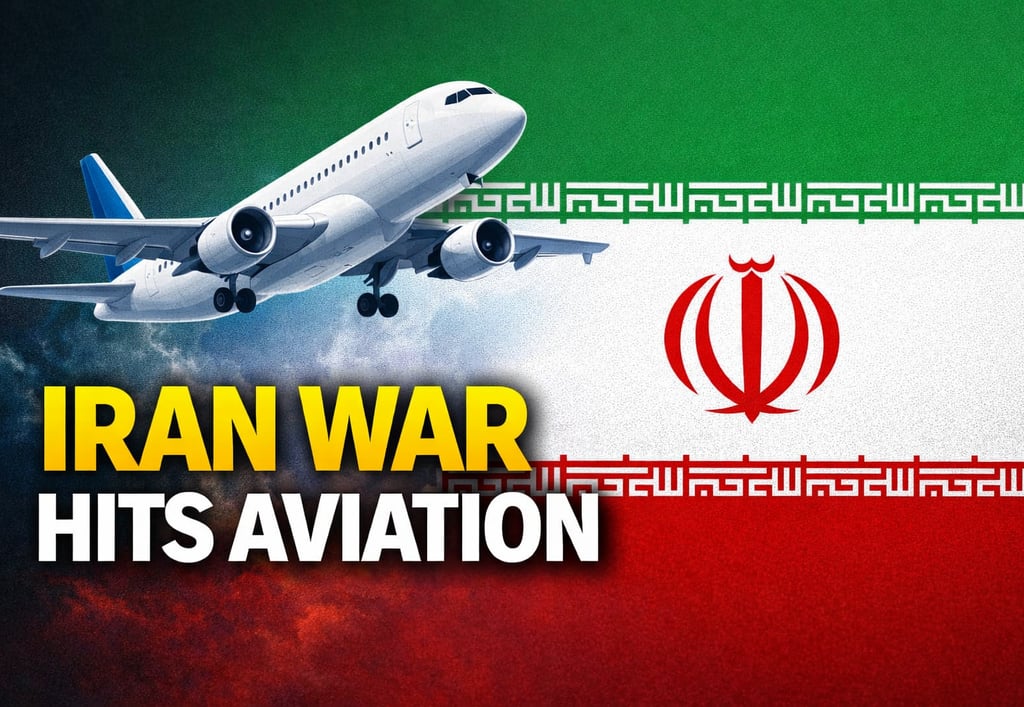
Phantom Flights and the Iran War: An Unprecedented Crisis for Global Aviation
Rising tensions between the United States, Israel and Iran have severely disrupted global air travel, creating one of the most significant aviation crises in recent years. Since February 28, 2026, escalating drone and missile attacks across the Middle East have forced authorities to close or restrict major airspace corridors over Iran, Iraq, Syria and parts of the Gulf region. These sudden security developments have shaken the global aviation network, leading to thousands of flight cancellations and forcing hundreds of aircraft to take longer alternative routes. During this period, international media began using a new term — “phantom flights” or “flights to nowhere” — referring to journeys that are unable to reach their intended destination and instead return to their departure point or land in a third country.
One of the most striking examples involved a long-haul flight from London to Dubai that travelled nearly 9,100 kilometres before turning back. Under normal conditions, the route takes around seven hours. On that day, however, passengers endured more than eleven hours of uncertainty as security alerts emerged while the aircraft was already en route. Similar incidents were reported across Europe, Asia and Africa. Dozens of flights performed sudden mid-air U-turns over Saudi Arabia, Egypt and the Arabian Sea. Some aircraft returned to their origin cities including London, Dublin, Paris, Madrid and Lisbon, while others were diverted to alternative airports in Cairo, Karachi, Dhaka, Islamabad, Muscat and even parts of Italy to ensure passenger safety.
Gulf carriers were among the hardest hit by the crisis. Airlines such as Emirates, Qatar Airways and Etihad Airways rely heavily on international transit passengers and operate some of the world’s busiest long-haul networks. The closure of regional airspace significantly disrupted their operations, forcing them on certain days to cancel or reroute between 70 and 90 percent of scheduled flights. Regional low-cost operators like flydubai also faced major losses as even short-haul routes became vulnerable to sudden security warnings and operational restrictions.
Security concerns have been the primary reason behind flight diversions and cancellations. In aviation, when an airport is deemed unsafe due to conflict risks or missile threats, pilots must make immediate decisions based on international safety protocols. Aircraft carry only limited extra fuel, known as diversion fuel, which is reserved for emergencies. As a result, planes cannot remain in holding patterns indefinitely and must either land at the nearest safe airport or return to their point of departure. The rapid closure of airspace during the conflict created widespread scheduling chaos, forcing airlines to redesign routes at short notice and increasing operational complexity.
Industry data suggests that between February 28 and March 18, nearly 30,000 flights to and from Middle Eastern airports were cancelled, while thousands more were rerouted along longer paths. This has increased fuel consumption by an estimated 15 to 25 percent on affected routes and significantly raised operating costs. Aviation experts estimate that diverting or returning a single long-haul flight can cost between $100,000 and $300,000, including additional fuel burn, crew expenses, airport handling fees, passenger accommodation and compensation payments. Insurance premiums for flying over or near conflict zones have also surged, adding further financial pressure on airlines.
The rerouting of global air corridors has extended flight times between Europe and Asia by up to two to four hours in some cases. Airlines have been forced to rely on Central Asian or southern maritime routes to avoid high-risk zones. This not only reduces aircraft utilisation — meaning fewer daily flights per plane — but also threatens airline profitability and could lead to higher ticket prices for passengers. Analysts warn that if tensions persist, some of these longer routes may become semi-permanent features of global aviation planning.
Beyond airlines, the crisis is also disrupting international trade and supply chains. Cargo flights carrying electronics, pharmaceuticals, industrial components and e-commerce shipments have experienced delays, affecting production timelines and market supply. Reduced passenger traffic at major Gulf transit hubs has weakened tourism revenues, while hotels, duty-free retailers and airport service providers have reported declining income. Business travel has also been postponed or cancelled as companies reassess security risks in the region.
Passengers themselves have faced significant challenges, including visa complications, missed connections and unexpected overnight stays in diversion cities. In several cases, sudden inflows of stranded travellers filled hotels to capacity and placed additional strain on airport infrastructure. Some travellers had to wait days for alternative flights, increasing travel uncertainty and anxiety worldwide.
Experts increasingly compare the current disruption to major aviation shocks in recent history, including airspace closures during the Ukraine war and the global suspension of flights during the COVID-19 pandemic. These comparisons highlight how geopolitical conflicts can rapidly destabilise global transportation networks within hours. If security conditions fail to improve, further cancellations, extended travel times and higher fares may become the new normal. The coming weeks are expected to be decisive in determining whether the Middle East can regain its position as a stable global aviation hub or whether the world will enter a prolonged era of more expensive and time-consuming air travel.
As tensions between the United States and Iran escalate, the Strait of Hormuz has once again become the center of a growing global energy crisis, with oil prices surging nearly 50% and markets facing severe uncertainty. Donald Trump has warned Iran against imposing tolls on oil tankers passing through the strategic waterway, calling such actions a violation of the recent April 7 ceasefire agreement. Despite the deal, hundreds of vessels remain stranded, disrupting nearly 20% of global oil supply and driving up shipping, insurance, and fuel costs. Countries heavily dependent on Gulf oil, particularly in Asia, are already feeling the impact, while industries ranging from LNG to aviation face rising expenses and supply chain disruptions. Analysts warn that if the situation worsens, oil prices could cross $100 per barrel, increasing the risk of a broader global economic slowdown.
👉 Read full details here: https://blinknews.blog/trump-iran-hormuz-tolls-oil-prices-energy-crisis-april-2026
Stay informed with the latest national and international news.
© 2026. All rights reserved.