
Israeli Court Resumes Netanyahu Corruption Trial After Iran Truce — Latest April 9, 2026 News
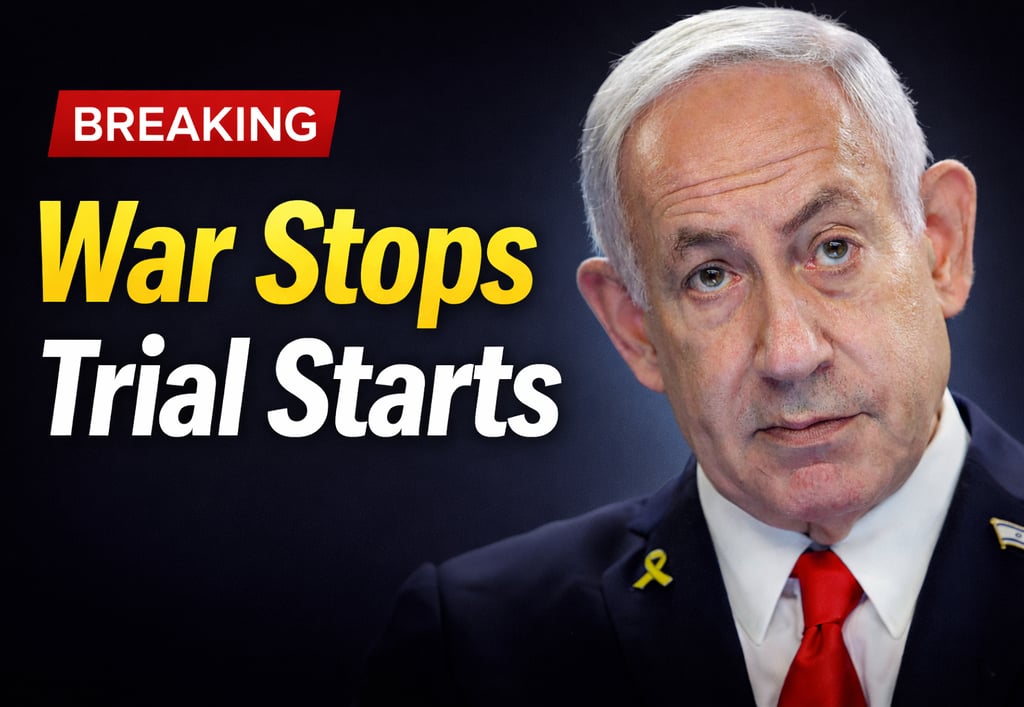
After Israel lifted a state of emergency following a temporary ceasefire with Iran, Prime Minister Benjamin Netanyahu’s long‑running corruption trial resumes this Sunday.
Raja Awais Ali
4/9/20263 min read
Israeli Court Resumes Netanyahu Corruption Trial After Iran Truce — April 9, 2026
JERUSALEM — Israeli Prime Minister Benjamin Netanyahu’s long‑running corruption trial will resume this Sunday, Israeli court officials announced Thursday, after the government lifted a state of emergency tied to escalating tensions with Iran.
The state of emergency, which suspended court proceedings and closed schools and workplaces, was lifted late Wednesday night after a temporary ceasefire took effect. No incoming Iranian missiles had been reported since around 3:00 a.m. GMT, prompting authorities to restore normal civic functions. However, the fragile truce now appears jeopardized due to intensified Israeli strikes in Lebanon targeting Iranian‑backed Hezbollah positions.
Iran launched a series of ballistic missiles and drones toward Israel after Israel and U.S. President Donald Trump carried out coordinated airstrikes against Iranian targets on February 28, 2026. Israeli officials described the attacks as preventative actions aimed at curbing Iran’s ability to project power regionally, ending its nuclear program, and countering efforts to undermine regional governments.
The conflict triggered exceptional domestic measures, including sweeping security protocols and a judicial slowdown. With the emergency now lifted, the Israeli judiciary confirmed that trials will proceed as scheduled from Sunday through Wednesday each week.
Prime Minister Netanyahu, the first sitting Israeli premier to face criminal charges, is accused of bribery, fraud, and breach of trust stemming from allegations first made public in 2019. His trial began in 2020 but has been repeatedly delayed due to official commitments and disruptions stemming from national security matters. The proceedings could carry significant penalties, including potential jail time if Netanyahu is convicted, though no final conclusion date has yet been set.
Throughout the trial, Netanyahu has denied all charges. Israeli and international media have closely tracked the case, noting its rare legal implications: few modern leaders have faced courtroom scrutiny while holding the nation’s highest office.
In parallel, U.S. President Donald Trump has publicly supported Netanyahu, urging Israeli President Isaac Herzog to consider granting clemency. Trump argued that frequent court appearances impede Netanyahu’s ability to lead effectively. According to Herzog’s office, Israel’s Justice Ministry will compile expert opinions through its pardons department and forward them to the president’s legal adviser, who will make a formal recommendation. Pardons are uncommon during active prosecutions, however.
Netanyahu’s legal troubles have compounded political challenges. The October 2023 attacks by Hamas and ongoing regional tensions have eroded public confidence in his leadership. Analysts now warn that his right‑wing coalition government, considered one of the most conservative in Israeli history, may face electoral losses in October 2026 general elections.
Political commentators also note that the combination of war pressures, legal proceedings, and domestic policy disputes has intensified political polarization across Israeli society. For many citizens, the Netanyahu trial is not only a legal matter but a defining test of democratic accountability and political legitimacy.
Israeli judicial authorities reaffirm that court proceedings will be conducted transparently and within legal norms. International press agencies continue to document developments, emphasizing the rare nature of a sitting head of government undergoing criminal prosecution.
The outcome of Netanyahu’s trial is likely to influence more than just the prime minister’s future; it could shape public trust in state institutions, affect security policy decisions, and have broader implications for the regional balance of power.
As the court resumes hearings this Sunday, all eyes remain fixed on Jerusalem, where law, politics, and geopolitical tension intersect in one of the most consequential trials in recent history.
Israel–Lebanon war escalated on April 13, 2026, as Israeli forces intensified their ground offensive in Bint Jbeil, a key Hezbollah stronghold in southern Lebanon, while rare diplomatic talks were being prepared in Washington. Israeli troops have encircled the town and launched a final phase assault aimed at securing full control, claiming only limited resistance remains. However, Hezbollah fighters continue heavy resistance, turning the area into a fierce battleground with rockets, artillery, and drone attacks. The conflict has also triggered a worsening humanitarian crisis in Lebanon, with thousands killed and over a million displaced. At the same time, diplomatic efforts are underway involving Israeli and Lebanese officials, though both sides remain divided on ceasefire terms. Israel insists on continuing military pressure, while Lebanon pushes for an immediate end to hostilities. The situation remains highly unstable, with regional and global implications increasing each day. More details here: 👉 https://blinknews.blog/israel-lebanon-war-2026-bint-jbeil-us-talks
Stay informed with the latest national and international news.
© 2026. All rights reserved.