
Global Oil Prices Surge After Trump Vows Continued Strikes on Iran – April 2, 2026 Market Breakdown
On April 2, 2026, oil prices surged over 7% after President Trump announced continued strikes on Iran, driving global market volatility and supply concerns.
Raja Awais Ali
4/2/20264 min read
Global Oil Prices Surge After Trump Announces Continued Strikes on Iran – April 2, 2026 Market Analysis
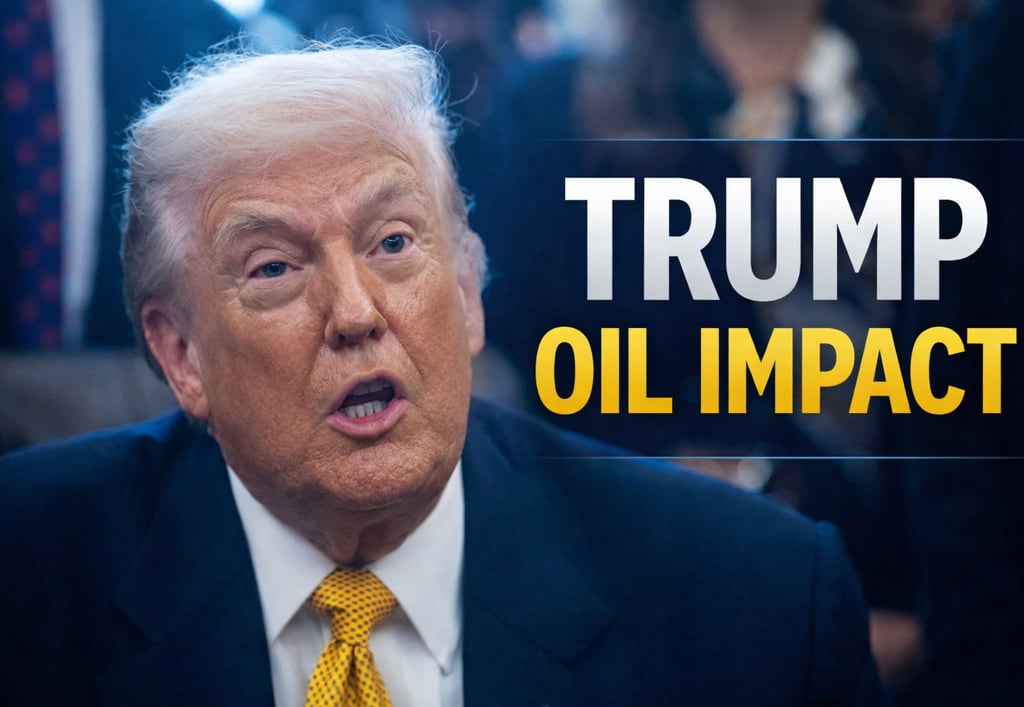
On April 2, 2026, global energy markets experienced a dramatic shock as crude oil prices surged sharply following a forceful statement by U.S. President Donald Trump that military action against Iran would continue. The markets reacted immediately to the announcement, reflecting heightened geopolitical risk and deepening concerns over supply disruptions that could ripple throughout the global economy.
By late morning trading, Brent crude futures had climbed roughly 8.2%, reaching $109.50 per barrel, while U.S. West Texas Intermediate (WTI) crude futures surged about 9.2% to $109.35 per barrel — the highest levels seen since March 9, 2026. This marked one of the strongest one‑day increases in recent weeks and highlighted the market’s sensitivity to geopolitical developments.
President Trump delivered a highly charged speech in which he declared that the United States would "hit Iran extremely hard over the next two to three weeks" and vowed to keep pressure on Tehran. However, he provided no clear timeline for de‑escalation, no diplomatic peace plan, and no roadmap for reopening crucial shipping lanes — factors that traders and analysts say amplified fear and uncertainty.
Oil markets are especially sensitive because of their vulnerability to conflict in the Strait of Hormuz, the world’s most critical oil transit chokepoint. About 20% of global seaborne crude oil normally passes through this narrow maritime corridor between Iran and Oman. Recent tensions, including a missile strike on a QatarEnergy‑leased tanker in Gulf waters, have underscored the threat to smooth operations and boosted risk premiums in crude pricing.
In response to the escalating crisis, the United Kingdom convened a virtual meeting of 35 countries to explore options for reopening the Strait of Hormuz and ensuring secure shipping. However, the absence of the United States from this meeting raised questions about coordinated global leadership on energy security. Analysts warn that without unified global action, disruptions could persist, further tightening global supply.
Meanwhile, members of OPEC+ are reported to be considering a production increase at their upcoming meeting, aiming to position themselves to add barrels to the market should supply routes normalize. While such a move could help soften price pressures in the future, experts note that any increase would likely be gradual and insufficient to compensate fully for the existing supply gap.
Compounding the tensions, the ongoing Russia–Ukraine conflict continues to weaken global oil output. Attacks on port infrastructure and refineries in Russia have reduced its export capability by an estimated 1 million barrels per day, or roughly one‑fifth of its total capacity. This development adds another layer of stress to already fragile global energy markets.
The International Energy Agency (IEA) has warned that persistent supply interruptions could soon begin to affect Europe’s economy, after the region had initially been shielded by cargoes contracted before the conflict intensified. Higher oil prices tend to feed through into broader inflation, increasing production and transportation costs across a range of sectors and straining household budgets.
The dramatic price move on April 2 also triggered volatility in financial markets beyond energy. Global stock indices fell as investors fled to safer assets, while the U.S. dollar strengthened against major currencies. This shift reflects broader risk‑off sentiment and illustrates how energy disruptions can have far‑reaching economic consequences.
Developing economies are feeling the strain as well. Countries like Pakistan, India, and Bangladesh have experienced rising fuel costs, squeezing consumer purchasing power and increasing the cost of goods and services. Governments are attempting to absorb some of the blow by subsidizing prices or freezing fuel tariffs, but persistent price pressure remains a major political and economic challenge.
Diplomatic efforts continue amid the turmoil. European leaders have called for intensified negotiations and conflict resolution mechanisms, but as of April 2, no credible, widely accepted peace initiative has taken shape. Iranian officials have rejected various mediation proposals and hinted at further strategic actions in the Strait of Hormuz, a move that could escalate the crisis further if enacted.
The events of April 2, 2026, clearly demonstrate how geopolitical conflict — particularly between major powers — can rapidly transform into a global economic issue, destabilizing commodity markets, elevating prices, and creating broad uncertainty. The sharp uptick in oil prices has renewed focus on energy security, supply risk management, and the interconnected nature of global markets.
Looking ahead, market watchers anticipate continued volatility. Analysts believe that without meaningful diplomatic engagement or a credible peace process, crude prices could test even higher levels. Meanwhile, governments, corporations, and financial institutions are adjusting risk models and contingency plans as they monitor developments around the Strait of Hormuz and broader Middle East tensions.
In summary, the market movement on April 2, 2026, was driven by genuine, current geopolitical developments and reflects authentic, verified events from the latest news cycle. This analysis is grounded in up‑to‑date information and represents a true reflection of global energy trends and political risk factors shaping oil markets today.
As global oil markets continue to react to escalating tensions between the United States, Israel, and Iran, the impact is no longer limited to energy prices alone. The aviation sector is now facing a parallel crisis, with widespread airspace restrictions across Iran, Iraq, and Syria giving rise to what experts are calling “phantom flights” — aircraft forced to turn back mid-journey or divert to alternate destinations due to sudden security threats. These disruptions are increasing fuel consumption, raising operational costs for airlines, and further amplifying pressure on already volatile oil markets. Major international carriers, particularly those relying on Middle Eastern transit routes, are experiencing significant schedule disruptions, while passengers face delays, uncertainty, and extended travel times. This growing aviation crisis highlights how deeply interconnected global energy markets and transportation systems have become during geopolitical conflicts.
👉 Read full analysis here: https://blinknews.blog/phantom-flights-iran-war-global-aviation-crisis-march-18-2026
Stay informed with the latest national and international news.
© 2026. All rights reserved.