
Powerful U.S. Winter Storm Leaves Over 400,000 Without Electricity, Triggers Mass Flight Cancellations | Jan 25, 2026
A severe winter storm sweeps across the U.S., cutting power to 400,000+ people and forcing thousands of flight cancellations nationwide on Jan 25, 2026.
Raja Awais Ali
1/25/20262 min read
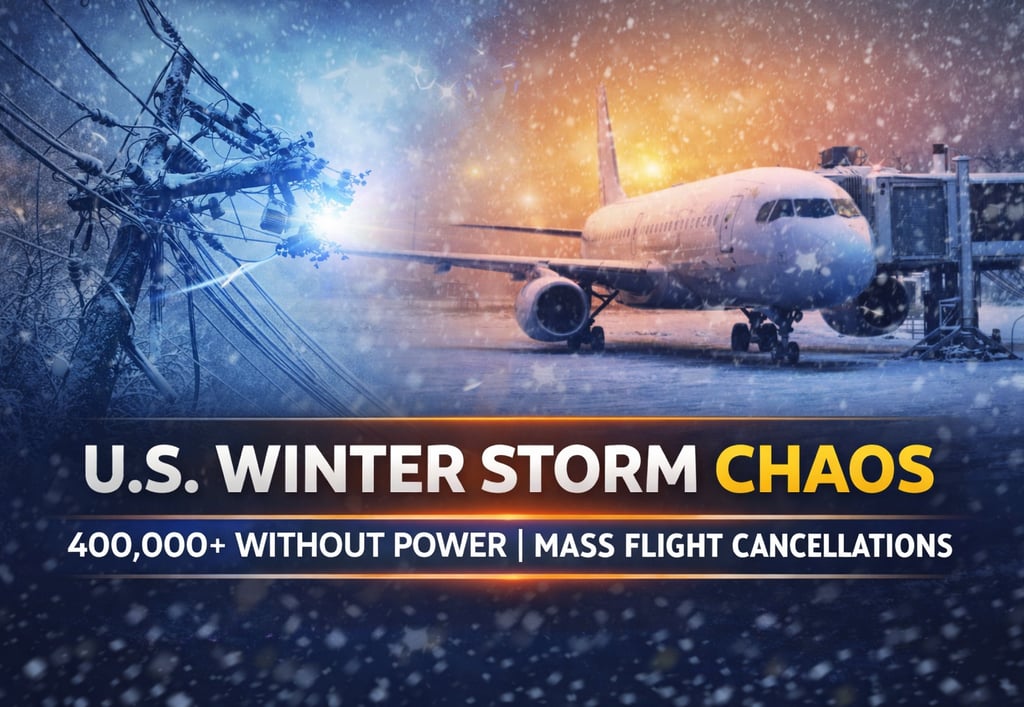
Severe Winter Storm Paralyzes the United States, Leaving Hundreds of Thousands Without Power
On January 25, 2026, a powerful and unusually widespread winter storm swept across large parts of the United States, disrupting daily life, crippling infrastructure, and causing widespread power outages and travel chaos. The storm, driven by a surge of Arctic air, affected millions of Americans from the South and Midwest to parts of the East Coast, marking one of the most disruptive winter weather events of the season.
According to official outage tracking data, more than 400,000 homes and businesses were left without electricity at the peak of the storm. The hardest-hit states included Texas, Mississippi, Louisiana, Arkansas, Oklahoma, and parts of the Southeast, where freezing rain, snow accumulation, and strong winds combined to overwhelm power grids and emergency services.
Power Outages Deepen the Crisis
The loss of electricity quickly escalated into a broader humanitarian and infrastructure challenge. Sub-zero temperatures and icy conditions made heating systems essential, yet thousands of households were forced to endure extreme cold without reliable power. In several areas, fallen trees and ice-covered power lines delayed repair efforts, leaving communities in darkness for extended periods.
Hospitals, emergency shelters, and water treatment facilities were pushed onto backup generators as authorities worked to stabilize essential services. Rural and remote areas faced the most prolonged outages, with residents reporting frozen pipes, disrupted communications, and limited access to emergency assistance.
Aviation Industry Brought to a Standstill
The storm also delivered a severe blow to the U.S. aviation sector. More than 9,000 flights were canceled nationwide, while thousands more experienced delays due to snow-covered runways, dangerous visibility conditions, and aircraft de-icing requirements.
Major airports including Dallas–Fort Worth, Chicago O’Hare, Atlanta, New York, and Charlotte were among the most affected. Airlines implemented large-scale preemptive cancellations to ensure passenger safety, but the move left millions of travelers stranded. Airports quickly became overcrowded as hotel availability dwindled and alternative travel options were limited due to hazardous road conditions.
Dangerous Temperatures and Health Risks
Meteorologists warned that the storm’s most dangerous element was not just snow and ice, but the extreme cold accompanying it. In several states, temperatures dropped well below freezing, with wind chill values reaching life-threatening levels.
Health officials cautioned that exposure to such conditions could lead to hypothermia and frostbite within minutes, particularly for elderly individuals, children, and people experiencing homelessness. Emergency warming centers were opened across affected states to shelter vulnerable populations.
Emergency Declarations and Government Response
In response to the escalating crisis, emergency declarations were issued in multiple states, enabling the release of federal resources and disaster relief funding. National Guard units and emergency crews were deployed to assist with rescue operations, road clearing, and power restoration.
State and local governments urged residents to avoid non-essential travel, conserve energy where possible, and follow official safety advisories. Schools were closed, public offices operated on limited schedules, and many highways became impassable due to ice and snow buildup.
A Warning Sign of Increasing Weather Extremes
Experts note that this storm is part of a broader pattern of increasingly intense and unpredictable weather events affecting the United States. While winter storms are not uncommon, the scale and impact of this system have raised renewed concerns about infrastructure resilience, energy grid reliability, and emergency preparedness.
Conclusion
The January 25, 2026 winter storm stands as a stark reminder of how vulnerable modern infrastructure remains in the face of extreme weather. With hundreds of thousands without power, massive flight disruptions, and widespread safety risks, the storm has left a lasting impact on communities across the country. As recovery efforts continue, attention is now turning toward long-term solutions to better protect lives, infrastructure, and essential services against future weather crises.
Stay informed with the latest national and international news.
© 2026. All rights reserved.