
US Suspends Technology Deal with Britain, Raising New Tensions Between Close Allies
The US has suspended its technology cooperation deal with Britain, citing trade and policy disputes, according to FT reports on Dec 16, 2025.
Raja Awais Ali
12/16/20252 min read
US Suspends Technology Deal with Britain, Raising New Tensions Between Close Allies
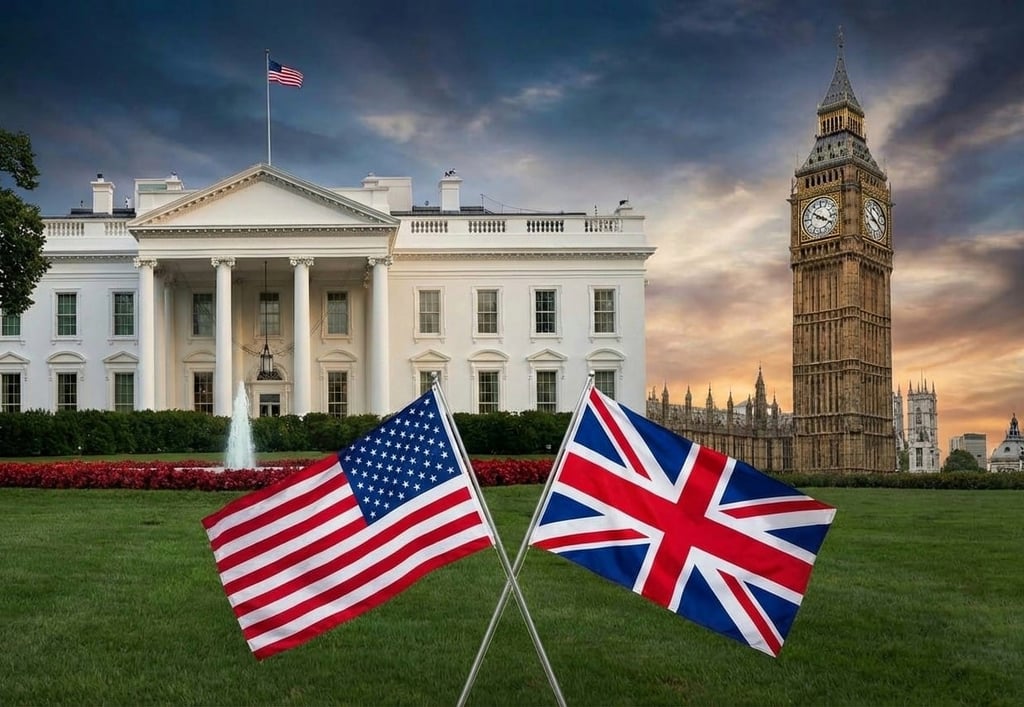
On 16 December 2025, a significant development emerged in global politics and the technology sector as the United States suspended a key technology cooperation agreement with Britain. The decision, first reported by the Financial Times, has drawn international attention, highlighting growing policy and trade disagreements between two long-standing allies.
The agreement, commonly referred to as the “Tech Prosperity Deal,” was designed to deepen cooperation in strategic areas such as artificial intelligence, quantum computing, and advanced energy technologies. It aimed to strengthen scientific research, investment, and innovation links between Washington and London, positioning both countries at the forefront of next-generation technologies.
However, US officials have now decided to pause the deal, citing unresolved concerns over Britain’s trade policies and regulatory framework. According to reports, Washington has expressed frustration over non-tariff barriers, strict food and industrial product regulations, and Britain’s continued digital services tax on large US technology companies. American authorities argue that these measures restrict fair competition and hinder broader economic cooperation.
The British government has responded cautiously, emphasizing that the suspension does not amount to a permanent cancellation. Officials in London have described the move as a temporary setback and stressed that dialogue with the US remains ongoing. Britain maintains that regulatory standards and digital tax policies are necessary to protect consumers and ensure a fair digital economy.
Analysts believe the suspension could have wider implications beyond bilateral relations. The United States and Britain are both influential players in global technology development, defense cooperation, and economic policy. A pause in collaboration may slow progress in critical fields such as artificial intelligence and quantum research, which are increasingly seen as vital to national security and economic competitiveness.
Despite the setback, experts note that US-UK relations remain fundamentally strong. Both countries are key NATO allies and share deep strategic, political, and economic ties. This foundation makes a complete breakdown in cooperation unlikely, and many expect renewed negotiations in the coming months to resolve differences and revive the agreement.
The situation also underscores how technology has become a central element of modern diplomacy. Advanced technologies are no longer just tools for innovation but key factors shaping global trade, security, and political influence. Disputes over regulation and market access now play a decisive role in international relations.
Overall, the US decision to suspend the technology deal with Britain marks an important moment in transatlantic relations. Whether this pause leads to renewed cooperation or signals deeper challenges will depend on upcoming negotiations. For now, the move serves as a reminder that even close allies must continuously manage economic and technological disagreements in an increasingly complex global landscape.
Stay informed with the latest national and international news.
© 2026. All rights reserved.