
U.S. Submarine Sinks Iranian Warship IRIS Dena; NATO Intercepts Missile Toward Turkey – March 4, 2026
On March 4, 2026, a U.S. submarine sank the Iranian frigate IRIS Dena off Sri Lanka, killing dozens, while NATO intercepted an Iranian missile heading toward Turkey, preventing casualties or damage.
Raja Awais Ali
3/4/20262 min read
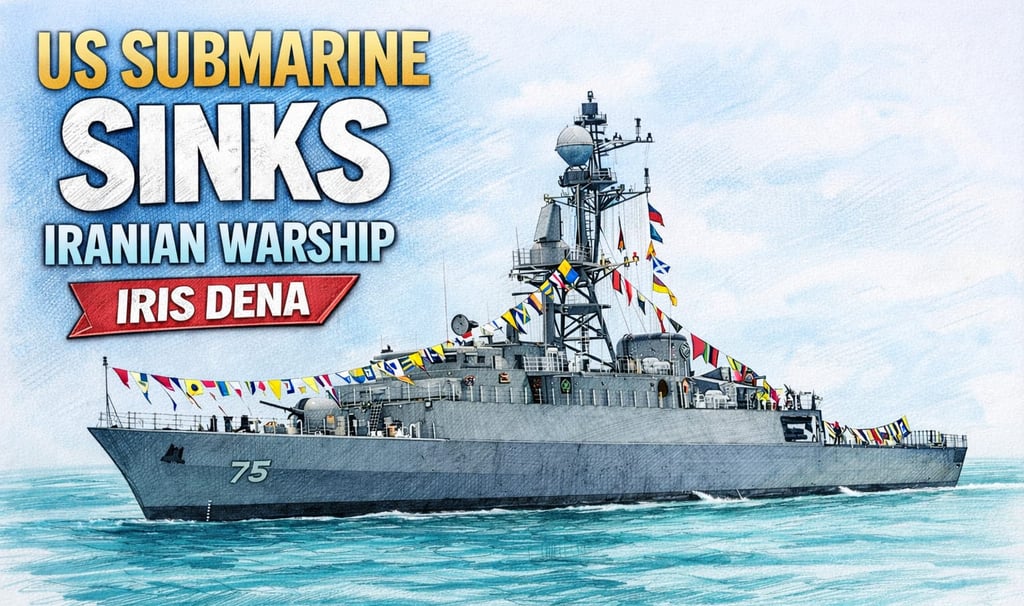
U.S. Submarine Sinks Iranian Warship; NATO Intercepts Iranian Missile Near Turkey | March 4, 2026
On March 4, 2026, tensions in the Middle East and surrounding regions escalated dramatically. On this day, a U.S. Navy submarine sank an Iranian warship, while NATO intercepted an Iranian ballistic missile before it could enter Turkish airspace. These actions not only affect the Middle East but also significantly increase global instability.
According to the U.S. Pentagon, the strike aimed to weaken Iran’s naval capabilities and protect U.S. interests in the region. The sunken vessel, named IRIS Dena, was located off the coast of Sri Lanka in the Indian Ocean. The ship had been returning to Iran after stopping at an eastern Indian port, where it participated in the ‘Milan’ biennial multinational naval exercise from February 18–25, organized by the Indian Navy.
The attack resulted in at least 87 Iranian sailors killed, while 32 were rescued and taken to a nearby hospital. Out of an estimated 180 crew members, approximately 60 remain unaccounted for. The Sri Lankan Navy launched an immediate rescue operation, saving crew members floating in the water. Many bodies were brought ashore, while survivors, including senior officers, confirmed that the ship had been struck by a U.S. submarine.
A Pentagon-released video showed a massive explosion at the ship’s rear, lifting it out of the water before it slowly sank stern-first. While the date and exact type of the ship in the video could not be independently verified, its deck and mast matched those of IRIS Dena.
On the same day, NATO responded promptly to Iranian aggression. An Iranian ballistic missile traveled over Iraq and Syria toward Turkish airspace, where it was destroyed by NATO air defenses. Turkey’s Ministry of Defense confirmed that the missile’s destruction prevented any casualties or material damage. This marks the first time a NATO member has faced a direct missile threat from Iran. NATO warned Tehran that such actions could further escalate tensions and trigger international consequences.
These military moves occur amid rising tensions between Iran and U.S./Israeli forces in the Gulf region. Earlier, Israeli strikes killed senior Iranian officials, prompting Iran to retaliate with missiles and drone attacks on Gulf states and Israel. The U.S. and NATO operations represent a direct response to these Iranian actions.
The global impact of the crisis is already significant. Oil exports from the Middle East have dropped by nearly 90%, causing sharp increases in global energy prices. Civilian and military casualties across multiple countries continue to rise, worsening humanitarian concerns.
Experts note that NATO has temporarily strengthened Turkey’s defenses, but continued Iranian aggression could require further military measures. Even a small miscalculation could escalate the situation into a broader international conflict.
The events of March 4, 2026, represent a turning point in global politics. The timely interventions of the U.S. Navy and NATO were crucial for regional stability, but Iranian responses raise the risk of further escalation. The conflict is no longer confined to Iran and the U.S.; it now involves a complex international front, requiring constant monitoring, strategic planning, and diplomatic action.
This night will be remembered as a milestone in the region’s history, reshaping military, political, and economic balances while highlighting the potential impact of future conflicts.
Stay informed with the latest national and international news.
© 2026. All rights reserved.