
US Schools Face Budget Crisis as Iran War Sends Diesel Prices Soaring in 2026
Rising diesel prices linked to the Iran war are putting major pressure on US school budgets in 2026. School districts across America are cutting costs, using emergency funds, and struggling to keep buses running as fuel prices surge.
Raja Awais Ali
5/16/20264 min read
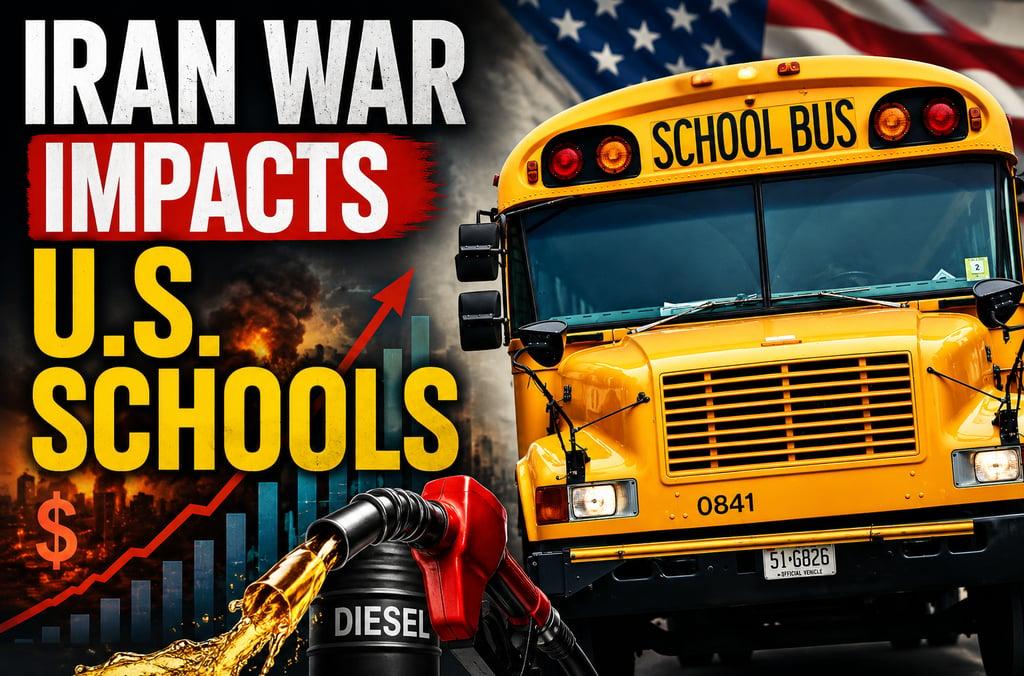
US Schools Face Budget Crisis as Iran War Sends Diesel Prices Soaring in 2026
The sharp rise in diesel prices following the Iran war is placing enormous financial pressure on school districts across the United States. Education systems that were already dealing with tight budgets are now struggling to manage rapidly increasing transportation and energy costs. From school buses and backup generators to classroom heating systems, diesel remains a critical part of daily school operations in many parts of America. As fuel prices continue climbing, districts are being forced to cut spending, delay projects, and dip into emergency reserves just to keep schools running normally.
The crisis began after disruptions to global oil supplies triggered a major increase in energy prices worldwide. A significant portion of the world’s oil supply passes through the Middle East, and growing instability in the region has shaken international energy markets. As supply concerns intensified, diesel prices in the United States surged at one of the fastest rates seen in recent years. For American school systems, which depend heavily on diesel-powered transportation, the impact has been immediate and severe.
School bus systems in the United States consume more than 800 million gallons of diesel every year. Since December, the average diesel price paid by US fleets has jumped by nearly 67 percent, reaching around $5.52 per gallon. Analysts estimate that this increase alone could add almost $1.8 billion in annual operating costs for school transportation systems nationwide. For many districts, these additional costs are simply unsustainable.
The financial burden is especially serious in rural and low-income communities. In Yakima, Washington, school officials say diesel prices have risen by 64 percent compared to last year, reaching approximately $6.30 per gallon. Operating the district’s fleet of 60 buses could now cost an additional $213,000 annually, an amount equal to the salaries of two teachers. Officials say the district was already under financial pressure before fuel prices exploded, making the current situation even more difficult to manage.
The crisis is not limited to one region. In Minnesota, transportation costs for hundreds of students have increased sharply since the start of the conflict. School leaders there warn that if diesel prices continue rising, student support services may eventually face cuts. In Texas, one school district reported an 84 percent year-over-year increase in diesel costs earlier this spring. Despite being located in one of America’s largest energy-producing states, districts there are still exposed to the effects of global fuel market instability.
In remote parts of Alaska, the situation has become even more serious because diesel is not only used for transportation but also for electricity generation and heating. Some districts rely entirely on fuel-powered community generators to keep classrooms operational during long winters. Local administrators are now facing difficult decisions about whether to lock in fuel purchases at extremely high prices or wait and hope markets stabilize later in the year. With limited delivery windows due to weather conditions, the risks are significant.
Across the country, school districts are being forced to make difficult financial adjustments. Nearly one-third of districts are reportedly shifting money away from other programs to cover fuel expenses, while many others are using emergency reserve funds to survive the current budget shock. Some districts are shortening bus routes, enforcing stricter anti-idling rules for vehicles, delaying maintenance work, and reducing administrative spending. While these measures may provide short-term relief, education experts warn they could eventually affect classroom quality and student services.
This crisis is also revealing an important political dimension. Rising fuel prices are affecting the daily expenses of American citizens, and the growing pressure on schools is becoming a political challenge for President Donald Trump. With the midterm elections in November approaching, the Republican Party is already facing pressure from its narrow majority in Congress. If school districts are forced to cut teacher salaries, student programs, or transportation services, it could trigger a significant political backlash.
However, some of the nation’s largest school districts have managed to reduce the impact by investing in alternative transportation systems over the past several years. In New York City, a large portion of student transportation is handled through private contractors, helping shift some fuel-related risks away from the public school system. Meanwhile, Los Angeles has spent years expanding the use of cleaner transportation technologies. Around 70 percent of its bus fleet now runs on alternative fuels or battery-powered systems, helping reduce dependence on diesel during the current crisis.
The situation is now being viewed as a warning sign for the future of American education infrastructure. Experts say the crisis highlights the growing connection between energy security and public education. Relying heavily on fossil fuels leaves schools vulnerable to global conflicts and sudden price shocks that are completely outside local control. As a result, more districts are beginning to explore electric buses, solar backup systems, and long-term clean energy investments to reduce future risks.
If oil markets remain unstable over the coming months, many states may eventually need to introduce emergency funding support for school districts facing severe operational pressure. Without additional assistance, some communities could struggle to maintain transportation services and daily school operations at current levels. The impact of the Iran war is no longer limited to global politics or energy markets. It is now reaching classrooms, school buses, and students across America, showing how international conflicts can directly affect everyday public services thousands of miles away.
Stay informed with the latest national and international news.
© 2026. All rights reserved.