
U.S. Orders Americans to Leave Middle East as Iran War Escalates, Airports Shut and Oil Prices Surge – March 3, 2026
The U.S. urges Americans to leave 16 Middle Eastern countries as the Israel–Iran war disrupts airports, spikes oil prices, and raises global security fears.
Raja Awais Ali
3/3/20263 min read
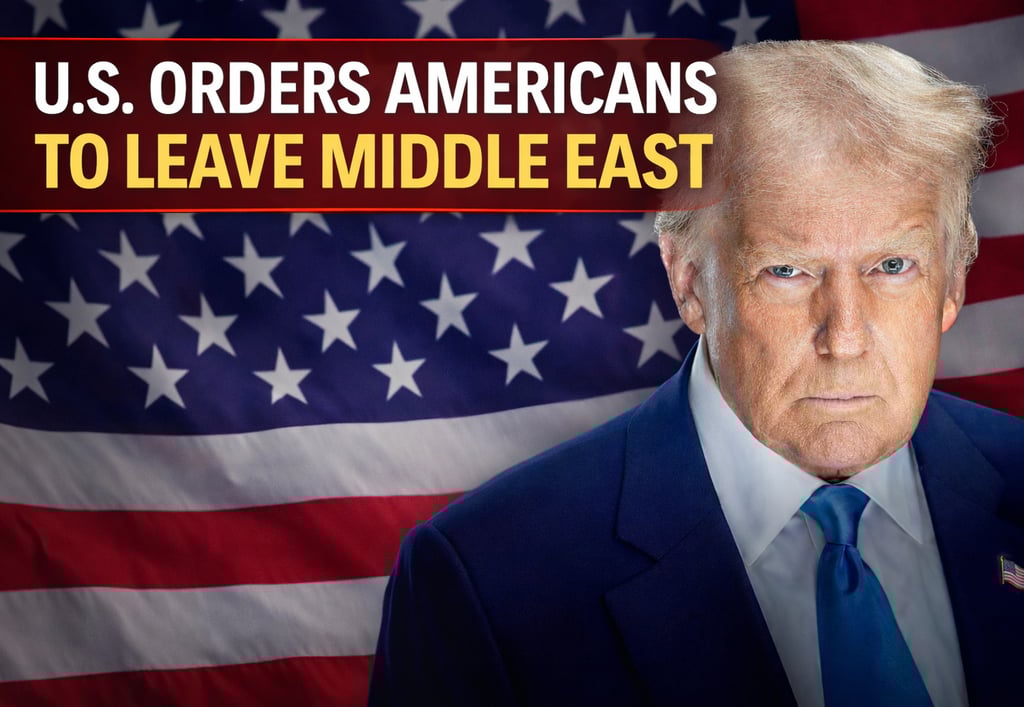
U.S. Orders Americans to Leave Middle East as Airspace Closes and Iran War Escalates
As of March 3, 2026, the United States government has formally urged American citizens across 16 Middle Eastern countries to leave immediately using available commercial transportation. The advisory comes amid rapidly escalating military conflict between Israel and Iran, widespread airspace closures, and growing regional instability that has disrupted global energy and aviation markets.
The U.S. Department of State instructed Americans to depart “now” while commercial options remain available. However, the announcement has sparked criticism because many major airports across the region remain closed or operating at limited capacity.
Congressman Ted Lieu publicly criticized the directive, questioning how Americans are expected to leave when airports and airspace are shut down. In a post on X, he called on Washington to organize immediate U.S. government evacuation flights for stranded citizens, arguing that a clearer contingency plan should have been prepared in advance.
Embassy Limitations and Evacuation Concerns
The U.S. Embassy in Jerusalem stated it is currently unable to directly evacuate or assist Americans departing Israel. The embassy said citizens may register for shuttle buses operated by Israel’s Ministry of Tourism to the Taba border crossing with Egypt. However, officials emphasized that Washington cannot guarantee the safety of that route and cannot formally recommend for or against using the shuttle service.
The State Department has activated an inter-agency task force to manage the crisis and launched a dedicated WhatsApp communication channel, which reportedly gained over 15,000 followers within hours. As of now, no official government evacuation flights have been announced.
Complicating matters further, the United States currently lacks Senate-confirmed ambassadors in several key regional countries, including Saudi Arabia, Qatar, Iraq, Egypt, Kuwait, Algeria, and the United Arab Emirates, raising concerns about diplomatic coordination during the crisis.
U.S.–Israeli Air War with Iran Intensifies
The U.S.–Israeli air campaign against Iran began Saturday and has already triggered significant regional fallout. Iranian drones reportedly struck the U.S. Embassy compound in Saudi Arabia overnight, damaging exterior structures and injuring at least three security personnel. No American diplomats were confirmed killed in the attack.
Casualty figures across the region continue to rise. According to regional sources:
Approximately 120 people have been killed in airstrikes inside Iran, with around 300 injured.
Israeli authorities reported at least 45 deaths and more than 150 injuries from retaliatory missile strikes.
Drone attacks in parts of the Gulf region have resulted in at least 18 additional fatalities.
Combined regional fatalities are estimated to exceed 180, with more than 500 injured. These figures are evolving and subject to verification as the conflict continues.
Global Aviation and Energy Markets in Turmoil
The conflict has severely disrupted international aviation. Dubai International Airport — the world’s busiest international hub, normally handling more than 1,000 flights per day — remained closed for a fourth consecutive day Tuesday. Tens of thousands of passengers are stranded, and ticket prices have surged dramatically.
Airlines worldwide are rerouting or canceling flights to avoid restricted Middle Eastern airspace, creating cascading delays across global travel networks.
Meanwhile, crude oil benchmarks rose approximately 7% on Tuesday, marking the third consecutive session of sharp gains. Energy markets are reacting to fears of supply disruptions in the Gulf, a critical corridor for global oil exports. Stock markets have also experienced volatility as investors weigh the risk of broader regional escalation.
Political Reactions and Strategic Signals
President Donald Trump stated on social media that the United States possesses a “virtually unlimited supply” of munitions and suggested that wars could be sustained indefinitely using existing stockpiles. The statement has heightened international concern about the potential duration and scale of the conflict.
Security analysts warn that if hostilities expand further, the crisis could become one of the most consequential military confrontations in recent decades, with long-term geopolitical and economic implications.
Conclusion
The Middle East is now facing a rapidly expanding conflict marked by military escalation, diplomatic gaps, airspace closures, and economic shockwaves. While Washington has urged Americans to depart immediately, limited commercial options and airport shutdowns complicate evacuation efforts.
With fatalities rising, oil prices climbing, and aviation in chaos, the coming days will be critical in determining whether diplomatic channels can prevent a broader regional war.
Stay informed with the latest national and international news.
© 2026. All rights reserved.