
US Lawmakers Reassure Denmark After Trump’s Greenland Remarks | Latest News 2026
Bipartisan U.S. lawmakers visit Copenhagen to reassure Denmark and Greenland after Trump’s controversial Greenland remarks, affirming NATO unity and sovereignty.
Raja Awais Ali
1/16/20262 min read
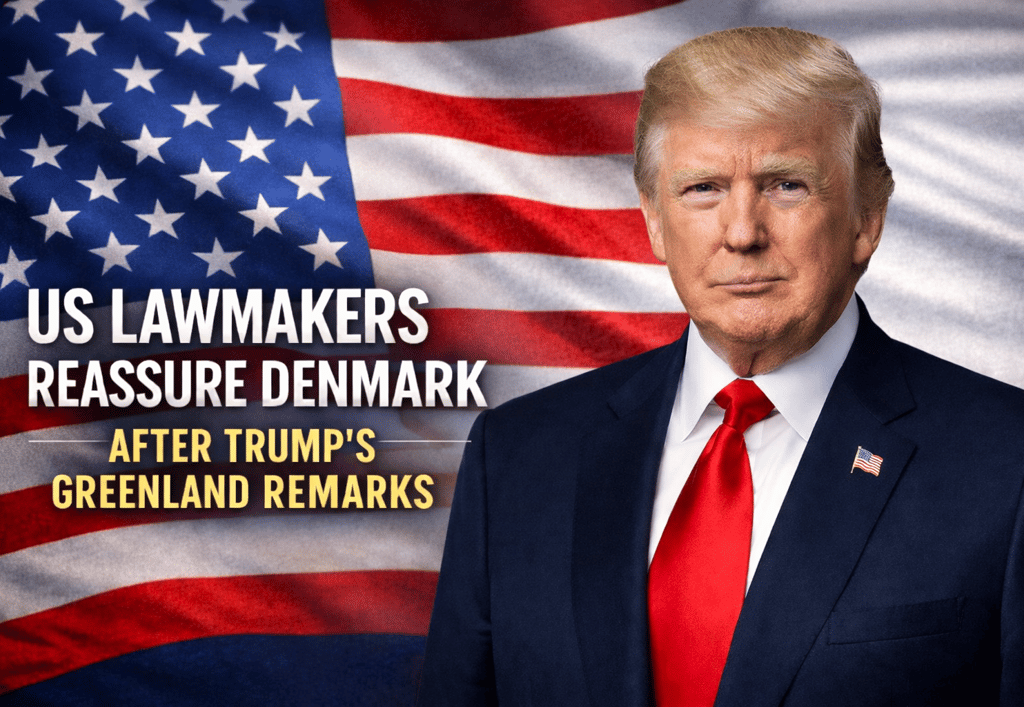
US Lawmakers Reassure Denmark After Trump’s Greenland Remarks, Affirm NATO Unity
In a significant diplomatic development on 16 January 2026, a bipartisan group of U.S. lawmakers traveled to Copenhagen to reassure Denmark and Greenland following controversial statements by President Donald Trump regarding Greenland. The visit aims to calm rising tensions between Washington and its European allies and reaffirm America’s long-standing commitment to diplomacy, international law, and NATO solidarity.
The congressional delegation, which included both Democratic and Republican members, delivered a clear message: Trump’s remarks on Greenland do not reflect a unified position of the U.S. government. Lawmakers emphasized that Denmark remains a close and trusted ally and that Greenland’s status can only be addressed through peaceful dialogue, respect for sovereignty, and established international norms.
Trump’s recent statements highlighted Greenland’s strategic importance, citing its location in the Arctic, proximity to emerging global shipping routes, and defense infrastructure. He reiterated his long-standing view that the United States should expand its influence in the region. These comments raised concern across Europe, particularly in Denmark, where officials firmly rejected any suggestion that Greenland’s future could be negotiated under pressure.
Danish and Greenlandic leaders restated that Greenland is not for sale and that its people have the right to determine their own future. Greenland, while part of the Kingdom of Denmark, enjoys broad self-governance, and both Copenhagen and Nuuk have stressed that any external attempt to influence its status would violate international law and democratic principles.
During meetings with senior Danish officials, U.S. lawmakers sought to rebuild trust and clarify Washington’s broader policy direction. They underlined that Congress strongly supports NATO’s collective defense framework and opposes any action that could undermine alliance solidarity. Members of the delegation stressed that maintaining unity within NATO is especially critical amid rising global security challenges in the Arctic, Eastern Europe, and beyond.
Greenland’s importance has grown steadily in recent years. As the world’s largest island, it holds vast reserves of rare earth minerals and occupies a strategic position in the rapidly changing Arctic region. Melting ice has opened new shipping lanes, increasing global competition among major powers, including the United States, Russia, and China. For this reason, Greenland has become a focal point of geopolitical interest far beyond its small population.
Within the United States, Trump’s statements have sparked debate. Several lawmakers from both parties warned that confrontational language toward allies could damage America’s credibility and weaken its global partnerships. They argue that diplomacy, not coercion, is the most effective way to protect U.S. strategic interests while preserving long-term alliances.
European officials have cautiously welcomed the congressional visit, viewing it as a positive sign that influential voices in Washington remain committed to cooperation and mutual respect. Analysts note that while presidential rhetoric can shape headlines, congressional engagement often plays a decisive role in maintaining stable international relationships.
Overall, the visit to Copenhagen signals that the United States, as represented by its legislature, is committed to preventing diplomatic fallout from Trump’s remarks. It reassures Denmark and Greenland that America values partnership over pressure and recognizes the importance of sovereignty and international law. At a broader level, the move also reassures NATO allies and the global community that transatlantic relations remain resilient despite political controversies, and that dialogue continues to be the preferred path forward.
Stay informed with the latest national and international news.
© 2026. All rights reserved.