
US–Iran War April 28, 2026: Trump Rejects Iran Proposal, Hormuz Oil Flow Collapses, Internet Cables at Risk
Latest US–Iran war update (April 28, 2026): Trump rejects Iran’s proposal, oil supply through Hormuz drops sharply, global internet cables face risk, and talks stall. Full detailed analysis.
Raja Awais Ali
4/28/20265 min read
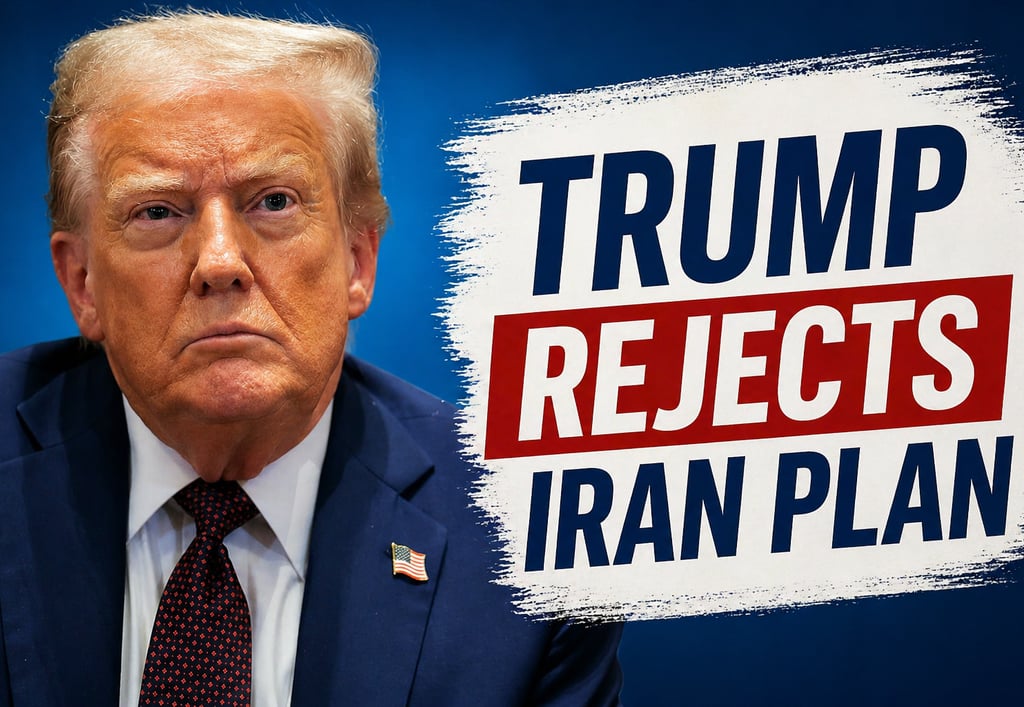
US–Iran War 2026: Trump Rejects Iran Proposal, Hormuz Oil Flow Collapses, Global Internet Infrastructure at Risk
The ongoing conflict between the United States and Iran, which began in February 2026 with the involvement of Israel, remains far from resolved despite a current ceasefire. Developments on April 28, 2026, clearly show that diplomatic efforts are struggling, as U.S. President Donald Trump is reportedly dissatisfied with Iran’s latest proposal aimed at ending the war. This disagreement has significantly reduced hopes for a near-term resolution while continuing to impact global energy supplies, drive inflation, and destabilize critical infrastructure worldwide.
According to a U.S. official familiar with a recent meeting between Trump and his advisers, the primary reason behind Washington’s rejection of the proposal is Iran’s decision to delay discussions on its nuclear program until after the war ends. The United States has consistently maintained that the nuclear issue must be addressed from the very beginning of any agreement. Reinforcing this stance, White House spokeswoman Olivia Wales stated that the U.S. “will not negotiate through the press” and emphasized that the administration’s red lines remain unchanged.
It is important to note that a previous agreement reached in 2015 between Iran and several global powers, including the United States, had significantly restricted Iran’s nuclear program, which Tehran insists is for peaceful civilian purposes. However, that deal collapsed after Donald Trump withdrew from it during his first term in office, reigniting tensions that have now escalated into the current conflict.
Diplomatic efforts have also faced major setbacks. The planned visit of U.S. special envoy Steve Witkoff and Jared Kushner to Islamabad was abruptly canceled, reducing hopes of progress in negotiations. Meanwhile, Iran’s Foreign Minister Abbas Araqchi actively pursued diplomacy, traveling twice to Islamabad over the weekend, followed by visits to Oman and Russia. In Moscow, he met President Vladimir Putin, securing verbal support from a longstanding ally. These developments indicate Iran’s attempt to strengthen its geopolitical position amid stalled talks.
According to senior Iranian officials, the proposal presented in Islamabad was based on a phased negotiation framework. The first step involved ending the U.S.-Israeli war against Iran and securing guarantees that hostilities would not resume. The second stage focused on lifting the U.S. naval blockade and restoring Iran’s maritime trade, particularly in the Strait of Hormuz. Only after these steps would negotiations address broader issues, including Iran’s nuclear program. Tehran continues to seek U.S. acknowledgment of its right to enrich uranium, a key sticking point in past negotiations.
However, Washington’s position remains fundamentally different, widening the gap between the two sides. As a result, the conflict continues to weigh heavily on global energy markets. Oil prices have resumed their upward trend as uncertainty persists and supply disruptions worsen. Analysts emphasize that markets are no longer reacting to political rhetoric but to the actual physical flow of crude oil, which remains severely constrained.
Recent data highlights the scale of disruption. At least six tankers carrying Iranian oil have been forced to return due to the U.S. blockade, underscoring the war’s direct impact on maritime traffic. Iran’s foreign ministry has condemned these actions as “outright legalization of piracy and armed robbery on the high seas.” Before the conflict, approximately 125 to 140 ships passed through the Strait of Hormuz daily. That number has now dropped dramatically to just seven vessels in a single day, none of which were transporting oil to the global market. This sharp decline represents a major shock to global supply chains and is a key factor driving rising energy prices and inflation worldwide.
Domestically, Donald Trump is also facing mounting pressure. Falling approval ratings and public dissatisfaction are increasing demands for an end to the war, especially as the administration’s justification for the conflict has shifted over time. Meanwhile, Abbas Araqchi claimed during a press briefing in Russia that it was Trump who requested negotiations, arguing that the United States has failed to achieve its objectives.
Beyond energy markets, the conflict is now posing a serious threat to global digital infrastructure. Iran has warned that undersea cables in the Strait of Hormuz represent a vulnerable point for the region’s digital economy. This narrow waterway is not only a critical oil transit route but also a key digital chokepoint, with multiple fiber-optic cables running across the seabed and connecting South Asia, Southeast Asia, the Gulf, and Europe via Egypt.
These subsea cables carry approximately 99% of global internet traffic and are essential for telecommunications, cloud services, financial transactions, and overall digital connectivity. Experts warn that any damage to these cables could lead to slower internet speeds, service outages, disruptions in e-commerce, delays in financial transactions, and widespread economic consequences.
The stakes are particularly high for Gulf countries such as the United Arab Emirates and Saudi Arabia, which have invested billions of dollars in artificial intelligence and digital infrastructure to diversify their economies beyond oil. Their growing digital ecosystems rely heavily on uninterrupted data flow through these undersea networks.
Major cable systems passing through the Strait of Hormuz include the Asia-Africa-Europe 1 (AAE-1) network, the FALCON network, and the Gulf Bridge International Cable System. Additional infrastructure projects are also underway, including new systems led by Qatar’s Ooredoo, further highlighting the region’s importance in global connectivity.
Despite their importance, these cables face multiple risks. According to industry data, between 150 and 200 cable faults occur annually, with 70% to 80% caused by human activities such as fishing and ship anchors. Natural hazards—including undersea currents, earthquakes, volcanic activity, and typhoons—also contribute to the risk.
While the cables have not yet been directly damaged in the current conflict, the risk is increasing. One major concern is indirect damage caused by vessels affected by military activity. For example, in a 2024 incident in the Red Sea, a ship attacked by Iran-aligned Houthi forces drifted and severed cables with its anchor. Experts warn that similar scenarios could occur if the conflict continues.
The war has already caused significant disruption to regional infrastructure, including reported impacts on Amazon Web Services data centers in Bahrain and the UAE. Although subsea cables remain intact for now, prolonged hostilities increase the likelihood of accidental damage.
Repairing damaged cables in a conflict zone presents additional challenges. While the technical process of repair is relatively straightforward, logistical barriers such as obtaining permits to access territorial waters and securing insurance for repair vessels can cause major delays. Experts note that bureaucratic and security hurdles often take longer to resolve than the repair work itself. After the conflict, companies will also need to conduct new seabed surveys to ensure safe cable routing, especially if debris or sunken vessels pose risks.
As for alternatives, satellite systems are not considered a viable replacement for subsea cables. They lack the capacity to handle the massive volume of global data traffic and are significantly more expensive. Even low-Earth-orbit networks, such as emerging satellite-based systems, are described by experts as a “boutique solution” that cannot yet scale to serve millions of users.
In a separate but related development, Iran has signaled its intention to expand its strategic influence by offering to share its defensive capabilities with other nations, particularly members of the Shanghai Cooperation Organisation (SCO). Iranian Deputy Defence Minister Reza Talaei-Nik stated that Tehran is ready to share its experience from the conflict with the United States, describing it as a demonstration of resistance. This statement was made during a meeting of SCO defense ministers in Kyrgyzstan, and follows recent discussions with Russian and Belarusian defense officials, who have expressed willingness to continue cooperation with Iran.
It is worth recalling that during the February–April phase of the war, Iran launched waves of drones and missiles targeting U.S. bases across the region as well as Israeli sites, while also shooting down U.S. aerial assets, primarily drones. Although a ceasefire is currently in place, efforts to resolve the conflict have stalled, and the latest developments suggest that tensions remain high.
In conclusion, the U.S.–Iran conflict has evolved into a multifaceted global crisis affecting energy markets, geopolitical alliances, and digital infrastructure. With negotiations at a standstill, oil flows severely disrupted, and critical undersea communication networks at risk, the situation remains highly volatile. Unless significant progress is made in addressing core disputes—particularly the nuclear issue, maritime security, and regional power dynamics—the conflict is likely to continue shaping global economic and political conditions in the months ahead.
Stay informed with the latest national and international news.
© 2026. All rights reserved.