
US Iran Peace Deal 2026: Trump Says Hormuz Strait May Reopen as Gulf Tensions Continue
US Iran peace deal 2026 moves closer as Trump discusses Hormuz Strait reopening, Iran nuclear talks, frozen assets, Israel Lebanon conflict and rising Middle East tensions.
Raja Awais Ali
6/14/20265 min read
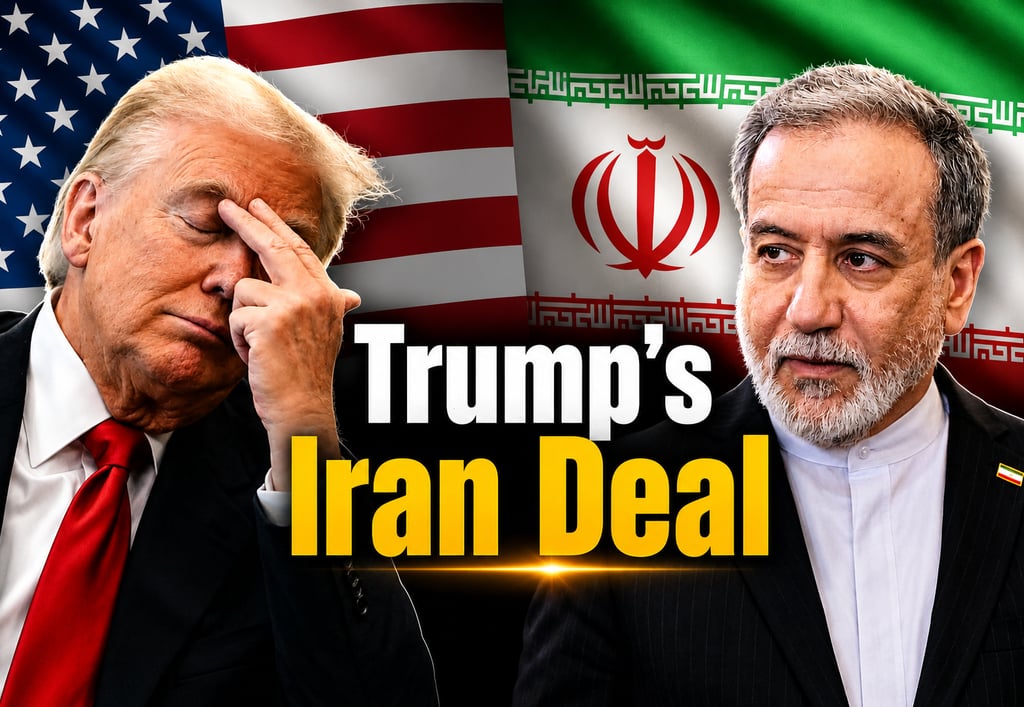
US Iran Peace Deal 2026 Moves Closer as Trump Signals Hormuz Strait Reopening Amid Rising Gulf Tensions
After months of military pressure, drone interceptions, naval blockades and rising fears of a wider regional war, the US Iran peace deal 2026 now appears closer than at any point since the conflict began earlier this year. President Donald Trump has claimed that a framework agreement between Washington and Tehran could be signed very soon, possibly within days, while diplomatic teams continue high-level discussions behind closed doors. Even though military operations are still active across the Middle East, global attention has now shifted toward whether these negotiations can prevent another major escalation in the Gulf region.
The latest Trump Iran deal discussions are centered around the future of the Strait of Hormuz, one of the world’s most important oil shipping routes. Before the conflict intensified, nearly 20 percent of global oil shipments passed through this narrow waterway every single day. Any disruption in the area directly affects international fuel prices, shipping companies, trade routes and energy markets across Asia, Europe and the Middle East. Because of this, the possible Hormuz Strait reopening has become the single most important issue in the current negotiations.
President Donald Trump stated that once the agreement is finalized, the Strait of Hormuz could immediately reopen to international shipping traffic. He also suggested that the United States would begin lifting its naval blockade around Iranian waters after Tehran removes restrictions in the Gulf. Trump’s statement attracted global attention not only because of the possible breakthrough but also because the expected timing of the agreement reportedly matches his 80th birthday on Sunday, adding strong political symbolism to the announcement.
Despite Washington presenting an optimistic picture, Iranian officials remain more cautious about publicly confirming the timeline. Iranian Foreign Ministry spokesperson Esmaeil Baghaei stated that although negotiations are moving forward, a final agreement may not happen immediately because political, legal and technical reviews are still ongoing inside Tehran. Reports from Iran also suggest that senior officials continue evaluating every condition connected to the framework before approving any final decision.
The latest Iran US talks have involved several regional countries working quietly to reduce tensions. Pakistan has emerged as one of the most important diplomatic channels during the current phase of negotiations. Prime Minister Shehbaz Sharif confirmed that preparations were underway for an electronic signing process followed by technical-level discussions in the coming week. Pakistan has spent recent weeks trying to maintain communication between regional powers while encouraging both Washington and Tehran to avoid further military escalation.
Qatar has also intensified its diplomatic role during the final stage of discussions. Sources familiar with the negotiations say Qatari mediators traveled to Tehran to help complete unresolved parts of the framework agreement. Doha has repeatedly acted as a bridge between Iran and the United States during earlier regional crises, and its latest involvement suggests that negotiations may now be approaching a decisive moment.
Even while diplomacy continues, military activity across the region has not stopped. American forces reportedly intercepted multiple Iranian drones heading toward the Gulf area near the Strait of Hormuz. The United States continues maintaining strong naval pressure in the region while trying to secure international shipping lanes. These developments show that despite ongoing diplomacy, neither side has fully stepped back from military readiness.
The broader security situation has become even more complicated because of the ongoing Israel Lebanon conflict. Israeli forces recently carried out strikes on more than 70 sites connected to Hezbollah during a 24-hour period inside Lebanon. The operations highlight how regional tensions continue spreading beyond direct US-Iran relations. Reports also indicate growing disagreements between Israeli Prime Minister Benjamin Netanyahu and President Trump regarding military operations in Lebanon.
According to officials familiar with the situation, Washington wants Israel to avoid actions that could damage negotiations with Tehran, while Israeli leadership continues supporting an aggressive military strategy against Iran-backed groups in the region. These differences have created additional pressure during an already sensitive diplomatic process.
One of the most important economic parts of the proposed agreement involves billions of dollars in frozen Iranian financial assets. Sources connected to the negotiations say the United States may gradually release frozen funds and ease restrictions connected to Iran oil exports if Tehran fully reopens the Strait of Hormuz and reduces military pressure in the Gulf. Iranian officials reportedly consider economic relief essential after years of sanctions that weakened the country’s economy and energy sector.
Iranian officials have also stated that reopening Gulf shipping lanes does not mean Tehran will completely step away from regional control measures. Some Iranian representatives reportedly argued that Iran should still receive compensation or service-related payments connected to activity in the strait. Meanwhile, American officials insist that shipping through the Strait of Hormuz must remain open without additional restrictions or toll systems.
Another major issue connected to the US Iran peace deal 2026 involves the future of Iran nuclear talks. Sources involved in discussions say nuclear negotiations are expected to continue during a separate 60-day process after the initial framework agreement is completed. American officials reportedly want Iran’s highly enriched uranium stockpile destroyed or removed under international monitoring.
Iran, however, continues supporting a different position. Iranian Foreign Minister Abbas Araqchi has argued that Tehran prefers to dilute enriched uranium while keeping nuclear material inside the country under revised conditions rather than transferring it abroad. Because of these disagreements, analysts believe the nuclear issue could still become the biggest obstacle to achieving a long-term settlement.
Inside Iran itself, reactions to the negotiations remain deeply divided. During pro-government rallies in several cities, hardline groups openly criticized the possibility of compromise with Washington. In the city of Mashhad, protesters reportedly chanted slogans against officials involved in negotiations and accused them of making dangerous concessions to the United States. Some demonstrators demanded resignations while others argued that Iran should maintain a tougher stance after months of conflict.
Iranian Foreign Minister Abbas Araqchi defended the diplomatic process by claiming that Iran entered negotiations from a position of strength despite military pressure and sanctions. He suggested that Tehran had managed to protect its regional influence even after months of conflict involving airstrikes, naval restrictions and economic pressure.
The wider picture surrounding Middle East tensions 2026 remains extremely fragile. Although diplomacy has gained momentum, military forces across the region remain on high alert and any unexpected confrontation could quickly damage the negotiation process. Energy markets also remain sensitive because traders understand that even small incidents near the Strait of Hormuz can push oil prices sharply higher within hours.
If negotiations succeed, the Hormuz Strait reopening could stabilize global shipping routes, lower pressure on oil markets and reduce fears of a broader Gulf conflict. The agreement could also create space for larger diplomatic discussions connected to regional security, economic cooperation and future relations between Iran and Western powers.
However, if talks collapse during the final stage, the situation could become significantly more dangerous. Military escalation between Washington and Tehran may intensify, attacks around Gulf shipping lanes could continue and the Israel Lebanon conflict may expand further into a wider regional confrontation involving multiple countries.
For now, global markets, regional governments and international observers are watching every new development carefully because the next few days could shape the future of Middle East tensions 2026 and determine whether diplomacy can finally replace months of military confrontation in one of the world’s most sensitive regions.
Stay informed with the latest national and international news.
© 2026. All rights reserved.