
U.S. Economic Growth Accelerates at 4.3% in Third Quarter of 2025 | Latest GDP Report
U.S. GDP expanded at a strong 4.3% annual rate in Q3 2025, driven by solid consumer spending, rising exports and government outlays. Latest economic outlook and analysis.
Raja Awais Ali
12/23/20252 min read
U.S. Economic Growth Accelerates in Third Quarter of 2025
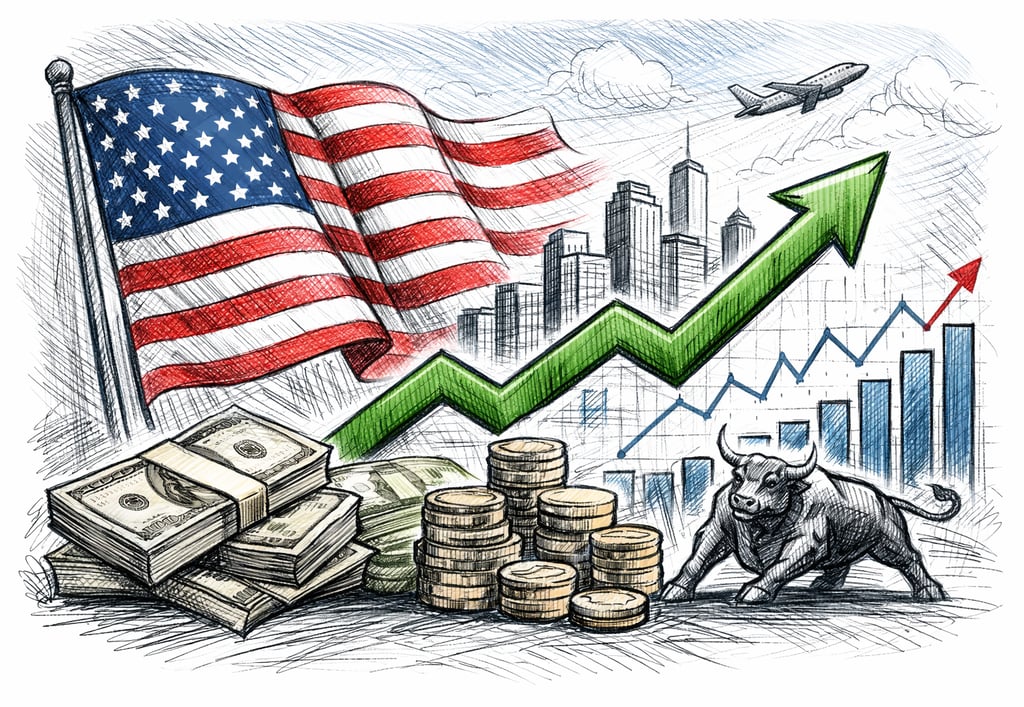
The United States economy showed surprisingly strong growth in the third quarter of 2025, with official data indicating a robust expansion that beat economists’ forecasts and reflected resilient consumer activity, rising exports and sustained government spending. According to reports released on 23 December 2025, the U.S. gross domestic product (GDP) expanded at an annualized rate of approximately 4.3%, marking one of the fastest paces of growth in recent years and significantly surpassing consensus expectations.
The U.S. Commerce Department’s GDP report highlighted that consumer spending, which accounts for roughly 70% of economic activity, remained a key driver of growth, supported by strong household expenditures on services and goods. In addition, exports increased sharply, and government expenditures continued to contribute meaningfully to overall output, helping to lift the nation’s economic performance beyond earlier forecasts.
Economists had broadly expected moderate growth in the third quarter, with projections centered around the low‑to‑mid 3% range, but the 4.3% outcome exceeded these estimates, demonstrating that the world’s largest economy retained significant momentum despite ongoing challenges such as elevated inflation and labor market pressures.
Key Drivers of Growth
One of the most notable contributors to the third‑quarter upswing was consumer activity, especially spending on services and nondurable goods. Rising consumer confidence and household demand helped sustain economic momentum even as inflation pressures persisted. Furthermore, export growth surged, narrowing the trade deficit and boosting GDP figures. Government spending on infrastructure and public services also played a stabilizing role during the quarter.
Another important factor was increased investment in technologies such as artificial intelligence (AI) and sustainable infrastructure, which bolstered business spending and encouraged broader economic engagement across key sectors. While business investment did not grow uniformly across all industries, it remained a positive contributor overall.
Inflation and Labor Market Context
Despite the strong GDP growth, inflation remained a central concern for policymakers. Measures of core inflation — which exclude volatile food and energy prices — stayed above the Federal Reserve’s 2% target, prompting continued debate among officials about the direction of interest rate policy. Wage growth and employment gains were uneven, with some sectors showing signs of slowdown, leading analysts to caution that broad‑based labor market strength is not yet fully established.
The Federal Reserve had already implemented several interest rate cuts in late 2025 in an effort to cushion economic slack, and future policy decisions are expected to balance inflation control with support for growth. Despite the strong third‑quarter performance, many economists anticipate slower growth in the fourth quarter as household spending moderates and the effects of earlier government data release delays — partly caused by a lengthy federal government shutdown — continue to shape quarterly estimates.
Broader Implications and Outlook
The U.S. economy’s solid performance in the third quarter of 2025 sends a positive signal to domestic and international investors, reaffirming confidence in American consumption and economic resilience. However, the mixed indicators from the labor market and persistent inflation suggest that challenges remain. Policymakers will continue to monitor these trends closely as they prepare for upcoming federal budget negotiations and Federal Reserve meetings in 2026.
In summary, while the United States experienced notable GDP growth of around 4.3% in Q3 2025, exceeding expectations and reflecting strong underlying demand, the economic picture remains complex. Analysts emphasize the importance of sustained consumer confidence, balanced monetary policy, and strategic investment to maintain momentum in the year ahead.
Stay informed with the latest national and international news.
© 2026. All rights reserved.