
US Courts Rule 4,400 ICE Detentions Illegal in 2026
US federal judges ruled 4,400 ICE detentions illegal since Oct 2025. Latest Feb 14, 2026 update on Trump’s immigration crackdown and court response.
Raja Awais Ali
2/14/20263 min read
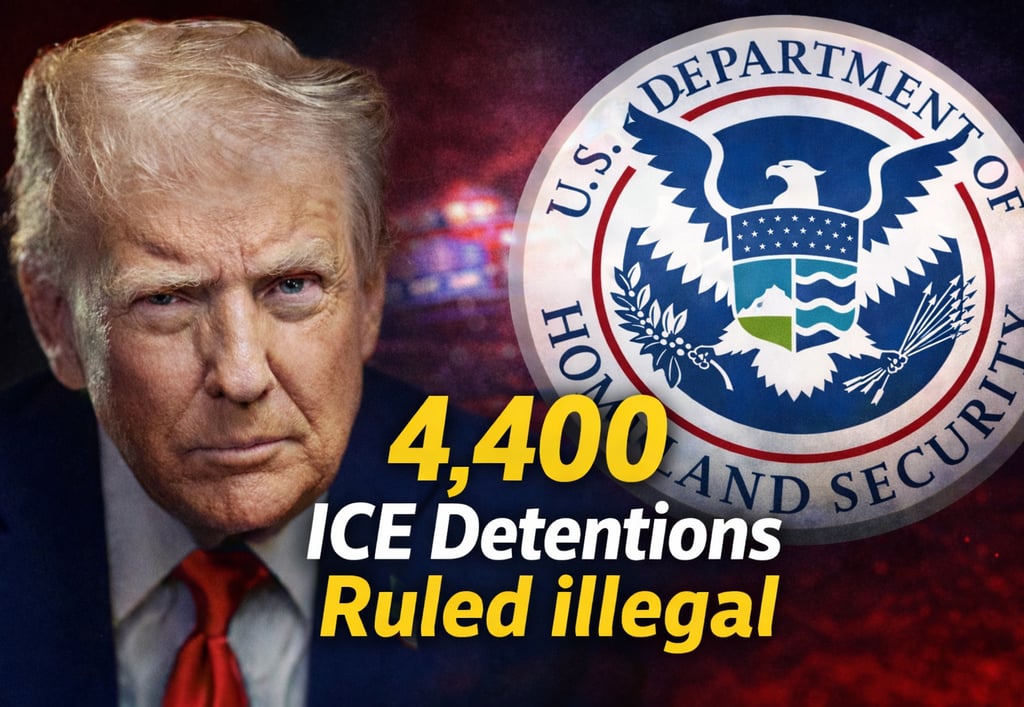
US Courts Rule 4,400 ICE Detentions Illegal as Trump Immigration Crackdown Faces Escalating Legal and Constitutional Scrutiny
As of February 14, 2026, the United States immigration enforcement system is confronting one of the most significant legal challenges in recent history. Since October 2025, federal judges across multiple jurisdictions have ruled at least 4,400 times that Immigration and Customs Enforcement (ICE) unlawfully detained individuals. These decisions stem from findings that detainees were held without proper statutory authority, denied timely bond hearings, or placed under mandatory detention without sufficient legal justification. The scale of these rulings reflects a broad judicial rebuke of enforcement practices carried out during President Donald Trump’s renewed immigration crackdown.
Court records indicate that thousands of detainees filed habeas corpus petitions challenging the legality of their confinement. Legal analysts report that more than 18,000 such petitions have been submitted in recent months — a dramatic increase compared to prior administrations. In numerous opinions, federal judges emphasized that immigration enforcement agencies must strictly comply with constitutional due process protections. Courts repeatedly ruled that aggressive enforcement priorities cannot override clear legal requirements, particularly when individuals are deprived of liberty without individualized review.
The impact of these detentions has extended beyond undocumented migrants. Cases reviewed in federal courts include lawful permanent residents, asylum seekers, long-term visa holders, and in certain instances, U.S. citizens who were later released after their status was verified. Reported examples include a minor detained after returning from school, a Venezuelan father placed under prolonged custody despite legal arguments for bond eligibility, and a healthcare worker held without adequate supporting evidence. During enforcement operations such as Minnesota’s “Metro Surge,” reports surfaced that a U.S. citizen was detained for several hours despite presenting valid identification. In another instance, an American citizen was allegedly forced to the ground during a parking lot stop before being released once documentation was confirmed. These incidents intensified national scrutiny of ICE verification procedures and operational standards.
Government data shows that detention levels rose sharply during the first year of President Trump’s renewed term, reaching approximately 68,000 individuals — an increase of nearly 75 percent compared to previous years. Further analysis suggests that around 40 percent of those detained had no prior criminal record, while roughly 14 percent faced allegations linked to more serious offenses. Critics argue that these figures challenge the administration’s claim that enforcement actions primarily target dangerous criminals. Supporters of the crackdown, however, maintain that broader enforcement is necessary to deter unlawful immigration and strengthen border control.
President Donald Trump has consistently defended strict immigration policies, stating that firm enforcement is essential to protect national security and uphold federal law. The White House maintains that ICE operations are conducted within existing statutory authority and reflect congressional mandates. Administration officials argue that judicial disagreements represent interpretive differences rather than systemic wrongdoing. However, public opinion surveys suggest growing division. Recent polling indicates that approximately 60 percent of respondents believe enforcement actions may be overly aggressive, while overall support for enhanced border security remains substantial at around 46 percent.
Civil rights organizations, including major advocacy groups, have raised constitutional concerns regarding prolonged detention without bond hearings. Immigration attorneys argue that mandatory detention policies, when applied broadly without individualized assessment, risk violating due process protections under the Fifth Amendment. Multiple lawsuits allege procedural deficiencies, lack of transparency, and, in certain cases, discriminatory enforcement patterns. Legal scholars warn that bypassing established safeguards could weaken confidence in the rule of law.
Reports have also highlighted concerns about detention facility conditions. Advocacy groups cite overcrowding, delays in medical treatment, limited legal access, and administrative backlogs as ongoing challenges within certain facilities. While federal authorities state that detention standards are regularly monitored, watchdog organizations argue that rapid increases in detainee numbers strain existing infrastructure and oversight systems.
In response to mounting litigation, policy experts are calling for structural reforms. Proposed measures include mandatory and expedited bond hearings, clearer evidentiary standards prior to detention, expanded judicial oversight mechanisms, enhanced transparency in reporting detention statistics, and strengthened congressional accountability measures for immigration agencies. Some lawmakers have also urged greater independent inspection of detention facilities to ensure compliance with federal standards.
The 4,400 judicial rulings collectively underscore a widening tension between aggressive immigration enforcement and constitutional safeguards. Federal courts have repeatedly affirmed that immigration authority, while broad, is not unlimited. Judges have emphasized that enforcement agencies must operate within statutory boundaries and respect procedural protections guaranteed under U.S. law.
As of mid-February 2026, ongoing court battles continue to shape the national debate. Additional rulings are expected in the coming months, and legislative proposals remain under discussion. Whether through judicial clarification or congressional reform, the future of U.S. immigration detention policy appears poised for further transformation. What remains clear is that the legal system has asserted a powerful role in defining the limits of enforcement authority during one of the most contentious immigration periods in modern American history.
Stay informed with the latest national and international news.
© 2026. All rights reserved.