
US-China Trade Detente Pauses Major Tech Curbs | Feb 2026
February 12, 2026 latest news: US-China trade detente leads to suspension of AI chip controls, semiconductor tariffs, and key technology restrictions.
Raja Awais Ali
2/12/20263 min read
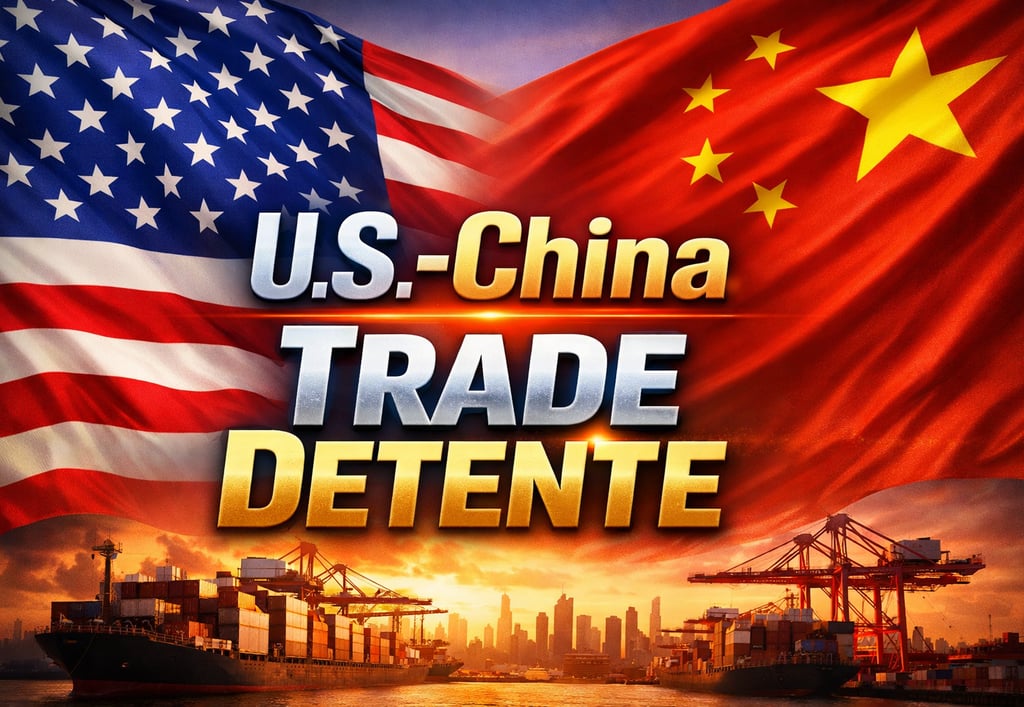
US-China Trade Detente Pauses Major Technology Restrictions – February 12, 2026
A significant geopolitical and economic shift emerged on February 12, 2026, as the United States and China moved toward easing years of escalating trade and technology tensions. In a development closely watched by global markets, several key U.S. technology restrictions imposed on China have been temporarily paused or softened under a broader trade detente between the world’s two largest economies.
This recalibration marks an important turning point for the semiconductor industry, artificial intelligence development, telecommunications infrastructure, and global supply chains that have faced prolonged uncertainty since the escalation of tech controls in recent years.
The foundation of this detente was laid in late 2025 during high-level discussions between U.S. President Donald Trump and Chinese President Xi Jinping. Following diplomatic engagement, both sides signaled their intention to stabilize economic relations and reduce trade friction. As part of the understanding, China pledged to significantly increase purchases of U.S. agricultural and energy products, including soybeans, oil, and liquefied natural gas. Reports indicate that China committed to purchasing approximately 20 million metric tons of U.S. soybeans in the current fiscal year, with projections rising to 25 million metric tons next year. In return, the United States agreed to reduce certain tariffs by around 10 percent and delay enforcement of new technology-related trade measures.
Over the past several years, U.S. policy toward China has focused heavily on restricting access to advanced technologies considered strategically sensitive. These included export controls on high-performance AI and semiconductor chips such as Nvidia’s H100 and H200 processors, proposed semiconductor tariffs scheduled for implementation before 2027, and the controversial “Affiliates Rule,” which limited U.S. technology exports to Chinese firms owned 50 percent or more by blacklisted entities. Estimates suggested this rule could impact up to 20,000 Chinese companies.
Additional measures targeted Chinese telecommunications firms operating in the United States, proposed tighter scrutiny of Chinese-made equipment used in American data centers, and placed restrictions on Chinese electric buses and commercial vehicles entering the U.S. market.
Under the current detente framework, several of these measures have been delayed, placed under review, or temporarily suspended. Planned semiconductor tariffs have reportedly been postponed until mid-2027. Enforcement actions affecting certain telecom operations and data infrastructure oversight have slowed, while export licensing procedures for advanced AI chips are being reassessed. These adjustments indicate a strategic pause rather than a complete reversal of policy.
Domestic economic pressures have significantly influenced this policy shift. In the United States, major corporations across technology, manufacturing, and energy sectors warned that strict export controls were costing billions of dollars in lost revenue and weakening global competitiveness. Industry leaders argued that prolonged restrictions risked accelerating China’s push for technological self-sufficiency while limiting U.S. firms’ access to one of the world’s largest markets. Hundreds of export license applications involving Chinese companies remain under review, contributing to continued uncertainty.
China, meanwhile, leveraged its dominance in rare earth minerals—essential components used in semiconductors, electric vehicles, and defense technologies. As a leading global supplier, Beijing holds strategic influence over critical manufacturing inputs. In 2025, China’s overall trade surplus reportedly reached approximately $1.189 trillion, although exports to the United States declined by roughly 20 percent, highlighting the economic impact of sustained tensions.
Analysts remain divided on the long-term implications of the detente. Supporters argue that easing tensions could stabilize global semiconductor markets, reduce supply chain disruptions, and temper inflationary pressures linked to technology shortages. U.S. data center capacity is projected to expand by up to 120 percent by 2030, making international cooperation in advanced computing infrastructure increasingly important. Semiconductor giants such as Nvidia and AMD could benefit from renewed—though regulated—access to segments of the Chinese market.
However, national security experts caution that relaxing technology restrictions too quickly may expose sensitive digital infrastructure to strategic vulnerabilities. Telecommunications networks, artificial intelligence platforms, and large-scale data centers are now regarded as critical national assets. Critics argue that technological competition between Washington and Beijing reflects a structural rivalry that is unlikely to disappear. In this context, the current detente may represent tactical stabilization rather than long-term reconciliation.
Global markets have responded with cautious optimism. Semiconductor stocks have shown signs of stabilization amid expectations of moderated regulatory enforcement. Manufacturers across Asia and Europe are closely monitoring developments, as reduced friction between the United States and China could ease pressure on production networks and logistics chains. Rare earth export dynamics remain a key variable, with any future disruption capable of reshaping global electronics and electric vehicle supply chains.
The February 12, 2026 developments signal a strategic recalibration rather than a definitive reset. The United States and China appear to be moving from aggressive economic decoupling toward managed competition combined with selective cooperation. Whether this trade detente evolves into a durable framework or proves to be a temporary pause in a broader geopolitical rivalry will depend on future diplomatic engagement and enforcement decisions. For now, global technology markets are navigating a period of uncertainty tempered by renewed dialogue between the world’s two largest economies.
Stay informed with the latest national and international news.
© 2026. All rights reserved.