
Ukraine Strikes Russia’s Azot Chemical Plant Again as Drone Warfare, AI and Electronic Warfare Reshape Modern Conflict
Ukraine has struck Russia’s Azot chemical plant for the second time in two weeks. Explore the strategic importance of Azot, June 2026 drone attacks, AI warfare, electronic warfare, cyber threats, Iran’s drone influence, and the future of modern conflict.
Raja Awais Ali
6/26/20266 min read
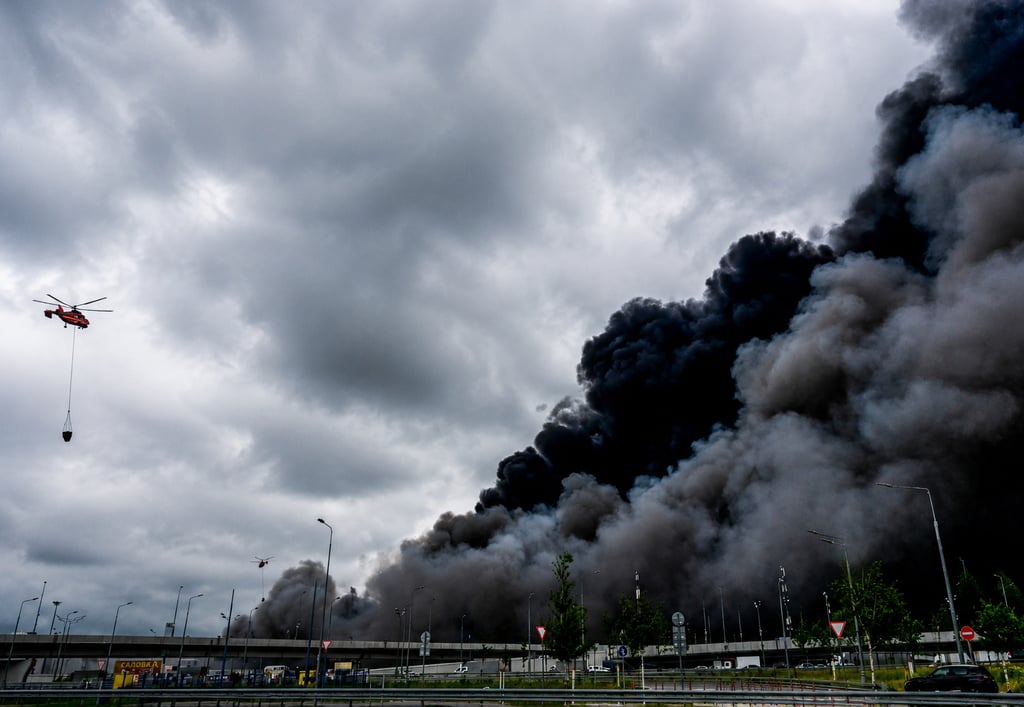
Ukraine has targeted Russia’s Azot Chemical Plant again. Drone warfare, artificial intelligence, and electronic warfare are changing how conflicts are fought in the 21st century.
The Russia-Ukraine war took a new and significant turn in June 2026. Military analysts might eventually call it the first large-scale conflict driven by drones, artificial intelligence, electronic warfare, and economic targeting. On June 26, Ukraine launched another drone strike on the Azot chemical plant in Novomoskovsk, located in Russia’s Tula region. This marked the second attack on the facility in just two weeks. Russian authorities reported that hundreds of Ukrainian drones were launched overnight toward multiple regions. Russia’s Ministry of Defense claimed to have intercepted and destroyed 660 drones. Yet, despite those assertions, several industrial sites were reportedly impacted, power infrastructure was damaged, and civilians were hurt. At first glance, it looks like another drone attack in a continuing war. However, when we consider the broader strategic context, it reveals a deliberate effort to target Russia’s war economy, its industrial supply chains, and its long-term military capabilities.
The Azot plant is one of Russia’s most crucial chemical production sites. It produces ammonia, nitrogen fertilizers, nitric acid, and other industrial chemicals vital to both agriculture and industry. While Russia highlights the plant’s role in food production and fertilizer exports, Ukrainian officials and many Western military experts argue these same chemical compounds are critical for making explosives, propellants, and other military materials. This is why Ukrainian leadership sees the facility as part of Russia’s larger war-support structure. The plant was previously targeted on June 14, and the latest strike indicates that Ukraine's strategy is not just about causing damage once. It aims to repeatedly disrupt repair efforts, reduce production capacity, and create ongoing economic pressure over time.
This strategy highlights a major change in modern warfare. Historically, wars were won by defeating enemy forces on the battlefield. Today, Ukraine seems to recognize that it is extremely challenging to defeat a much larger power like Russia using conventional military methods alone. Therefore, the focus has shifted towards targeting Russia’s economy, energy sector, industrial production, and defense manufacturing capabilities. Strikes against refineries near Moscow, attacks on energy infrastructure in Tyumen, operations targeting gas-processing facilities, and repeated strikes on the Azot plant all seem to fit into this larger strategy. The message is clear: no strategically important industrial site in Russia can be considered completely secure.
June 2026 has been significant not only because of Ukrainian attacks inside Russia. Moscow has also stepped up its air campaign against Ukraine. Cities like Kyiv, Kharkiv, Odesa, and Dnipro faced major missile and drone strikes throughout the month. Some attacks involved hundreds of drones and dozens of missiles launched at once. Residential buildings, power systems, military sites, and civilian infrastructure suffered damage or destruction. These developments show that the conflict is no longer limited to front-line military positions. Both countries are increasingly targeting each other's national resilience, economic strength, and critical infrastructure.
If World War I was defined by artillery and trench warfare, World War II by tanks and air power, and the Cold War by nuclear deterrence, then the conflict of 2026 may be remembered as the war of drones, artificial intelligence, cyber operations, and electronic warfare. Russia and Ukraine are essentially fighting what could be labeled as the world’s first major industrial drone war powered by AI. Military planners worldwide are examining every detail of this conflict because it is shaping the future of warfare.
Drone warfare has become the most visible aspect of this change. Only a few years ago, drones were mainly seen as support tools for reconnaissance and surveillance. Today, they are key weapons systems capable of influencing strategic outcomes. A relatively inexpensive drone can damage or destroy a refinery, power station, or military facility worth billions. Ukraine has shown an increasing ability to strike targets hundreds or even thousands of kilometers inside Russian territory. Meanwhile, Russia continues to launch large drone attacks to overwhelm Ukrainian air defenses and damage critical infrastructure.
One of the most discussed weapons in this conflict is the Iranian-designed Shahed drone. These drones are known for their low cost, long operational range, and potential for mass production. Russia has used them extensively in its strikes. Their biggest advantage is their economic efficiency. Compared to advanced cruise missiles or modern fighter jets, Shahed drones are much cheaper while still capable of hitting high-value targets. This has fundamentally shifted the economics of warfare. If a low-cost drone forces an opponent to use an expensive missile for air defense, the attacker gains a significant financial edge even before factoring in physical damage.
Another significant development is the use of FPV, or First-Person View, drones. These small but deadly systems can destroy tanks, armored vehicles, and fortified positions at a fraction of the cost of traditional anti-tank weapons. Both Russia and Ukraine have extensively deployed FPV drones. Many military experts now argue that these drones have challenged the battlefield dominance of traditional armored vehicles to such an extent that future doctrines of mechanized warfare may need major revision.
Even more concerning is the rise of drone swarms. These involve hundreds or even thousands of drones working together as part of a single attack. If artificial intelligence is fully integrated into swarm operations, traditional air-defense systems may struggle to counter them. The United States, China, Russia, Israel, and other nations are investing heavily in swarm technologies. Future conflicts may see massive autonomous drone formations overwhelming defenses in minutes, fundamentally altering the balance between offense and defense.
The recent confrontation between Iran and Israel has provided essential insights into the future of warfare. It showed that low-cost drones and missile systems can challenge some of the world’s most advanced defense networks. Over the past decade, Iran has made significant investments in drone development, producing not only the Shahed family but also various reconnaissance and loitering munitions. Events in the Middle East have proven that future wars won't be determined solely by fighter jets and missile forces. Drone networks, sensor systems, and electronic warfare capabilities will also be crucial. The Russia-Ukraine conflict has expanded and intensified many of these trends.
Modern warfare is no longer defined just by physical weapons. Electronic warfare has become a decisive factor on the battlefield. Today, conflicts are fought not only with explosives but also with signals. Tactics like GPS jamming, drone spoofing, radar suppression, satellite interference, and signal intelligence are vital components of military operations. Russia and Ukraine are constantly working to disrupt each other’s communications, interfere with navigation, and diminish the effectiveness of surveillance networks. Often, drones fail to reach their targets due to electronic countermeasures. As a result, electronic warfare specialists have become just as crucial as traditional military commanders.
Alongside electronic warfare, cyber warfare has emerged as another critical front. Power grids, banking systems, government databases, communications infrastructure, and industrial control networks have all become potential targets. A successful cyberattack can disrupt essential services, weaken economic stability, and undermine military effectiveness without firing a single shot. This reality has led many analysts to argue that future wars may rely on cyber and electronic dominance as much as on conventional military power.
Artificial intelligence is making this landscape even more complicated. AI-powered systems are already helping drones identify targets, optimize flight paths, analyze battlefield conditions, and support decision-making. In the future, autonomous systems may detect threats, select targets, and execute missions with little human involvement. While these technologies promise improved military efficiency, they also raise significant ethical and legal questions. Should machines be allowed to make life-and-death choices? This debate is likely to become one of the most pressing security issues in the coming decade.
The Russia-Ukraine war has also revealed another important reality: modern conflicts are not fought only by soldiers. Engineers, software developers, cybersecurity experts, and data scientists are now essential players in warfare. Nations that create better software, more effective drones, stronger electronic warfare capabilities, and advanced AI systems may gain a critical advantage on future battlefields. This is why governments worldwide are increasing their defense budgets for technology, automation, and artificial intelligence.
The conflict also has major economic implications. Russia remains one of the world’s key energy and fertilizer exporters. Ongoing attacks on facilities like the Azot plant or major oil refineries could have effects well beyond Russia’s borders. Global energy markets, agricultural supply chains, and commodity prices may all be impacted. This is why governments, investors, and international organizations are closely watching the developments in the conflict.
American politics plays an important role in shaping expectations about the war’s future. U.S. President Donald Trump has repeatedly stressed the need for negotiations and a possible ceasefire. However, ongoing military operations show that both Russia and Ukraine are trying to gain as much strategic advantage as they can before any future diplomatic agreement. Ukraine is increasing pressure on Russia’s industrial and economic infrastructure, while Russia continues to target Ukrainian energy systems and critical facilities to weaken the country's ability to resist.
The second strike on the Azot chemical plant should be viewed as part of a much larger story. It was not just an attack on an industrial facility. It represented the shift in warfare in the twenty-first century. The conflict between Russia and Ukraine is increasingly fought with drones, artificial intelligence, electronic signals, cyber networks, and economic infrastructure instead of just tanks and trenches. The lessons learned today will shape military strategies, defense spending, and security plans around the world for years. Future battlefields may have fewer human soldiers and more autonomous systems, intelligent drones, and digital networks. In this context, the attack on the Azot plant might eventually be remembered not just as another wartime strike but as a key example of how modern warfare is changing in an age of technology, artificial intelligence, and strategic economic competition.
Stay informed with the latest national and international news.
© 2026. All rights reserved.