
Trump vs Netanyahu 2026: Lebanon Conflict, Iran Peace Talks and the Future of US-Israel Relations
A leaked Trump-Netanyahu phone call over Lebanon and Hezbollah has triggered new debate about US-Israel relations, Iran negotiations, Middle East tensions, Israeli elections, and America’s changing foreign policy in 2026.
Raja Awais Ali
6/5/20265 min read
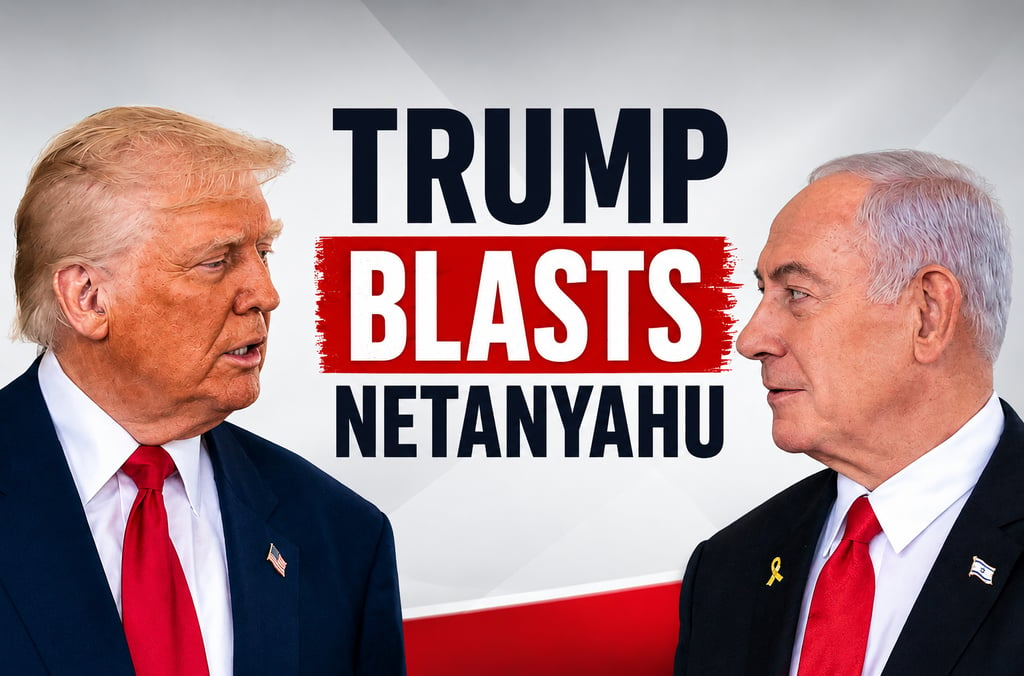
Trump’s Unusual Anger at Netanyahu: Have US-Israel Relations Entered a New Phase?
For decades, Benjamin Netanyahu has maintained a unique position in Israeli politics. His greatest political strength has not only been his long rule or his security policies, but also the perception that he possesses connections in Washington unlike any other Israeli leader. In particular, his close relationship with Donald Trump has often been viewed as one of Israel’s biggest diplomatic achievements. However, a leaked phone call that surfaced in June 2026 has shaken that entire image and raised serious questions about the future direction of US-Israel relations.
According to reports, President Donald Trump held an extremely tense conversation with Israeli Prime Minister Benjamin Netanyahu regarding the Lebanon situation, during which he reportedly described Netanyahu as “crazy.” Trump later publicly acknowledged that he was frustrated with Israeli policies. The significance of this incident goes far beyond a disagreement between two leaders. It has become a major signal regarding shifting power politics in the Middle East, the future of tensions involving Iran, Israel’s domestic political climate, and America’s evolving foreign policy priorities.
The roots of this dispute lie in the ongoing conflict surrounding Lebanon and Israel’s strategy against Hezbollah. Israel’s position remains clear: Hezbollah continues to represent one of the country’s greatest national security threats, and repeated attacks on northern Israel are viewed as proof that the organization’s military capabilities must be weakened permanently. Israeli leadership believes that maintaining military pressure is essential for long-term security.
On the other hand, the Trump administration is increasingly focused on securing a broader ceasefire and a diplomatic settlement across the region. Washington fears that renewed Israeli military operations in southern Beirut could push Lebanon into even deeper instability while simultaneously damaging ongoing diplomatic contacts with Iran and wider peace efforts across the Middle East. This disagreement over strategy appears to be the exact point where tensions between Trump and Netanyahu openly surfaced.
What makes this incident especially important is not only the harsh tone of the conversation but the fact that it became public. In previous decades, disagreements between American presidents and Israeli prime ministers have occurred many times. Barack Obama and Netanyahu experienced several periods of strained relations, while policy differences also appeared during the administrations of George Bush and other American leaders. However, such disputes were generally handled privately in order to protect the strategic image of unity between Washington and Jerusalem.
This time, the situation appears very different. Information from the phone call leaked into the media, and Trump himself later confirmed his frustration publicly. This created a powerful global impression that relations between Washington and Jerusalem are no longer operating with the same level of political coordination that existed before.
For Netanyahu, the timing of this controversy is especially dangerous because he is currently passing through one of the most sensitive political phases of his career. Recent political surveys suggest that his coalition government could face significant challenges in securing a strong majority in the next elections. Although military operations against Iran and Hezbollah still receive support from a large portion of the Israeli population, many Israelis are increasingly questioning whether the conflict has truly achieved all of its objectives.
At the beginning of the war, Netanyahu declared that Iran’s military capabilities would face severe damage, that Tehran’s nuclear ambitions would be significantly restricted, and that Hezbollah would become ineffective in southern Lebanon. However, current realities suggest that many of these objectives have not yet been fully achieved despite months of conflict and regional escalation.
This growing uncertainty has allowed the Israeli opposition to quickly transform the controversy into a political weapon. Opposition leader Yair Lapid accused Netanyahu of placing Israel in a position where it appears vulnerable to American pressure. According to Lapid, if Israel cannot independently determine its own military strategy, then serious questions emerge regarding national sovereignty and political independence.
Interestingly, criticism is not only coming from the opposition. Some hardline allies within Netanyahu’s own coalition government have also reportedly expressed frustration over the level of American influence on Israeli military decision-making. This reflects a broader debate inside Israel regarding how much strategic dependence on Washington is acceptable during a period of regional conflict.
Behind this entire dispute lies another important reality: America’s changing priorities in the Middle East. Although Trump strongly supported Israel during military operations involving Iran, his political focus now appears increasingly centered on ending conflicts rather than expanding them further. American voters, particularly Trump’s “America First” supporters, have little interest in another prolonged and expensive war in the Middle East.
After the experiences of Iraq and Afghanistan, many Americans have become exhausted by long foreign conflicts that consume massive political and economic resources. Trump understands that if he wants to maintain political momentum in the 2026 environment, he must present himself as a leader who prevents wars from growing instead of allowing them to expand uncontrollably.
This explains why his administration is placing greater emphasis on ceasefires, diplomacy, and negotiated settlements involving Lebanon, Iran, and other regional disputes. Washington increasingly appears interested in containing instability rather than deepening military confrontation.
Another important dimension of this crisis involves the ongoing diplomatic contacts with Iran. Israel is reportedly not directly participating in these negotiations. According to various reports, multiple mediators, including Pakistan, are playing communication roles between Washington and Tehran while Israel remains outside the direct negotiating process.
For Netanyahu, this situation is highly unusual and politically uncomfortable. Historically, Israel often maintained a highly visible role in major American strategic decisions involving the Middle East. The possibility that Washington and Tehran could eventually reach some form of understanding without Israel’s direct involvement has created concern within many Israeli political and security circles.
There is growing fear that if a diplomatic agreement eventually emerges between the United States and Iran, Israel may be forced to accept outcomes that do not fully align with its own strategic preferences regarding regional security and Iran’s long-term influence.
Trump’s recent behavior also reveals another political reality. Although he remains widely viewed as one of Israel’s strongest supporters in modern American politics and has repeatedly praised Netanyahu publicly over the years, he also wants to demonstrate that American foreign policy decisions are ultimately made in Washington, not elsewhere.
Because of this, some American critics now argue that Trump is attempting to balance strong support for Israel with a broader message that the United States will not allow any foreign ally to dictate American strategic priorities. At the same time, many Israelis also do not want their country to appear dependent on American approval for every major military or political decision.
The central question now is no longer whether disagreements exist between Trump and Netanyahu. The real issue is how deeply these disagreements could affect diplomacy, regional stability, and domestic politics over the coming months.
If the United States succeeds in securing a significant agreement related to Iran or Lebanon, Trump could attempt to present himself internationally as a leader capable of reducing conflict and delivering diplomatic results. However, if Israeli voters begin to believe that Netanyahu failed to fully achieve his wartime objectives because of American pressure, it could seriously weaken his political standing before future elections.
Ultimately, this entire episode reveals a deeper truth about the current state of US-Israel relations. Military cooperation remains active, intelligence coordination continues, and both countries still view each other as critical strategic allies. However, for the first time in years, it is becoming openly visible that Trump and Netanyahu are not completely aligned on every major regional issue.
On one side, Trump increasingly appears focused on reducing wars, stabilizing the region, and achieving diplomatic progress that can strengthen his broader political image. On the other side, Netanyahu continues to believe that maintaining maximum pressure on Iran and Hezbollah remains essential for Israel’s long-term security.
This growing strategic difference may shape not only the future of relations between the United States and Israel but also the wider political direction of the Middle East itself. In the future, historians may remember this leaked phone call not simply as a diplomatic disagreement, but as the moment when America and Israel entered a more complex and uncertain phase in their long-standing alliance.
Stay informed with the latest national and international news.
© 2026. All rights reserved.