
Trump’s Venezuela Oil Plan Angers China, Sends Global Oil Prices Lower
Trump’s plan to take Venezuelan oil sparks China’s anger, pushes global oil prices down, and reshapes energy geopolitics in 2026.
Raja Awais Ali
1/7/20263 min read
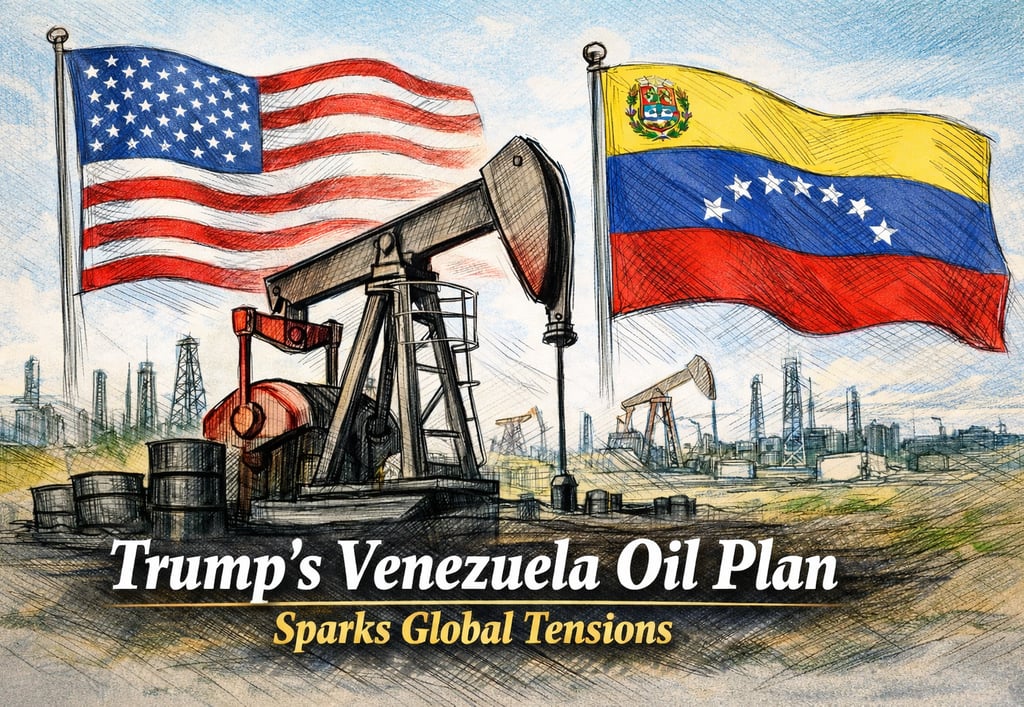
Trump’s Plan to Take Venezuelan Oil Sparks China’s Anger, Pushes Global Oil Prices Down
Global energy markets and international diplomacy were shaken on 7 January 2026 after U.S. President Donald Trump announced a controversial plan involving the transfer of large volumes of Venezuelan crude oil to the United States. The move has triggered sharp criticism from China, intensified geopolitical tensions, and contributed to an immediate decline in global oil prices.
The announcement marks one of the most aggressive energy-driven foreign policy decisions of Trump’s current term, reinforcing his long-standing “America First” approach while challenging existing power dynamics in the global oil trade.
Venezuela’s Oil: A Strategic Global Asset
Venezuela holds the largest proven oil reserves in the world, surpassing even Saudi Arabia. Despite this vast potential, years of political instability, economic collapse, international sanctions, and declining infrastructure have crippled its oil production capacity.
For decades, Venezuela’s crude oil has been a strategic asset sought by major powers, particularly China, which has invested billions of dollars in Venezuelan energy projects and relied heavily on its oil supplies to fuel long-term industrial growth.
Trump’s new plan directly threatens this established relationship.
Trump’s Announcement: Oil Shipments to the U.S.
On 7 January 2026, President Trump confirmed that Venezuela would send between 30 and 50 million barrels of crude oil to the United States under a newly structured arrangement involving American oversight and energy companies.
According to U.S. officials, the oil would be sold at market prices, with revenues allegedly directed toward stabilizing Venezuela’s economy and funding humanitarian and infrastructure programs. Trump emphasized that U.S. energy firms would play a central role in managing production, logistics, and refinery operations.
“This deal strengthens American energy security and ensures that hostile powers do not control resources in our hemisphere,” Trump stated during a press briefing.
China’s Strong Reaction and Diplomatic Backlash
China reacted swiftly and angrily. Beijing accused Washington of violating Venezuela’s sovereignty and undermining international norms governing energy trade. Chinese officials warned that the U.S. was attempting to weaponize energy resources for geopolitical dominance.
For China, the plan represents a direct threat to its long-standing investments and oil supply agreements with Caracas. Analysts note that Venezuela has been a key pillar of China’s energy diversification strategy, particularly as Beijing seeks to reduce reliance on Middle Eastern suppliers.
China has hinted that it may respond by deepening energy cooperation with Russia, Iran, and Central Asian states, potentially accelerating a shift away from U.S.-influenced markets.
Oil Prices Slide Amid Oversupply Fears
Financial markets reacted almost immediately. Global oil prices fell by nearly 1% following Trump’s announcement, as traders anticipated an increase in crude supply entering the international market.
Brent crude and U.S. West Texas Intermediate both recorded losses, reflecting investor concerns that additional Venezuelan oil could flood an already fragile market. The price drop comes at a sensitive time, with OPEC+ members struggling to balance production cuts against weakening global demand.
Energy analysts say even the expectation of increased supply is often enough to drive prices down — a pattern clearly visible after Trump’s statement.
Strategic Motives Behind the U.S. Move
While the White House has framed the deal as an economic and humanitarian initiative, geopolitical motives are impossible to ignore. Experts believe the plan is aimed at:
Reducing China’s influence in Latin America
Strengthening U.S. control over Western Hemisphere energy resources
Reasserting American dominance in global oil markets
Gaining leverage in broader U.S.–China strategic competition
Trump has repeatedly emphasized that the U.S. will not allow rival powers to “exploit” regional resources at America’s expense.
Impact Inside Venezuela
Inside Venezuela, reactions have been deeply divided. The government has welcomed the prospect of increased oil revenues and renewed infrastructure investment. However, opposition groups and civil society organizations have raised serious concerns about sovereignty, transparency, and foreign control.
Protests have erupted in parts of Caracas, with demonstrators accusing the government of trading national resources for political survival. Critics warn that foreign management of oil assets could further weaken Venezuela’s independence.
Global Political Implications
The fallout from Trump’s plan extends far beyond energy markets. Relations between Washington and Beijing are expected to deteriorate further, adding pressure to already strained ties over trade, technology, and security issues.
Russia and Iran have voiced support for China’s criticism, framing the U.S. move as another example of unilateral power politics. Diplomatic observers fear the situation could evolve into a broader confrontation over resource control and global influence.
Conclusion
President Trump’s plan to redirect Venezuelan oil to the United States has reshaped the global energy conversation overnight. It has angered China, unsettled markets, and intensified geopolitical rivalry at a time when the world economy remains fragile.
Whether the strategy delivers long-term benefits for the U.S. or deepens global instability remains uncertain. What is clear is that oil, once again, has proven to be far more than a commodity — it is a powerful instrument of global politics.
Stay informed with the latest national and international news.
© 2026. All rights reserved.