
Trump Urges Iranians to Keep Protesting as Death Toll Rises, Says Help Is on the Way
Donald Trump urges Iranians to continue protests as unrest deepens, with thousands reportedly killed and global concern mounting over Iran’s crisis.
Raja Awais Ali
1/13/20263 min read
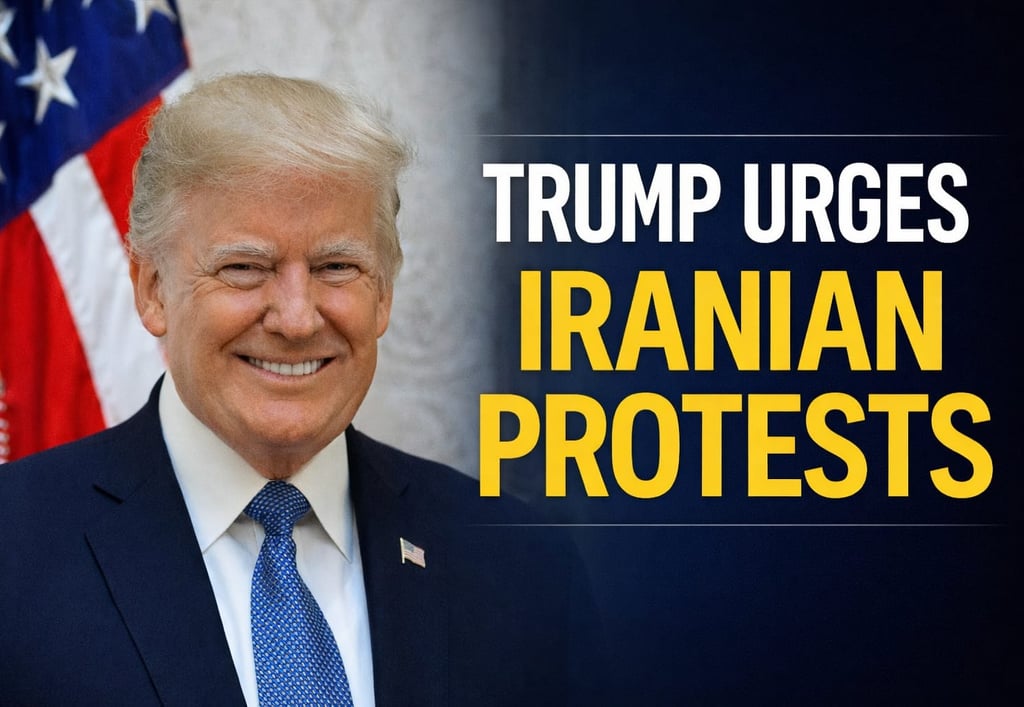
Trump Urges Iranians to Keep Protesting, Says “Help Is on the Way”
US President Donald Trump has urged the Iranian people to continue their nationwide protests, declaring that “help is on the way,” as unrest across Iran enters a critical phase. Trump’s statement, issued on 13 January 2026, comes amid one of the most severe internal crises Iran has faced in years, marked by widespread demonstrations, a heavy security crackdown, and rising international concern over the growing death toll.
Protests erupted across Iran in late December 2025 following a sharp deterioration in economic conditions. Skyrocketing inflation, high unemployment, shortages of essential goods, and the continued collapse of the Iranian rial triggered public anger in major cities, which quickly spread to smaller towns and rural areas. What began as economic demonstrations soon evolved into broader protests against governance, corruption, and restrictions on political freedoms.
In a message posted on his social media platform, Trump directly addressed the Iranian public, encouraging them to remain steadfast. He praised protesters for what he described as their “historic struggle for freedom” and announced that he had cancelled all planned engagements with Iranian officials until violence against demonstrators stops. His most striking line — “Help is on the way” — drew immediate global attention, though he did not specify the form that assistance might take.
The human cost of the unrest has become a central issue in international reporting. According to Iranian officials, around 2,000 people have been killed during clashes between protesters and security forces. Human rights organizations, however, present varying estimates, suggesting the death toll could range from 500 to more than 6,000, depending on the source and level of access to information. These discrepancies are largely due to widespread internet shutdowns, restrictions on journalists, and limited independent verification inside the country. Rights groups also report that more than 10,000 people have been arrested, including activists, students, and journalists.
Trump’s remarks have intensified debate over US policy toward Iran. His allies argue that vocal support for protesters sends a strong message against authoritarian repression. Critics, however, warn that such statements could escalate tensions and give Iranian authorities justification to label the protests as foreign-backed interference. Tehran has firmly rejected Trump’s comments, accusing the United States of attempting to destabilize the country and warning that any external intervention would be met with a strong response.
At the same time, Washington has increased economic pressure on Iran. US officials have confirmed additional trade restrictions targeting countries that continue commercial dealings with Tehran. The White House maintains that these measures are intended to pressure Iranian authorities into halting violent crackdowns, not to punish ordinary citizens already suffering from economic hardship.
The international community has reacted with growing alarm. The United Nations, the European Union, and multiple human rights organizations have called on Iran to respect the right to peaceful assembly and to avoid the use of lethal force. Several governments have also urged restraint from all sides, emphasizing the need for a diplomatic solution rather than further escalation.
Inside Iran, the situation remains volatile. Security forces continue to patrol major urban centers, while communication blackouts make it difficult to assess the full scale of ongoing demonstrations. State media portrays the unrest as a foreign conspiracy, while opposition voices insist the protests are driven by genuine public frustration after years of economic decline and political repression.
In summary, Trump’s call for Iranians to keep protesting has added a new international dimension to an already fragile situation. With thousands reportedly dead, thousands more detained, and no clear path to de-escalation, Iran stands at a crossroads. Whether external pressure will ease the crisis or deepen it remains uncertain, but the events unfolding in January 2026 are already shaping the future of Iran’s domestic politics and its relations with the wider world.
Stay informed with the latest national and international news.
© 2026. All rights reserved.