
Trump Tells Norway He No Longer Feels Bound to Think Only of Peace
Donald Trump tells Norway he no longer feels obligated to think only of peace, signaling a major shift in U.S. foreign policy on Jan 19, 2026.
Raja Awais Ali
1/19/20262 min read
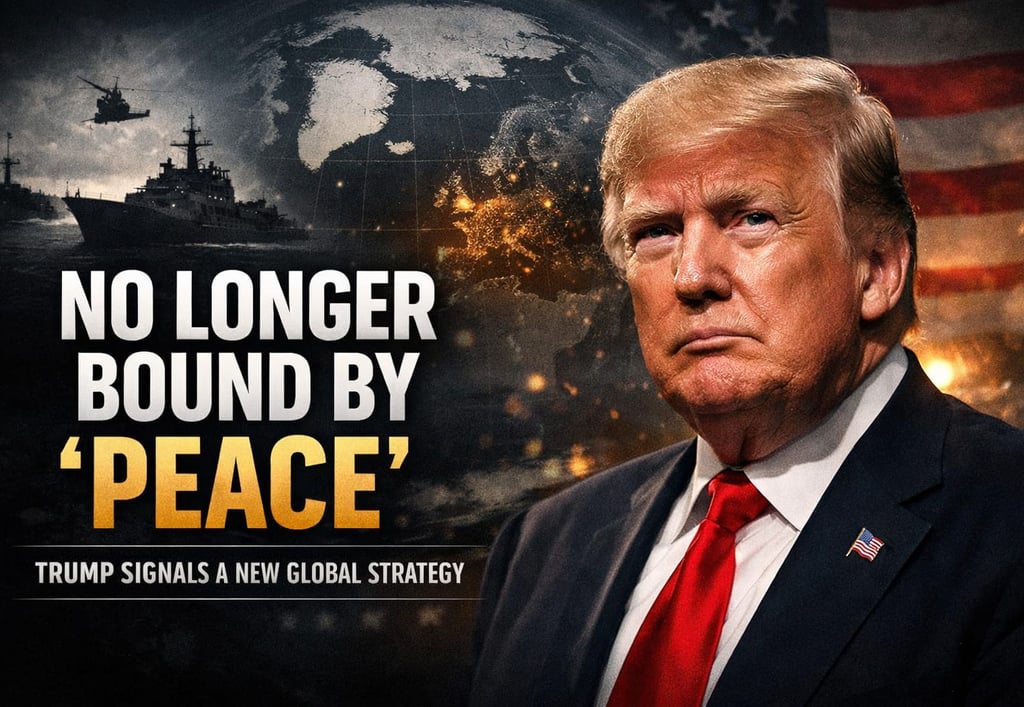
Trump Tells Norway He No Longer Feels Bound to Think Only of Peace, Signaling a Shift in Global Policy
On 19 January 2026, U.S. President Donald Trump made a striking and controversial statement to Norway, declaring that he no longer feels obligated to think only in terms of peace. The message, delivered through a formal communication to Norwegian leadership, has triggered widespread international debate and raised serious questions about the future direction of U.S. foreign policy.
Trump’s remarks are being viewed as a significant departure from traditional diplomatic language. While emphasizing that peace remains important, he made it clear that global realities now demand a broader and tougher strategic approach. According to Trump, changing geopolitical conditions, growing security threats, and rising global competition mean that focusing solely on peace is no longer practical or sufficient.
The statement carries particular weight because Norway is closely associated with peace diplomacy, most notably through the Nobel Peace Prize. Trump has long argued that his role in reducing international conflicts and preventing wars was not properly recognized. Although he did not directly mention the Nobel Committee in detail, his message strongly reflected frustration over what he sees as a lack of acknowledgment for America’s diplomatic efforts under his leadership.
Trump stressed that future decisions must prioritize U.S. national interests, security, and strategic dominance, even if those decisions are perceived as aggressive by allies or rivals. He argued that maintaining global stability sometimes requires strength rather than restraint, and that weakness can invite greater conflict.
A key element of Trump’s broader thinking relates to strategic territories and global power balance. He highlighted the importance of regions such as the Arctic, including Greenland, describing them as vital to future security and geopolitical control. Trump has repeatedly warned that rival powers are expanding their influence in such regions, and he believes the United States must respond decisively to protect its interests.
European leaders have reacted with caution and concern. Several diplomats fear that Trump’s stance could increase tensions between the United States and its traditional allies, particularly within NATO. Critics argue that abandoning a peace-first narrative risks destabilizing diplomatic relationships and escalating conflicts. Supporters, however, say Trump is simply stating what many leaders privately believe: that peace without strength is unsustainable.
Political analysts note that this statement is not merely symbolic. It signals a possible shift toward a more assertive U.S. role on the global stage, where diplomacy is backed by economic pressure, military readiness, and strategic control of key regions. If implemented, such an approach could reshape alliances and redefine America’s engagement with both allies and adversaries.
In conclusion, Donald Trump’s message to Norway marks a defining moment in contemporary global politics. By openly stating that he no longer feels bound to think only of peace, Trump has reignited debate over the balance between diplomacy and power. As the world watches closely, this declaration may influence future international policies and push global relations into a more uncertain yet decisive era.
Stay informed with the latest national and international news.
© 2026. All rights reserved.