
Trump's Saudi Nuclear Deal Explained: Missing Safety Rules, Congress Vote and Global Concerns
Trump's Saudi nuclear deal explained in detail. Learn why missing nuclear safeguards, Congress review, IAEA oversight, and uranium enrichment are raising global concerns.
Raja Awais Ali
7/22/20265 min read
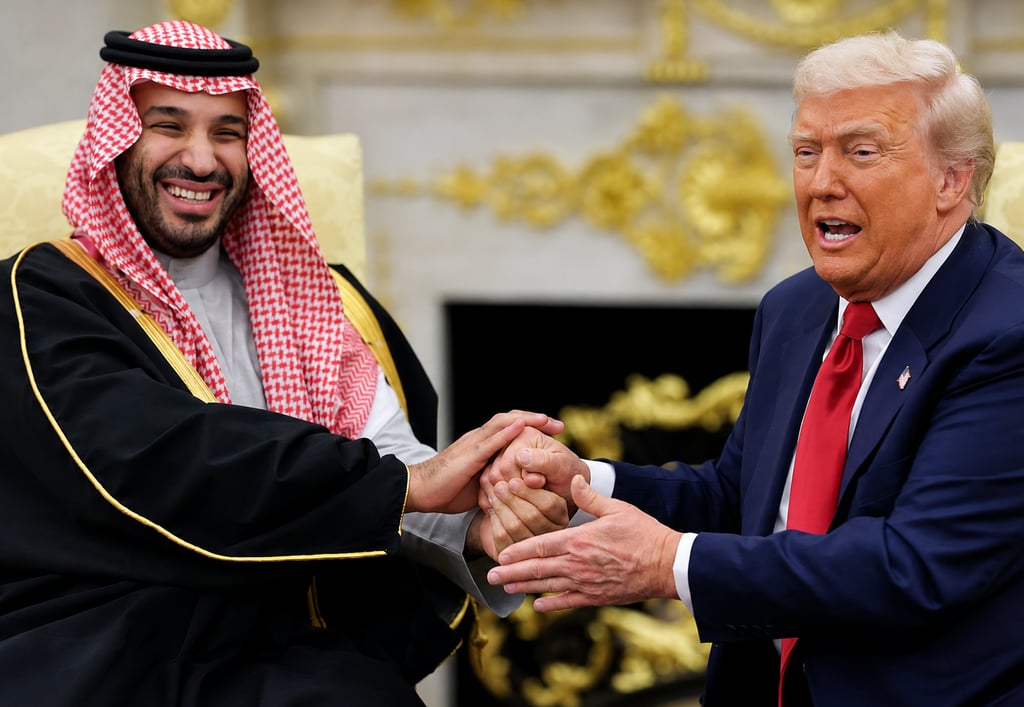
Trump's Saudi Nuclear Deal Explained: Why the Missing Safety Rules Are Raising Global Concerns
A new civil nuclear cooperation agreement between the United States and Saudi Arabia has become a major focus in international news. This interest goes beyond energy; it involves nuclear security, Middle East stability, global non-proliferation efforts, and U.S. foreign policy.
Recent reports say President Donald Trump's administration plans to submit a 123 Agreement to the U.S. Congress in the coming days. If approved, this pact would allow American entities to work with Saudi Arabia in building a modern civilian nuclear energy industry.
What has drawn significant attention is not just what the deal includes, but also what it lacks. Sources familiar with the proposal indicate that it omits two key safeguards the U.S. usually requires to prevent the spread of nuclear weapons.
This omission turns the proposal into a broader geopolitical issue that ties into nuclear oversight, regional security, U.S.-Saudi relations, Iran's influence, and global nuclear non-proliferation.
To grasp the importance of this agreement, it helps to know what a 123 Agreement entails.
The title comes from Section 123 of the U.S. Atomic Energy Act of 1954. U.S. law requires this type of agreement before any transfer of civilian nuclear technology, reactors, fuel, equipment, or technical expertise to other countries.
In practical terms, a 123 Agreement sets the legal groundwork for American firms and government agencies to join another country's civilian nuclear program.
If the deal is approved, it would allow Saudi Arabia to access American nuclear technology, engineering skills, reactor designs, technical assistance, and long-term investments. For years, Saudi Arabia has aimed to diversify its economy under Vision 2030, reduce its reliance on oil, and build a civilian nuclear energy sector to ensure future electricity supply.
The anticipated investment is valued at billions of dollars, making Saudi Arabia’s emerging nuclear industry a significant prospect for U.S. energy companies in the coming decades.
While the agreement officially focuses on peaceful nuclear cooperation, the missing safeguards are a major point of concern.
The first issue is commonly referred to as the "Gold Standard."
In past nuclear cooperation agreements, the U.S. has typically required partner nations to legally agree that they will not enrich uranium or reprocess spent nuclear fuel. These activities are sensitive, as they are necessary for some civilian operations but may also lead to materials suitable for nuclear weapons.
This promise is termed the Gold Standard since it represents a strong non-proliferation measure in U.S. nuclear agreements.
For example, the United Arab Emirates accepted this standard when it signed its 123 Agreement with Washington in 2009. That commitment helped boost international confidence in the UAE's peaceful nuclear program.
Sources familiar with the Saudi proposal suggest that the new agreement does not include this restriction.
In essence, Saudi Arabia would not legally give up its right to enrich uranium or reprocess spent fuel under the proposed deal. One source pointed out that while it lays a legal foundation for cooperation throughout the nuclear fuel cycle, it does not require the U.S. to provide uranium enrichment technology or related capabilities to Saudi Arabia.
The second major concern involves the lack of the International Atomic Energy Agency's (IAEA) Additional Protocol.
This protocol grants the IAEA wider inspection and verification powers than standard safeguards agreements.
With this protocol, inspectors may ask for more information, conduct deeper monitoring, and perform unannounced inspections, including at undisclosed locations if necessary. These measures are meant to ensure that civilian nuclear programs focus solely on peaceful purposes.
Sources indicate that the proposed U.S.-Saudi deal does not obligate Saudi Arabia to adopt this Additional Protocol.
This gap raises significant worries among arms control experts, former diplomats, and lawmakers. They argue that lacking both the Gold Standard and stronger IAEA oversight makes it harder to ensure that the civilian nuclear program will not shift to military uses.
The concern grows due to Saudi Arabia's longstanding stance on Iran.
Crown Prince Mohammed bin Salman has openly declared that if Iran obtains a nuclear weapon, Saudi Arabia will pursue one too.
In a 2018 CBS interview, the Crown Prince stated that while Saudi Arabia doesn't want a nuclear bomb, if Iran developed one, the Kingdom would follow suit "as soon as possible."
This position still plays a role in today's discussions in Washington, highlighting the strategic competition between Saudi Arabia and Iran.
Saudi Arabia has consistently affirmed its desire to keep its right to enrich uranium, especially since the Kingdom has domestic uranium resources it plans to develop.
These viewpoints escalate the apprehensions among lawmakers and non-proliferation experts who fear easing existing safeguards could spur a regional nuclear arms race amid rising geopolitical tensions.
However, the Trump administration counters with a different perspective.
Supporters of the agreement argue that if the U.S. declines to cooperate with Saudi Arabia, the Kingdom might turn to countries like China or Russia for nuclear technology.
In this view, retaining leadership in Saudi Arabia's civilian nuclear sector would maintain American strategic influence while yielding significant economic benefits for U.S. firms.
U.S. Energy Secretary Chris Wright has suggested that the preliminary agreement was not meant to transfer uranium enrichment technology and that it meets the non-proliferation requirements set by U.S. Atomic Energy law.
Still, sources familiar with the latest draft indicate that the final agreement seems more flexible than previous U.S. nuclear cooperation agreements.
The next step is Congress.
Once a 123 Agreement is officially presented, Congress has around 90 days of continuous legislative session to review it.
During this time, lawmakers can debate the deal, raise concerns, ask for added safeguards, or try to block it.
If Congress opts to reject the agreement, it must pass a joint resolution. However, if the President vetoes that resolution, lawmakers wouldneed a two-thirds majority in both the House and Senate to override it, a challenging threshold to reach.
Because of this, analysts believe that while the deal may face intense debate, stopping it entirely might be difficult.
The political discussion is becoming more intriguing since U.S. Secretary of State Marco Rubio, previously a Senator, argued that any nuclear deal with Saudi Arabia should have strict non-proliferation safeguards.
His current role in the Trump administration is under scrutiny as Congress prepares to review the agreement.
Economically, the proposed deal could yield billions in contracts for nuclear reactors, engineering services, infrastructure, fuel supply, technology transfer, and ongoing support for American companies.
This helps explain why many within the U.S. energy sector see the deal as a tremendous commercial prospect.
Yet the wider international discussion goes beyond economic interests.
Critics wonder if the U.S. is relaxing long-standing nuclear non-proliferation policies for strategic and commercial gains.
Others question whether allowing Saudi Arabia more leeway without the usual safeguards could lead other American allies to seek similar deals in future nuclear agreements.
Experts warn that such developments could gradually undermine the global nuclear non-proliferation framework built over several decades.
These concerns extend far beyond Washington and Riyadh.
The Middle East remains a strategically sensitive region. Any change in nuclear policy there could affect international security, diplomatic relations, regional stability, global energy markets, and future power dynamics.
As the agreement reaches Congress soon, lawmakers will not just be reviewing another international energy partnership.
They will be deciding on a proposal that could shape U.S. nuclear policy, Saudi Arabia’s nuclear aspirations, regional stability, and the future of the global non-proliferation system for years to come.
For this reason, governments, security experts, investors, and observers worldwide will closely watch Washington as this important discussion unfolds.
Stay informed with the latest national and international news.
© 2026. All rights reserved.