
Trump Orders National Guard Withdrawal From Chicago, LA, and Portland | January 2026
Donald Trump announces removal of National Guard troops from Chicago, Los Angeles, and Portland amid legal challenges and security debate.
Raja Awais Ali
1/1/20262 min read
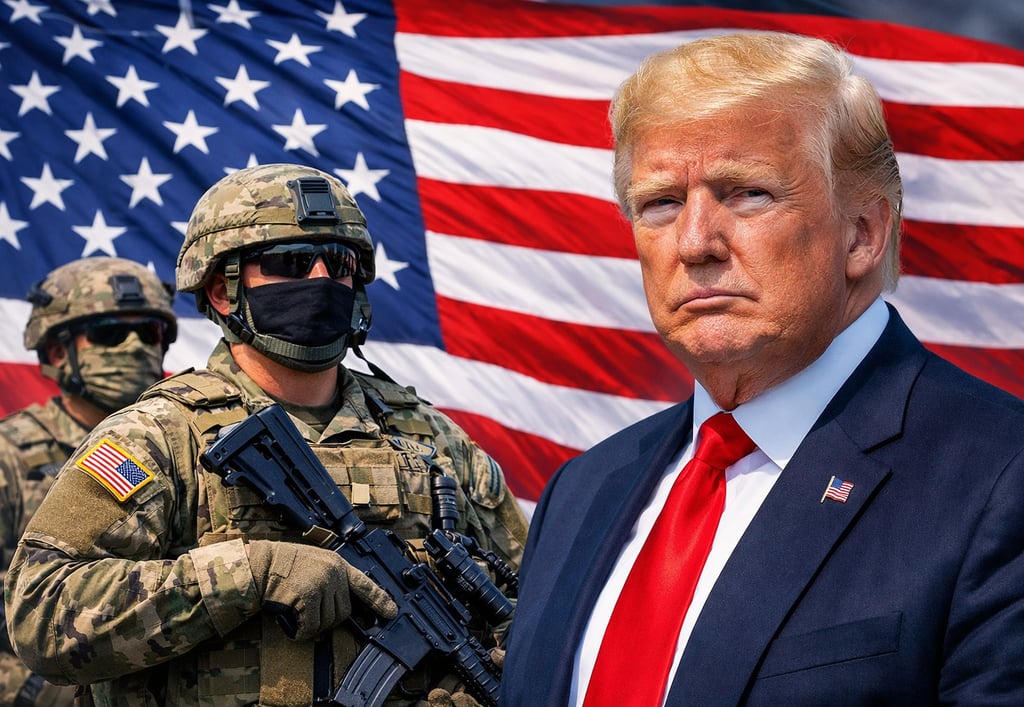
Trump Announces Removal of National Guard From Chicago, Los Angeles, and Portland
Washington | January 1, 2026 — U.S. President Donald Trump has announced that National Guard troops are being withdrawn from the major cities of Chicago, Los Angeles, and Portland, a decision that has reignited debate over federal authority, public safety, and the limits of military involvement in domestic law enforcement.
In a public statement, Trump said the National Guard deployment had played a key role in reducing crime levels in the affected cities. However, he acknowledged that recent legal and judicial developments have made it difficult for the federal government to maintain the presence of Guard units in these areas. According to Trump, the decision to remove the troops is not an admission of failure but a move driven by legal obligations and court rulings.
Trump emphasized that during the deployment period, crime indicators showed improvement, which he credited to a tougher federal stance on law and order. He argued that the National Guard helped restore stability at a time when local authorities were struggling to manage rising unrest and criminal activity. Despite these claims, legal challenges from state governments and civil rights groups questioned the legality of prolonged federal involvement without the consent of state leadership.
Courts ultimately ruled that the authority to deploy National Guard forces primarily lies with state governors, except under exceptional circumstances defined by law. These rulings placed restrictions on federal actions, leading to the gradual withdrawal of troops from the three cities. State officials welcomed the decision, asserting that public safety should remain under local and state jurisdiction rather than federal command.
At the same time, Trump issued a warning that the federal government could intervene again if crime rates rise sharply. He stated that if local administrations fail to maintain order, federal authorities may return “in a stronger and different form.” This comment has drawn mixed reactions across the political spectrum, with supporters praising his firm stance on security, while critics accuse him of using fear and force as political tools.
Chicago, Los Angeles, and Portland have all experienced periods of social unrest, protests, and heightened tensions in recent years. With the National Guard now withdrawn, responsibility for maintaining law and order rests entirely with local police departments and state authorities. Security analysts note that the coming months will be crucial in determining whether these cities can manage public safety independently without federal assistance.
Overall, Trump’s announcement highlights the ongoing struggle between federal power and state autonomy in the United States. As 2026 begins, the issue remains a significant political and legal flashpoint, raising broader questions about constitutional limits, public safety strategies, and the future role of federal forces in domestic affairs.
Stay informed with the latest national and international news.
© 2026. All rights reserved.