
Trump Pushes Forward With Iran War Despite Midterm Election Risks | Deep Analysis – March 2, 2026
President Donald Trump advances Iran war plans despite warnings of political fallout ahead of 2026 U.S. midterm elections. Full in-depth analysis.
Raja Awais Ali
3/2/20263 min read
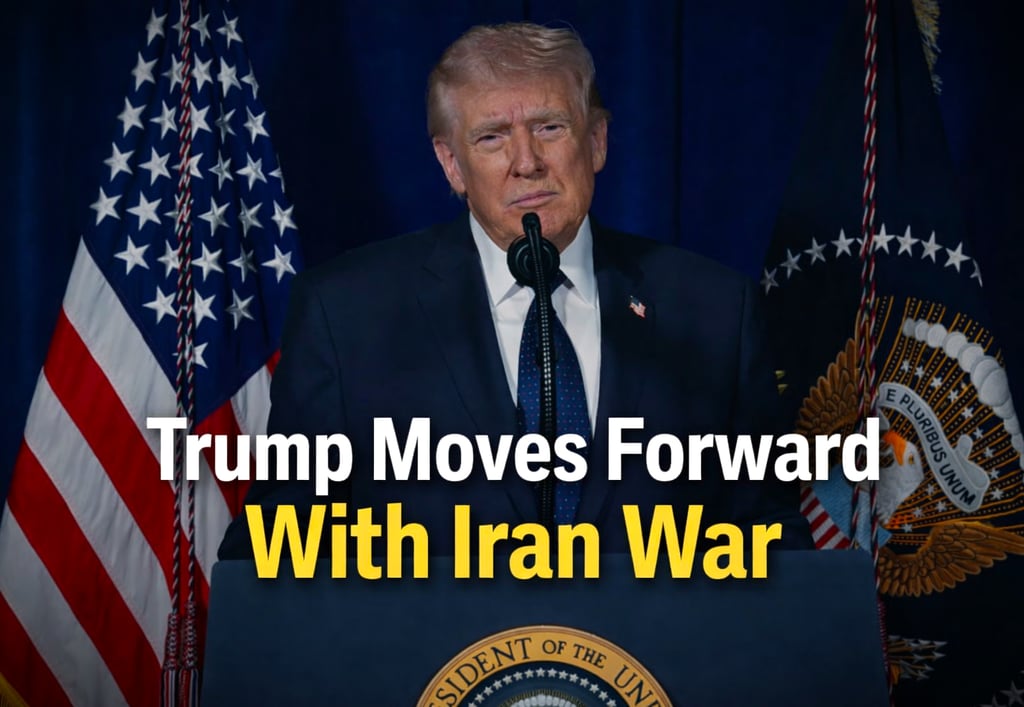
Trump Presses Ahead With Iran War Despite Political Risks — Midterm Elections, Global Fallout, and U.S. Power Politics Explained (March 2, 2026)
U.S. President Donald Trump has entered one of the most controversial and politically sensitive phases of his presidency as he continues to push forward with military action against Iran, despite growing warnings that the conflict could severely damage Republican prospects in the 2026 U.S. midterm elections. The decision has intensified debate not only within Washington but across the global political and economic landscape.
The Trump administration argues that the confrontation with Iran is a matter of national security, regional stability, and deterrence. According to official statements, recent U.S.-backed strikes were aimed at degrading Iran’s military infrastructure, missile networks, and command capabilities, which Washington believes pose a direct threat to American interests and allies in the Middle East. President Trump has framed the operation as a demonstration of strength, insisting that peace can only be achieved through decisive power rather than diplomatic hesitation.
However, critics inside the United States question whether the administration has a clear long-term strategy. Several lawmakers and defense analysts have expressed concern that while the initial military objectives may be defined, there is no transparent plan for managing the aftermath of escalation. The absence of congressional authorization has further fueled constitutional and political debates, with opponents warning that unilateral military decisions could set a dangerous precedent.
Public sentiment adds another layer of risk. Surveys and political assessments indicate that a significant portion of the American population is wary of another prolonged Middle Eastern conflict. After years of costly wars, many voters remain skeptical about foreign interventions, especially at a time when domestic economic pressures are mounting. Rising fuel prices, increased defense spending, and inflationary concerns have already placed strain on household budgets, making foreign military engagement a politically sensitive issue.
The timing of the conflict is particularly critical. With the 2026 midterm elections approaching, control of both chambers of Congress is at stake. Historically, U.S. presidents who preside over unpopular wars during election cycles often face voter backlash. Political strategists warn that independent and moderate voters — who frequently determine midterm outcomes — may shift away from the ruling party if they perceive the Iran conflict as unnecessary or poorly managed.
Within the Republican Party itself, divisions are becoming more visible. One faction supports Trump’s hard-line approach, viewing it as a reaffirmation of American dominance and leadership on the world stage. This group believes a strong national security stance can energize the party’s base. Another faction, however, fears that war fatigue among voters could erode support, particularly in swing districts where economic issues tend to outweigh foreign policy concerns.
Internationally, the situation has heightened tensions across the Middle East. Calls for restraint and de-escalation have emerged from multiple global actors, warning that continued confrontation could destabilize the region further. The conflict has already affected global energy markets, with volatility in oil prices reflecting fears of supply disruptions. These economic ripples extend beyond the region, impacting both developed and developing economies.
Iran’s response has added to the uncertainty. Tehran has signaled that it will not remain passive, emphasizing its right to defend itself and its interests. Increased activity by Iran-aligned groups across several regional fronts has raised concerns that the conflict could expand beyond direct U.S.-Iran engagement, potentially drawing in additional actors and complicating diplomatic solutions.
At the heart of the debate lies a fundamental political question: will President Trump’s aggressive stance strengthen his leadership image or accelerate political backlash? Supporters argue that projecting strength deters adversaries and reassures allies. Critics counter that prolonged conflict, rising costs, and unclear objectives could undermine public trust and weaken electoral prospects.
As the United States stands at the crossroads of war and domestic politics, the Iran conflict represents more than a military challenge — it is a strategic gamble with far-reaching consequences. The outcome will not only shape America’s role in the Middle East but also influence the balance of power in Washington after the 2026 midterm elections. Whether this gamble pays off or backfires remains one of the most consequential questions facing U.S. politics today.
Stay informed with the latest national and international news.
© 2026. All rights reserved.