
Trump Warns Iran: Nuclear Deal or Far Worse U.S. Attack
Trump warns Iran to accept a nuclear deal or face a far more severe U.S. attack. Full analysis of military moves, nuclear figures, and global impact.
Raja Awais Ali
1/28/20263 min read
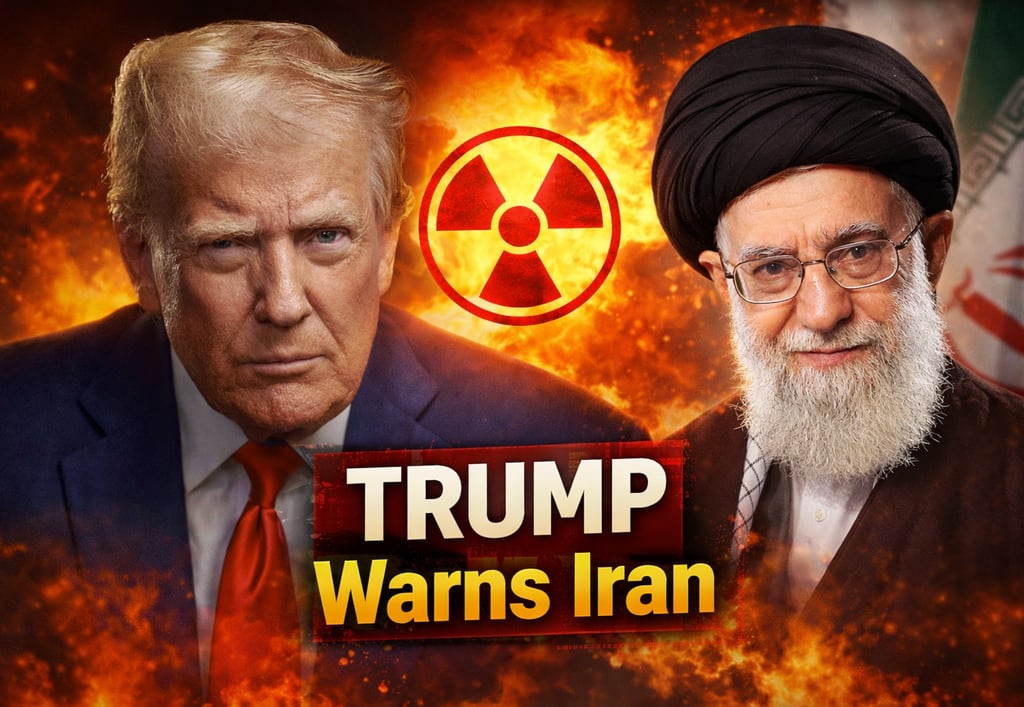
Trump Warns Iran: Make a Nuclear Deal or the Next Attack Will Be Far More Severe
Global political tensions escalated sharply on January 28, 2026, after U.S. President Donald Trump issued a stern and unprecedented warning to Iran, stating that failure to reach a nuclear agreement would result in a future American military strike “far worse” than any previous action. The statement comes at a highly sensitive moment, as the Middle East remains volatile amid rising military deployments and diplomatic deadlock.
Speaking through a public statement and social media messaging, President Trump described the warning as Iran’s “final opportunity” to abandon its nuclear ambitions and accept a new agreement with the United States. He emphasized that Washington prefers diplomacy but will not hesitate to use overwhelming force if Iran continues on its current path.
President Trump also confirmed that the United States has deployed a significantly expanded naval force to the region. According to U.S. defense officials, the deployment includes an aircraft carrier strike group, at least three guided-missile destroyers, and a cruise-missile submarine. The carrier alone is reported to be carrying more than 70 combat aircraft, supported by advanced missile defense systems and surveillance assets. The move is widely seen as a strategic show of strength aimed at pressuring Tehran back to the negotiating table.
In his remarks, Trump reiterated that the United States does not seek war but warned that previous limited military actions should not be underestimated. He stated that if Iran ignores the warning, any future operation would be broader in scope, faster in execution, and significantly more destructive. U.S. officials claim that American forces now possess the capability to deliver decisive results within hours if ordered to act.
At the center of Washington’s concern are Iran’s nuclear figures. International monitoring agencies estimate that Iran has enriched uranium up to 60 percent purity, far above the 3.67 percent limit set under the 2015 nuclear agreement. Reports further indicate that Iran’s enriched uranium stockpile has exceeded 4,000 kilograms, a level that experts say could drastically shorten the time required to produce weapons-grade material if enrichment continues.
Iran has responded sharply to the warning. Senior Iranian officials rejected negotiations under threat, stating that diplomacy cannot succeed in an environment of intimidation. Tehran maintains that its nuclear program is intended solely for peaceful purposes and insists that it will not compromise its sovereignty. Iranian authorities have also warned that any attack would trigger a firm and proportionate response against U.S. interests in the region.
The economic impact of the standoff is also significant. Since the re-imposition of U.S. sanctions in 2018, Iran is estimated to have lost more than $200 billion in oil revenue due to restricted exports. Despite the financial strain, Iranian leaders continue to resist U.S. demands, arguing that sanctions and military pressure have failed to achieve their objectives.
International reaction has been cautious but concerned. European governments, the United Nations, and several regional powers have urged both sides to exercise restraint and prioritize diplomacy. Analysts warn that a military conflict could disrupt nearly 20 million barrels of oil per day passing through critical shipping routes, potentially driving global oil prices up by 20 to 30 percent and intensifying inflation worldwide.
Political analysts suggest that President Trump’s hard-line rhetoric serves a dual purpose: increasing pressure on Iran while reinforcing U.S. deterrence on the global stage. However, many diplomats argue that sustainable stability can only be achieved through negotiations rather than threats.
In conclusion, President Trump’s warning marks a decisive moment in U.S.–Iran relations. With rising military readiness, alarming nuclear figures, and severe economic implications, the coming days will be critical. Whether diplomacy prevails or the world moves closer to another major conflict will depend on the decisions taken by both Washington and Tehran in the immediate future.
Stay informed with the latest national and international news.
© 2026. All rights reserved.