
Donald Trump’s Greenland Strategy: Analysis of Controversy and Global Impact 2026
Explore Donald Trump’s renewed Greenland push, international reactions, and geopolitical stakes in this 11 January 2026 detailed report.
Raja Awais Ali
1/11/20262 min read
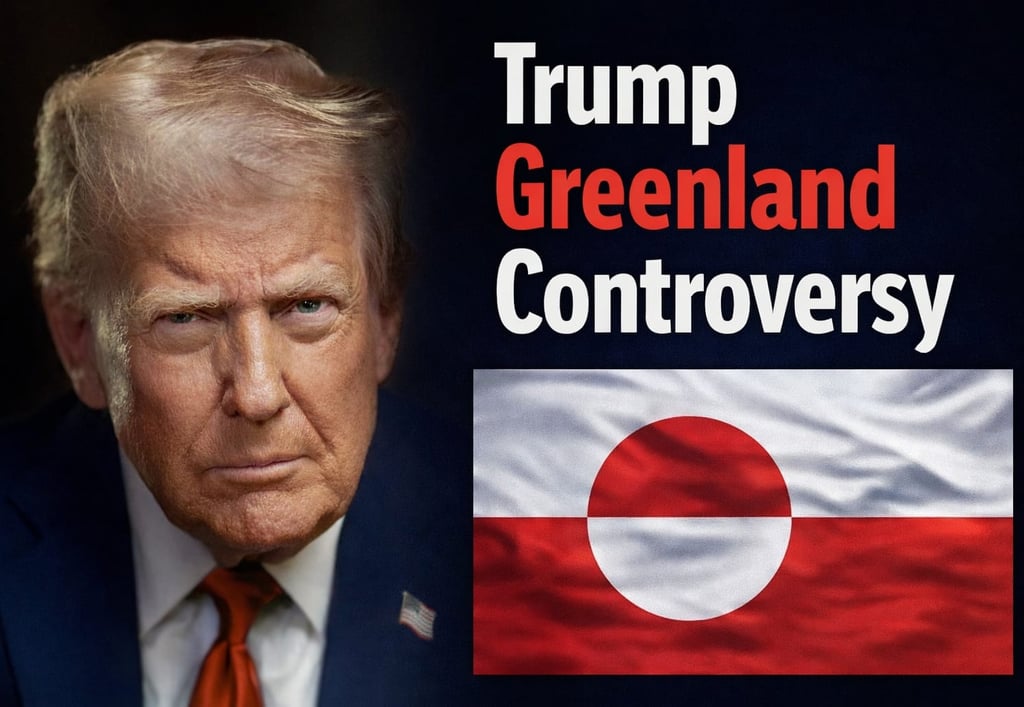
Donald Trump and Greenland: Full Analysis and Detailed Report (11 January 2026)
As of 11 January 2026, global attention has turned to one of the most unusual and controversial geopolitical debates in recent history — U.S. President Donald Trump’s renewed interest in Greenland, the world’s largest Arctic territory. Trump’s statements and plans have reignited discussion that was once largely dismissed, placing Greenland at the center of global headlines.
Why Greenland Matters: Geography, Resources, and Strategy
Greenland, part of the Kingdom of Denmark, enjoys broad autonomy and has a population of approximately 57,000. Its strategic Arctic location makes it critical for global defense, shipping routes, and natural resources, particularly rare earth elements vital for technology and defense industries. Climate change has increased interest in the region as melting ice opens new sea routes and resource access.
Trump and his advisers have emphasized that U.S. involvement is necessary to prevent other powers, especially Russia or China, from gaining influence. They argue that failing to secure Greenland could create strategic vulnerabilities.
Trump’s Statements and U.S. Strategy
In January 2026, President Trump stated that the U.S. must focus on Greenland and indicated that action would follow “the easy way or the hard way.” Reports suggest that military options have been discussed or considered as contingency planning, alongside diplomatic or purchase strategies. No military action has been taken, and U.S. officials have described any operation as complex and highly risky.
Greenland’s Response: “We Don’t Want to Be Americans”
Greenland’s political leaders firmly rejected any transfer of sovereignty. In a joint statement, leaders of the five major parties said:
“We don’t want to be Americans… we want to remain Greenlanders.”
The Prime Minister emphasized that Greenland’s future should be determined by its citizens. A 2025 poll indicated that 85% of Greenlanders oppose joining the United States, highlighting strong local opposition.
Denmark and NATO: Allied Concerns
Denmark, responsible for Greenland’s foreign affairs and defense, rejected Trump’s proposals, stressing that any U.S. attempt to assert control would violate Greenland’s autonomy and Danish sovereignty. Danish officials have expressed willingness to engage in dialogue with the U.S., while European leaders warned that aggressive action could undermine NATO cohesion and international relations.
Nordic Rebuttal and Expert Analysis
Nordic officials challenged claims of Russian and Chinese military activity near Greenland, stating there is no evidence of significant presence. Analysts caution that Greenland is strategically important, but outright acquisition would violate international law and diplomatic norms. Critics have compared Trump’s approach to Cold War-era rhetoric, suggesting cooperative agreements are a more effective and lawful approach to Arctic security.
Natural Resources and Economic Importance
Greenland’s mineral wealth, including rare earth elements, is critical for technology, renewable energy, and defense sectors. However, harsh terrain, limited infrastructure, and environmental restrictions make large-scale exploitation challenging. While resources are strategically valuable, logistical and environmental obstacles render aggressive acquisition ambitions highly speculative.
Conclusion: A Geopolitical Flashpoint
As of 11 January 2026, the Greenland issue remains unresolved. Trump’s assertive rhetoric, Greenland’s steadfast opposition, Denmark’s defense of sovereignty, and global scrutiny have made Greenland a focal point of international politics.
Greenland is no longer just a distant Arctic island; it has become a strategic flashpoint, highlighting critical issues of sovereignty, resources, international law, and alliance dynamics. Whether this situation unfolds through negotiation or heightened tension could have long-term implications for the Arctic region and global diplomacy.
Stay informed with the latest national and international news.
© 2026. All rights reserved.