
Trump Halts Venezuelan Oil and Money to Cuba, Demands Deal — 11 January 2026 Breaking News
Trump orders total cutoff of Venezuelan oil and funds to Cuba, urging Havana to make a deal with the U.S. — latest verified update from Jan 11, 2026.
Raja Awais Ali
1/11/20262 min read
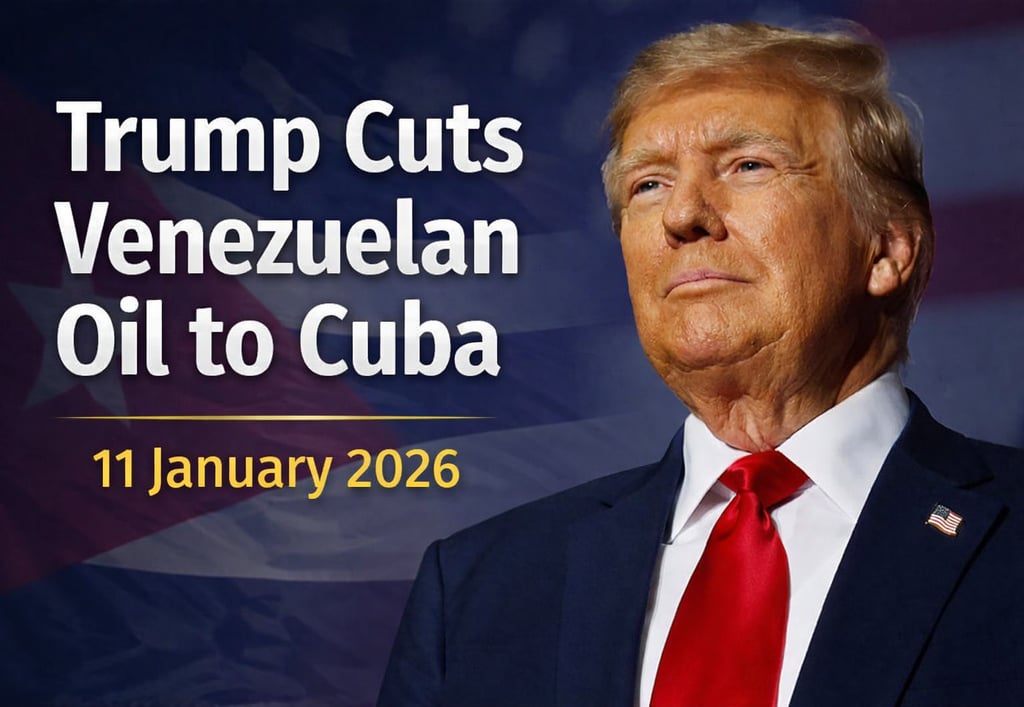
Trump Cuts Off Venezuelan Oil and Money to Cuba, Urges Deal With U.S. — A Major Geopolitical Shift (11 January 2026)
On 11 January 2026, U.S. President Donald Trump delivered a forceful message toward Cuba, declaring that Venezuelan oil shipments and financial support to the island nation will be completely stopped and urging Havana to negotiate a political or economic agreement with Washington “before it is too late.”
In a series of posts on his social media platform Truth Social, Trump insisted:
“THERE WILL BE NO MORE OIL OR MONEY GOING TO CUBA — ZERO! I strongly suggest they make a deal, BEFORE IT IS TOO LATE.”
This announcement marks a significant escalation in U.S. foreign policy toward Cuba and follows the recent U.S. operation in Venezuela, which resulted in the removal of President Nicolás Maduro — a longtime ally of Havana.
Background: Cuba’s Reliance on Venezuelan Oil
For years, Venezuela has been Cuba’s largest oil supplier, providing tens of thousands of barrels of crude oil per day — roughly half of Cuba’s daily oil needs — which helped sustain Cuba’s energy and economic stability. In exchange, Havana provided various forms of support to Caracas, including political backing and, according to U.S. statements, “security services.”
Since Maduro’s removal, the U.S. has blocked oil shipments to Cuba and redirected Venezuelan oil toward the United States. Analysts report that Cuba is now seeking alternative arrangements, potentially importing oil from Mexico, but the country faces ongoing energy shortages.
Trump’s Strategic Warning
Trump’s statement signals a new phase of American pressure on Cuba’s communist leadership. With oil supplies halted and financial aid ended, the Cuban economy is expected to face intensified strain. Trump called on Havana to negotiate a deal, though he did not specify the nature of that deal or the concessions expected.
Reports also indicate that Washington is negotiating with Caracas on a potential $2 billion oil supply deal for U.S. markets under U.S. supervision, further limiting Havana’s access to Venezuelan resources.
Cuban Reaction and Regional Implications
Havana has strongly rejected Trump’s ultimatum. Cuban officials said their country has the right to trade with willing partners and accused the U.S. of destabilizing actions that threaten regional peace and economic viability.
Analysts warn that without Venezuelan oil, Cuba’s energy shortages, already worsened by declining production, chronic shortages, inflation, and frequent blackouts, could deepen, potentially causing greater economic contraction and social unrest.
Strategic Shifts in Venezuela
The broader context involves the U.S. asserting control over Venezuelan oil resources following Maduro’s ouster. This realignment significantly reshapes geopolitical alliances in Latin America, disrupting the decades-long Cuba–Venezuela axis of energy and political cooperation.
What This Means Going Forward
Trump’s hardline stance officially ends Venezuelan oil and financial support to Cuba, placing Havana at a crossroads: negotiate with Washington under pressure or face deeper isolation and economic hardship. Analysts predict that energy shortages combined with diplomatic pressure could lead to internal instability in Cuba — a development with widespread implications for regional security and U.S.–Latin America relations.
The international community will closely watch Havana’s response in the coming days to see whether diplomatic breakthrough or intensified confrontation emerges.
Stay informed with the latest national and international news.
© 2026. All rights reserved.