
Trump Tightens Control Over 50,000 Federal Workers in Major 2026 Overhaul
President Donald Trump expands executive control over 50,000 federal workers in a landmark civil service overhaul announced February 5, 2026. Full details and impact analysis.
Raja Awais Ali
2/5/20263 min read
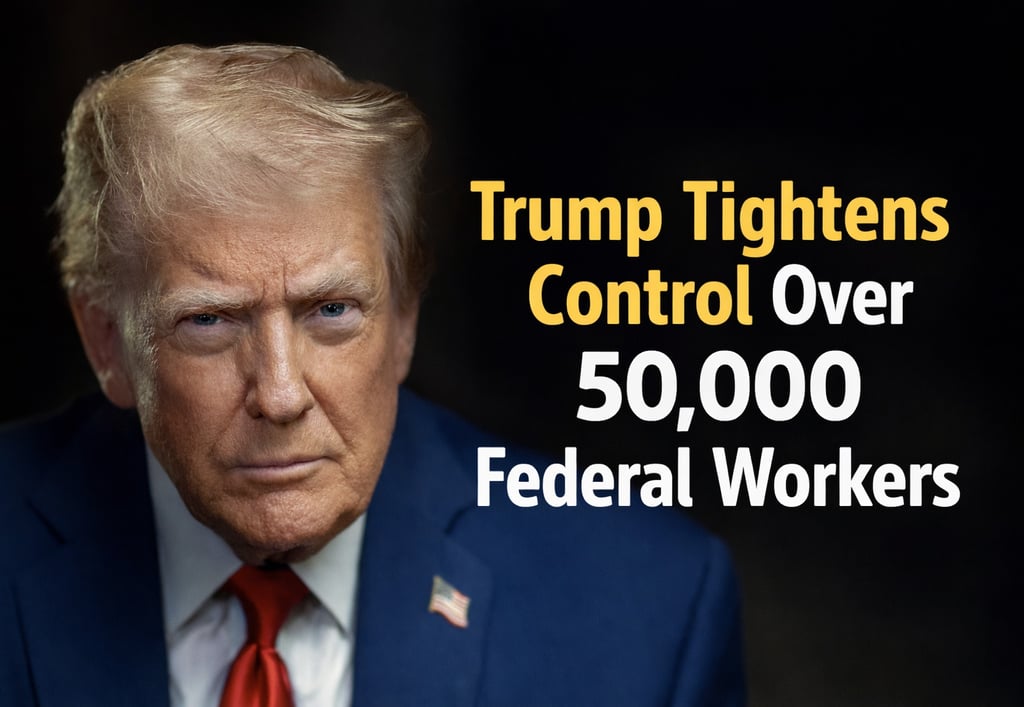
Trump Tightens Control Over 50,000 Federal Workers in Major Government Overhaul
The administration of U.S. President Donald Trump has implemented a significant and controversial reform within the federal government, strengthening presidential control over approximately 50,000 federal employees. Announced on February 5, 2026, the move is being described as one of the most far-reaching changes to the American civil service system in decades.
The decision has sparked intense debate across Washington, drawing reactions from policymakers, federal agencies, labor unions, and legal experts. Supporters see it as long-overdue reform, while critics warn it could undermine the independence of the federal workforce.
Who Are Federal Workers and Why Do They Matter?
Federal workers are employees of the U.S. federal government, serving across a wide range of departments and agencies including the Departments of Defense, Treasury, State, Health and Human Services, Education, Homeland Security, and environmental and regulatory bodies. Unlike state or local government employees, federal workers operate directly under national authority and play a critical role in implementing laws, managing public services, and advising policymakers.
Traditionally, federal employees—especially career civil servants—are protected by strong civil service rules. These protections are designed to ensure neutrality, allowing employees to provide professional advice and enforce laws without fear of political retaliation.
What Has Changed Under Trump’s New Policy?
Under the new rules issued by the Office of Personnel Management (OPM), thousands of federal positions linked to policy development, strategic planning, and advisory functions will be reclassified into a new employment category. Employees placed in this category will lose many of the long-standing job protections that previously made dismissal difficult.
This change allows the administration to remove, reassign, or replace affected employees more easily, significantly expanding presidential authority over key areas of government operations.
According to the Trump administration, the reform aims to make the federal government more efficient, responsive, and aligned with the elected president’s agenda.
Trump’s Justification for the Move
President Trump and his senior advisers argue that the federal bureaucracy has become too powerful and resistant to change. They claim that unelected officials have, at times, delayed or obstructed policies backed by voters, weakening democratic accountability.
By tightening control over policy-influencing roles, the administration believes it can ensure that government agencies execute decisions more quickly and effectively, without internal resistance.
Roots of the Policy: A Revival of “Schedule F”
The new framework closely resembles the controversial “Schedule F” policy introduced during Trump’s first term. That initiative sought to reclassify certain civil service positions to reduce employment protections. Although it was later revoked by a subsequent administration, Trump has now revived the concept with revised legal mechanisms and broader scope.
Backlash From Unions and Legal Experts
Federal employee unions and civil service advocates have sharply criticized the move, calling it a threat to the non-partisan nature of government institutions. They warn that employees may feel pressured to conform politically, discouraging honest assessments and professional dissent.
Legal scholars have also raised concerns that the policy could face constitutional challenges, arguing that civil service protections exist to prevent abuse of power and political purges within government agencies.
Potential Impact on U.S. Governance
The long-term effects of this decision could be substantial. On one hand, the White House may gain greater control over policy execution and faster implementation of reforms. On the other, reduced job security could lead to lower morale, loss of experienced personnel, and weakened institutional independence.
International observers are also watching closely, as U.S. federal agencies play a major role in global diplomacy, security, and economic regulation.
Conclusion
President Donald Trump’s move to tighten control over 50,000 federal workers marks a pivotal moment in U.S. administrative history. Supporters frame it as a necessary reform to restore accountability and efficiency, while opponents view it as a dangerous concentration of power.
As legal challenges loom and political debate intensifies, the future of America’s civil service system now stands at a crossroads—one that could reshape how the federal government functions for years to come.
Stay informed with the latest national and international news.
© 2026. All rights reserved.