
Trump’s AI Executive Order Faces Major Political and Legal Challenges
President Trump’s AI order meets strong political resistance and legal hurdles as states challenge federal overreach. Latest verified news from 12 December 2025.
Raja Awais Ali
12/12/20252 min read
Trump’s New AI Executive Order Faces Major Political and Legal Obstacles Across the U.S.
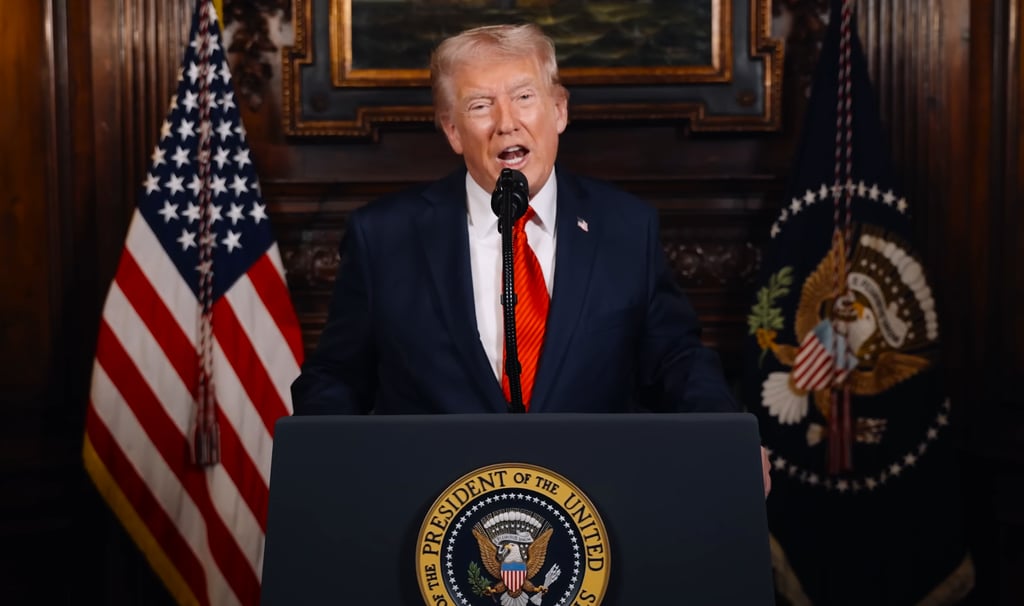
The United States has entered a new phase of political and legal confrontation after President Donald Trump signed a sweeping executive order aimed at creating a unified national regulatory framework for artificial intelligence. According to verified reports dated 12 December 2025, the order has triggered strong opposition from multiple states, political leaders, and legal experts, making it one of the most controversial technology directives of the Trump administration.
The executive order seeks to override state-level AI regulations and replace them with a single federal structure. President Trump argues that different AI rules in states like California, Colorado, Utah, and Texas are harming American innovation and slowing down the nation’s AI competitiveness — especially against global rivals such as China. As part of the order, the Department of Justice has been instructed to establish an AI Litigation Task Force, while the Department of Commerce has been tasked with reviewing and potentially limiting state AI laws.
However, the move has encountered immediate constitutional hurdles. States have asserted that Trump’s order infringes on their legislative authority. Many governors and attorneys general argue that the U.S. Constitution gives states the right to create their own regulations, and any attempt to nullify those laws without congressional action could be deemed unconstitutional. Legal scholars predict that the matter is likely to be challenged in federal courts and may ultimately reach the Supreme Court.
Politically, the order has sparked division not only between Republicans and Democrats but also within Trump’s own party. Several Republican leaders, including Florida Governor Ron DeSantis and Senator Josh Hawley, expressed concern that weakening state regulations may compromise consumer safety, child protection, algorithmic bias controls, and privacy safeguards. They argue that state laws play a critical role in protecting citizens from emerging AI risks.
On the other hand, major technology and AI companies strongly support Trump’s initiative. Tech industry leaders say that a patchwork of state rules increases compliance costs, slows product development, and discourages AI investment. A unified national policy, they argue, would give the U.S. a stronger and more predictable regulatory environment, helping the country maintain global leadership in artificial intelligence.
The Trump administration has also stated that it will work closely with Congress to develop comprehensive AI legislation in the future, aiming to establish a long-term federal strategy. Despite this effort, the executive order remains deeply controversial, raising fundamental questions about the balance of federal and state powers, the future of AI governance, and the political influence surrounding emerging technologies.
Overall, Trump’s new AI order is now at the center of a major national debate, facing strong legal challenges and intense political resistance. Whether the United States can move toward a unified AI policy — or whether the issue escalates into a prolonged constitutional battle — remains one of the most significant questions shaping America’s technological future.
Stay informed with the latest national and international news.
© 2026. All rights reserved.