
Tesla Full Self-Driving Controversy in Europe: Safety Claims, EU Approval Battle and Elon Musk’s Growing Problem
Tesla faces controversy in Europe after questions emerged over Full Self-Driving safety claims presented to regulators. Explore the EU approval battle, Elon Musk’s strategy, FSD crash data concerns, European investigations, and how Tesla’s autonomous driving future could be affected.
Raja Awais Ali
6/15/20264 min read
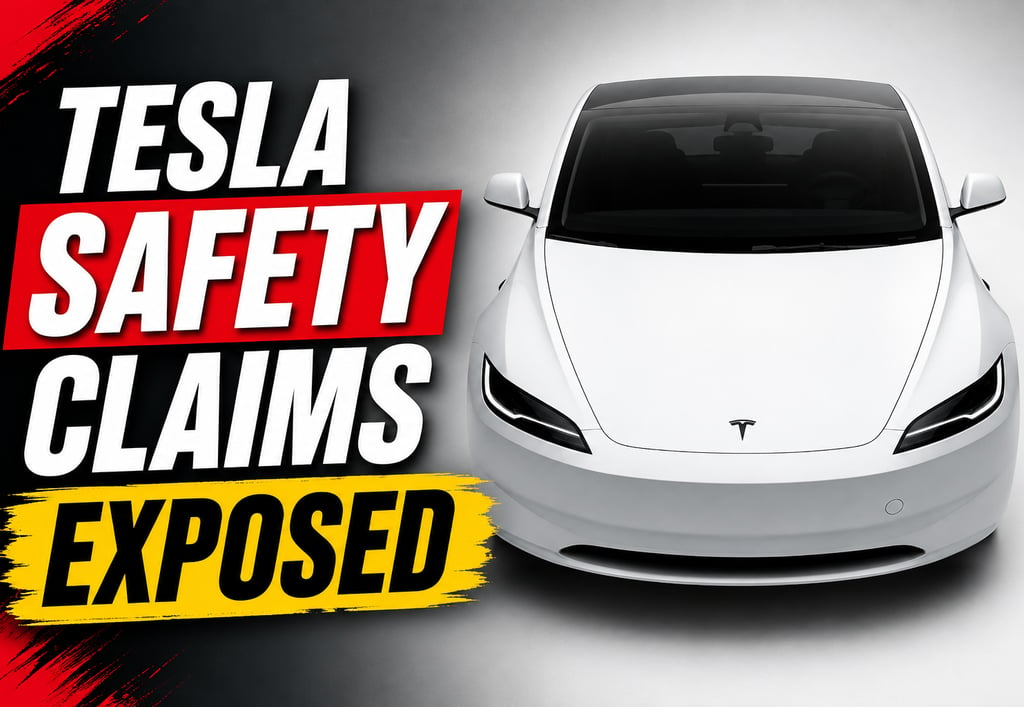
Tesla’s Full Self-Driving System Faces Major Questions in Europe as Safety Claims Come Under Scrutiny
Tesla is facing growing controversy in Europe after serious questions were raised about the safety claims connected to its “Full Self-Driving” (FSD) technology. The issue has quickly become one of the biggest debates surrounding autonomous driving, road safety, artificial intelligence in vehicles, and the future expansion plans of Elon Musk across European markets. European regulators are now under pressure to carefully examine whether Tesla’s safety statistics accurately reflect real-world driving conditions or whether the company exaggerated key figures while seeking wider approval for its self-driving system.
Tesla has repeatedly promoted its Full Self-Driving software as a technology capable of making roads significantly safer than traditional human driving. According to claims presented by the company, Tesla vehicles using FSD can travel much farther between crashes compared to average drivers in the United States. The company also suggested that widespread use of FSD could potentially save around 32,000 lives and prevent nearly 1.9 million injuries. These numbers were used to support Tesla’s argument that autonomous driving technology could dramatically reduce road accidents in the future.
However, traffic safety researchers and independent experts raised concerns that Tesla’s comparisons may have created a misleading impression of the system’s actual performance. One of the biggest criticisms focused on how the crash statistics were measured. Tesla reportedly counted only severe crashes involving airbag deployments when calculating accidents involving FSD-equipped vehicles, while the national U.S. crash statistics used for comparison included both major and minor accidents. Because of this difference, Tesla’s data appeared far safer than average driving conditions.
Researchers also pointed out another important issue involving vehicle age and safety technology. Tesla compared its modern vehicles equipped with advanced safety systems to the average vehicle operating in the United States, even though many cars on American roads are older models without newer safety features. Experts argued that this comparison naturally makes Tesla vehicles appear safer regardless of whether the Full Self-Driving software itself is responsible for reducing crashes.
The controversy intensified as Tesla continued efforts to gain approval for Full Self-Driving technology across Europe. In late 2024, Tesla reportedly began discussions with the Dutch road regulator RDW to start the approval process for FSD. During communications with regulators, Tesla claimed that increased use of Full Self-Driving technology could lead to safer roads and fewer traffic accidents. After more than a year of testing, evaluations, and discussions, Dutch authorities approved limited FSD use in the Netherlands in April 2026. The Dutch regulator is now working toward securing broader approval for Tesla’s system throughout the European Union.
Shortly after the Dutch approval, Tesla representatives reportedly contacted Swedish regulators and shared additional presentations supporting the company’s safety claims. The material repeated the argument that Tesla vehicles using FSD were significantly safer than average human drivers and highlighted projections suggesting thousands of lives could be saved if the technology became widely adopted. Critics, however, argued that these projections depended on unrealistic assumptions, including the idea that nearly all traditional vehicles could eventually be replaced by FSD-enabled Tesla cars and that every Tesla vehicle would consistently perform far better than other vehicles in all road conditions.
Swedish officials later stated that they do not rely only on headline safety figures when evaluating autonomous driving systems. Regulators emphasized that approval decisions involve broader technical evidence, road testing, and detailed assessments beyond company-produced statistics. This response indicated that European agencies are aware of the concerns surrounding self-reported data and are attempting to independently evaluate Tesla’s technology before making larger regulatory decisions.
Road safety organizations across Europe also expressed concern about the situation. Several experts argued that any major safety claims involving autonomous driving technology should be independently verified by universities or qualified researchers before being used to influence regulators or public opinion. Critics believe independent testing is necessary because self-driving systems directly affect public safety and could eventually influence millions of drivers worldwide.
The timing of the controversy is especially important for Tesla because the company is currently trying to strengthen its position in the European electric vehicle market. Over the past year, Tesla faced declining sales across parts of Europe as competition from Chinese EV manufacturers continued to grow. Lower-cost electric vehicles from China are becoming increasingly popular among European consumers, creating additional pressure on Tesla’s market share. At the same time, Elon Musk’s political controversies and public statements also contributed to criticism and protests in several European countries, further affecting Tesla’s brand image in the region.
For Tesla, Full Self-Driving approval represents more than just a software expansion. The company sees autonomous driving technology as one of its most important long-term business opportunities. If Tesla successfully secures approval across the European Union, the company could gain a major competitive advantage in the global self-driving industry and strengthen its position in the future transportation market. Wider FSD approval could also help Tesla attract customers looking for advanced driving technology as competition in the EV industry becomes more intense.
Under European Union rules, broader approval for Tesla’s Full Self-Driving system would require support from a majority of EU member states representing a large percentage of the bloc’s population. Some countries may also choose to approve the technology individually before a full EU-wide decision is reached. This means Tesla’s approval process could continue for months as regulators across Europe conduct additional reviews, tests, and policy discussions regarding autonomous driving safety standards.
The debate surrounding Tesla’s safety claims has also triggered wider questions about the future regulation of artificial intelligence in vehicles. Governments around the world are increasingly facing pressure to balance innovation with public safety as companies race to develop advanced autonomous driving systems. While supporters argue that self-driving technology could eventually reduce human error and lower accident rates, critics warn that exaggerated marketing claims or incomplete data could create dangerous misunderstandings about what these systems are truly capable of handling in real-world conditions.
The situation has now become a major test not only for Tesla but also for European regulators responsible for protecting public safety while supporting technological innovation. The final decisions surrounding Full Self-Driving approval could shape the future of autonomous vehicles across Europe and influence how regulators worldwide evaluate safety claims made by technology companies in the coming years.
As scrutiny grows around Tesla’s safety statistics, one central question continues to dominate the discussion: is Full Self-Driving genuinely safer than human drivers, or has the technology been promoted with claims that go beyond what current evidence can fully prove? The answer could determine the future of Tesla’s autonomous ambitions, the pace of self-driving adoption in Europe, and the level of trust consumers place in AI-powered transportation systems worldwide.
Stay informed with the latest national and international news.
© 2026. All rights reserved.