
Taiwan China Tensions 2026 Explained as Trump Delays New US Arms Deal
Taiwan and China tensions are rising in 2026 after Donald Trump delayed approval of a major US arms deal. Learn why Taiwan matters, how China is increasing military pressure, and what this crisis means for global security, trade, and the future of Asia.
Raja Awais Ali
5/16/20264 min read
Taiwan China Tensions 2026 Explained as Trump Delays New US Arms Deal
The growing tensions between Taiwan, China, and the United States are once again becoming one of the biggest global political and security issues of 2026. The situation became more serious after US President Donald Trump said he had not yet decided whether to approve a new weapons package for Taiwan. His comments created uncertainty in Asia and raised new questions about America’s long-term commitment to Taiwan’s defense.
Taiwan quickly responded by stressing that US military support is important not only for Taiwan’s security but also for maintaining peace and stability across the Indo-Pacific region. Taiwanese officials warned that China’s increasing military pressure is becoming the biggest threat to regional stability.
To understand why this issue matters so much, it is important to understand the history behind the Taiwan conflict. Taiwan is a self-governed democratic island located near the Chinese mainland. However, China considers Taiwan part of its own territory under the “One China” policy. The roots of the dispute go back to 1949, when the Chinese Civil War ended. After losing the war, the nationalist government moved to Taiwan while the Communist Party took control of mainland China. Since then, both sides have remained politically separated.
China has repeatedly said that Taiwan must eventually reunify with the mainland, and Beijing has never ruled out the use of military force to achieve that goal. Taiwan, on the other hand, considers itself a sovereign democratic government with its own political system, military, and economy. Most Taiwanese citizens support maintaining their current independent way of life rather than coming under Chinese control.
Although the United States does not officially recognize Taiwan as an independent country, Washington remains Taiwan’s most important international supporter. Under the Taiwan Relations Act, the US is legally required to help Taiwan maintain defensive capabilities. Because of this law, the US has supplied Taiwan with advanced military equipment for decades.
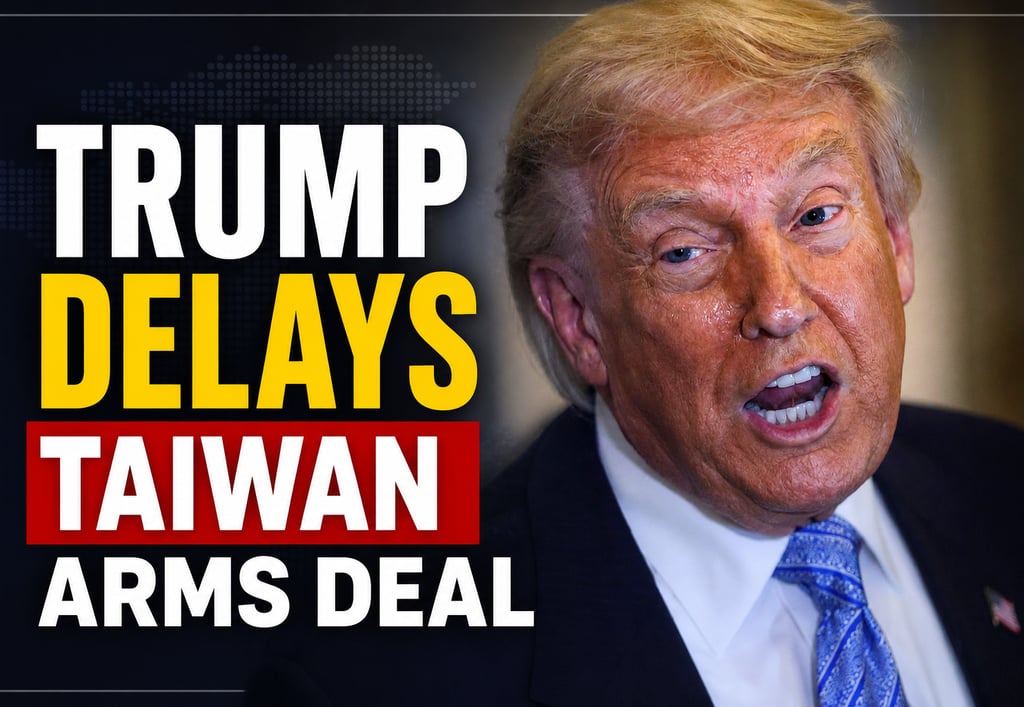
The latest controversy began after Trump met Chinese President Xi Jinping in Beijing. Following the meeting, Trump said he had not yet made a final decision regarding a major new arms sale package for Taiwan. His statement immediately sparked concern in Taipei because Taiwan depends heavily on US military support to counter growing Chinese military activity.
Taiwanese President Lai Ching-te and his government responded by emphasizing that US arms sales are essential for regional deterrence. According to Taiwanese officials, these weapons are not only meant to defend Taiwan but also to prevent larger military conflict in Asia.
China’s military pressure on Taiwan has increased significantly in recent years. Chinese fighter jets regularly enter Taiwan’s air defense identification zone, while Chinese naval ships continue operating near the island almost daily. Beijing has also increased military exercises around Taiwan, sending a strong message that it is prepared to use force if necessary.
At the same time, the United States has increased its own military presence in the Indo-Pacific region. American warships frequently pass through the Taiwan Strait, and the US continues military cooperation with allies such as Japan, South Korea, and the Philippines. Because of these developments, many experts now describe the situation as a new Cold War-style rivalry between Washington and Beijing.
Taiwan is also extremely important to the global economy. The island is home to Taiwan Semiconductor Manufacturing Company, commonly known as TSMC, which is the world’s leading semiconductor manufacturer. Modern smartphones, artificial intelligence systems, electric vehicles, advanced weapons, and computer technology all depend heavily on semiconductors produced in Taiwan.
This means any military conflict involving Taiwan could severely damage global supply chains and disrupt the world economy. Many countries now see Taiwan not only as a political issue but also as a critical part of global technology and economic security.
Reports suggest that the US has already approved an earlier $11 billion weapons package for Taiwan, while another package worth around $14 billion is still awaiting final approval. The proposed deal is expected to include advanced missile systems, air defense technology, surveillance equipment, and other military hardware designed to strengthen Taiwan’s defensive capabilities.
Inside Taiwan, defense spending has also become a major political issue. The Taiwanese government requested approximately $40 billion in additional defense funding, but the opposition-controlled parliament approved only part of the proposal. This shows that even within Taiwan there are debates over how much should be spent on military preparedness.
Political analysts believe Trump’s hesitation may also be connected to broader US-China diplomacy. Some experts think the White House could delay approving the weapons package until after a possible future visit by Xi Jinping to the United States later this year. If true, this would show that Taiwan has become deeply connected to larger negotiations between the world’s two biggest powers.
Trump also drew attention when he suggested he may personally speak with Taiwan’s leadership regarding the weapons deal. His comments were interpreted by some Taiwanese officials as a sign that Washington still intends to maintain direct communication with Taipei despite pressure from Beijing.
Meanwhile, China continues rejecting all offers of political dialogue from Taiwan’s government. Beijing labels President Lai Ching-te a separatist and insists that reunification is unavoidable. Taiwanese officials strongly reject those claims and continue to insist that Taiwan’s future should be decided only by its own people.
The current Taiwan crisis is no longer just a regional territorial dispute. It has become part of a much larger global competition involving military power, technology, trade, diplomacy, and international influence. The decisions made by Washington, Beijing, and Taipei over the next few months could shape the future of Asia for years to come.
If the United States fully supports Taiwan with new weapons and stronger military cooperation, tensions with China could rise even further. On the other hand, if Washington delays or reduces support, Taiwan may begin questioning the reliability of American commitments. Either scenario could increase uncertainty across global markets and international politics.
For now, the Taiwan issue remains one of the most dangerous flashpoints in the world. Any serious escalation could affect not only Asia but also the global economy, international trade, technology industries, and geopolitical stability worldwide.
Stay informed with the latest national and international news.
© 2026. All rights reserved.