
Social Media Addiction: Mental Health, Loneliness, and Life Balance
Learn how social media addiction affects mental health, relationships, and daily life. Explore age-wise impacts, emotional challenges, and practical solutions for balance.
Raja Awais Ali
1/9/20262 min read
Social Media Addiction: Effects on Mental Health and Life
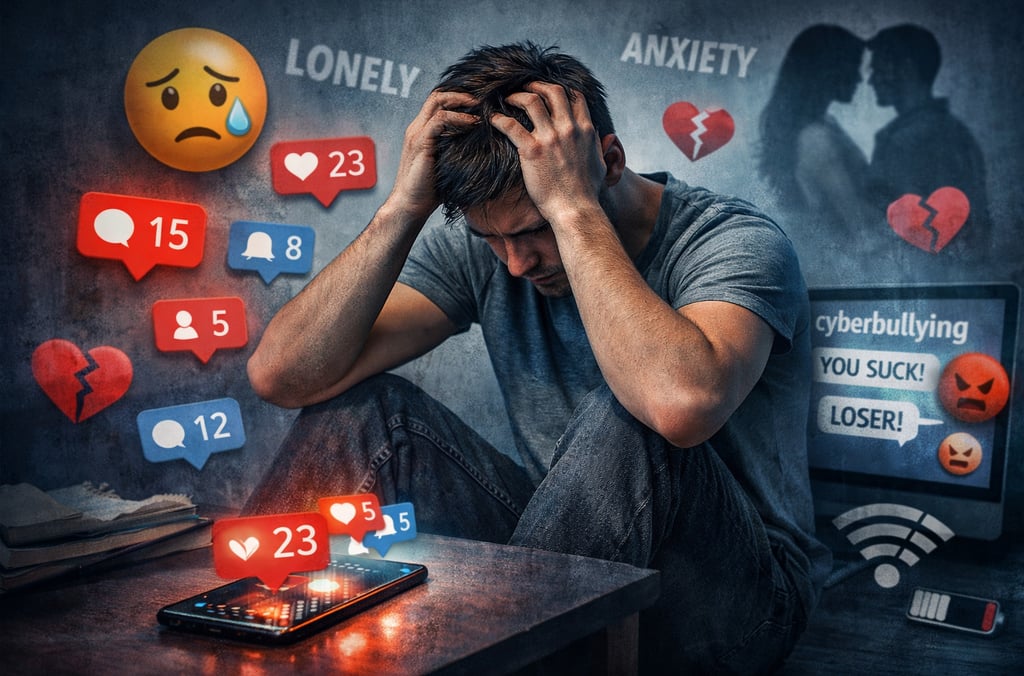
Social media has become an inseparable part of daily life. Platforms like Instagram, Facebook, TikTok, WhatsApp, and Twitter allow people to stay connected, access information, entertain themselves, and express their creativity. While these platforms provide immense benefits, excessive use can quickly turn into an addiction, impacting mental health, academic or professional performance, personal relationships, and overall well-being. Signs of social media addiction include constant checking of notifications, feeling anxious when disconnected, neglecting responsibilities, and spending hours mindlessly scrolling. Such behaviors can lead to anxiety, depression, sleep disorders, reduced focus, social isolation, physical health issues, and relationship problems. Children and teenagers are particularly vulnerable because their brains and personalities are still developing.
Despite these risks, social media does offer several positive aspects when used responsibly. It provides connectivity with friends, family, and colleagues, helps users access news and educational resources, offers platforms for professional growth and networking, allows for creative expression, and creates support communities for shared interests. These advantages are most meaningful when social media is used mindfully and in moderation.
However, excessive use carries significant mental health risks. Constant comparison with others’ curated lives can lower self-esteem and lead to anxiety or depression, particularly among teenagers. Late-night scrolling disrupts sleep patterns, which negatively affects memory, focus, and cognitive performance. Continuous notifications and distractions reduce productivity and attention to studies, work, and personal goals. Over time, users can become dependent on screens, checking updates compulsively. Cyberbullying, online harassment, and exposure to dishonest or misleading interactions can further contribute to stress, emotional trauma, and a sense of isolation. Many people experience loneliness because of limited real-life connections, lack of attention from family or friends, or the disappointment of being deceived in online relationships. Physical consequences such as eye strain, back pain, reduced physical activity, and obesity are also common.
The effects of social media addiction vary across age groups. Children aged 5 to 12 often face reduced physical activity, slower emotional development, weaker social skills, and lower self-confidence if parental guidance is limited. Teenagers between 13 and 19 are prone to anxiety, depression, academic decline, body image concerns, and relationship challenges due to peer comparison and online deception. Young adults (20–30) may experience disrupted professional life, decreased productivity, and trust issues in personal relationships. Adults between 30 and 50 often struggle with balancing work, family time, and online engagement, leading to stress, fatigue, and emotional detachment. Seniors (50+) may benefit from social media in reducing isolation, but they are also vulnerable to misinformation, scams, technological anxiety, and emotional loneliness when family attention is limited.
Preventing social media addiction requires conscious effort and lifestyle adjustments. Users should allocate specific hours for social media, turn off unnecessary notifications, prioritize real-life relationships, and engage in offline activities such as sports, hobbies, or reading. Periodic digital detoxes can help reset mental focus and emotional well-being. Mindful use, such as following meaningful content and avoiding negative material, is essential. Parents should supervise children’s screen time and ensure safe online practices, while teenagers and adults should be guided to maintain honesty, trust, and balance in personal relationships. Monitoring mental health and seeking professional help in case of anxiety, depression, or loneliness is also critical.
In conclusion, social media is a powerful tool for communication, information, entertainment, and self-expression, but it can negatively impact mental health, social interactions, and life quality if overused. Awareness, moderation, real-world engagement, strong family and social bonds, and self-regulation can transform social media from a potential source of harm into a valuable resource. By using it responsibly, individuals of all ages can enjoy its benefits while minimizing its risks.
Stay informed with the latest national and international news.
© 2026. All rights reserved.