
Samsung Q4 Profit Set to Jump 160% as AI Boom Drives Chip Prices Higher
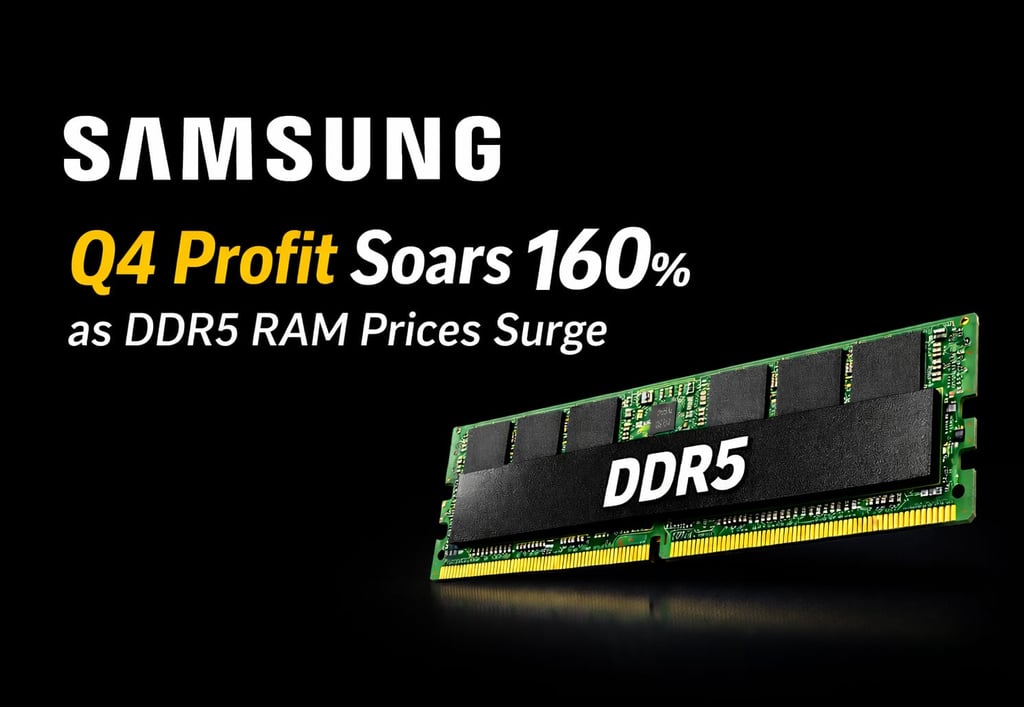
Samsung is expected to report a 160% surge in Q4 profit as AI demand fuels soaring memory chip prices, marking its strongest earnings since 2018.
Raja Awais Ali
1/6/20262 min read
Samsung Likely to Report 160% Jump in Q4 Profit as AI Boom Drives Chip Prices Higher
Seoul | 6 January 2026 — Samsung Electronics is expected to report a dramatic 160% year-on-year surge in its fourth-quarter operating profit, fueled by the global artificial intelligence (AI) boom that has sent memory chip prices sharply higher. The anticipated results mark one of the strongest earnings recoveries in the company’s recent history.
According to market forecasts compiled from multiple analyst estimates, Samsung’s operating profit for the October–December 2025 period is projected to reach approximately 16.9 trillion won ($11.7 billion). If confirmed, this would be the company’s highest quarterly profit since 2018, underscoring the strength of the ongoing semiconductor upcycle.
In comparison, Samsung posted an operating profit of 6.49 trillion won in the same quarter a year earlier, highlighting the scale of the turnaround. The rebound follows a prolonged slump in the memory chip market, which has now reversed sharply due to explosive demand from AI-driven technologies.
AI Boom Pushes Memory Chip Prices Up
The primary driver behind Samsung’s profit surge is the steep rise in memory chip prices, particularly DDR5 DRAM, which is widely used in AI servers, data centers, and high-performance computing systems. Industry data indicates that DDR5 prices jumped by more than 300% year-on-year in the fourth quarter, as supply struggled to keep pace with soaring demand.
Artificial intelligence applications — including large language models, cloud computing platforms, and advanced data analytics — require significantly higher memory capacity and speed. As one of the world’s largest memory chip manufacturers, Samsung has emerged as a major beneficiary of this structural shift.
Strengthening Position in High-Bandwidth Memory
Beyond conventional DRAM, Samsung has also made strategic progress in high-bandwidth memory (HBM), a critical component for AI accelerators and advanced processors. Analysts note that Samsung’s next-generation HBM products have strengthened its competitive position and helped restore investor confidence after years of volatility in the chip sector.
However, while Samsung’s semiconductor division is enjoying strong momentum, not all business segments are performing equally well. The company’s smartphone and consumer electronics units continue to face margin pressure due to intense global competition and rising component costs.
Outlook for 2026
Despite these challenges, analysts remain optimistic about Samsung’s broader outlook. If AI-related demand continues at its current pace, some projections suggest the company’s full-year operating profit in 2026 could exceed 100 trillion won, a level that would represent a historic milestone.
At the same time, experts caution that persistently high chip prices could eventually weigh on demand in PCs and mobile devices. Still, for now, the AI-driven semiconductor boom appears strong enough to offset these risks.
Conclusion
Samsung’s expected 160% jump in fourth-quarter profit reflects a fundamental shift in the global technology landscape. As artificial intelligence reshapes computing needs worldwide, memory chips have become a strategic asset — and Samsung is once again at the center of the industry’s growth cycle. The company’s upcoming earnings report is likely to confirm that AI is not just a technological revolution, but a powerful engine for corporate profitability.
Stay informed with the latest national and international news.
© 2026. All rights reserved.