
Russia Targets Telegram Founder Pavel Durov: Digital Freedom at Risk
On February 24, 2026, Russia launched a criminal investigation against Telegram founder Pavel Durov, citing alleged terrorism links. Discover how this move impacts digital privacy, political dissent, and social media freedom worldwide.
Raja Awais Ali
2/24/20262 min read
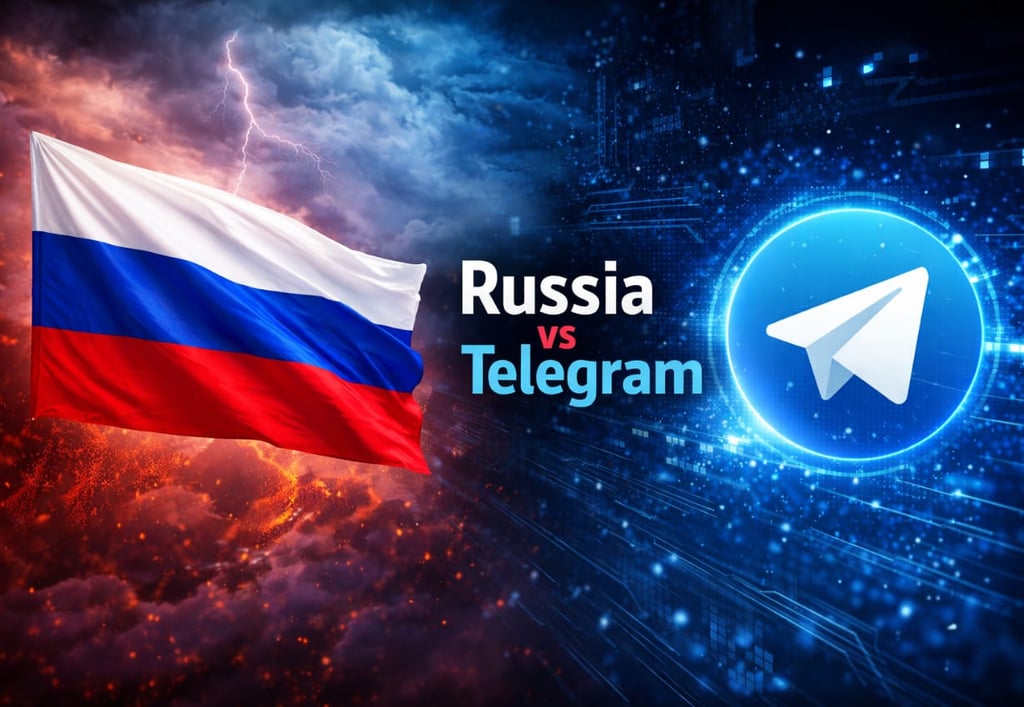
Russia Investigates Telegram Founder Pavel Durov: Freedom or State Control?
On February 24, 2026, Russia launched a major criminal investigation into Pavel Durov, the founder of Telegram, accusing him and his company of allegedly assisting terrorist activities. This move has sparked concern not only about social media freedom in Russia but also about broader issues surrounding digital privacy and freedom of expression globally.
According to Russian authorities, the FSB (Federal Security Service) has filed a case against Durov for “assisting terrorist activities.” Under Russian law, Part 1.1, Article 205.1, this is a serious offense with potentially severe consequences. Russian media reports suggest that Telegram has allegedly been involved in facilitating terrorist operations on multiple occasions, including the 2024 attack in Moscow.
Officials claim that Telegram has become a powerful tool for extremists, terrorists, and foreign actors. They argue that the platform is being used to coordinate internal and external threats, making it a national security risk. The authorities also allege that NATO and Ukrainian intelligence have used Telegram, which they describe as creating “hybrid threats” against Russia.
Yet, Telegram also plays a very different role: it serves as a key communication platform for critics of Vladimir Putin and independent political commentators. Despite strict state-controlled media, Telegram remains a space where discussions on government policies, corruption, and political criticism continue to thrive. Many analysts see the Russian crackdown as more about political control than security alone.
Durov and Telegram have strongly denied the allegations. Durov described the investigation as a move toward political surveillance and authoritarian control. He emphasized that Telegram has consistently prioritized user privacy and freedom of expression and has not supported terrorism or sabotage. According to him, the Russian government is trying to push users toward a state-controlled platform called “MAX,” giving authorities easier access to private data and enabling greater surveillance.
This investigation comes amid the ongoing war between Russia and Ukraine, where digital communication is increasingly used as a critical front. Telegram has played a crucial role for civilians, journalists, soldiers, and even government officials, providing an essential channel for sharing information and coordinating activities. From Russia’s perspective, any platform outside government control is seen as a potential security threat, which helps explain the crackdown.
Internationally, this development is being viewed as a warning for digital freedom. Media advocates and digital rights organizations note that pushing citizens toward government-approved platforms often signals political motivations, not just security concerns. Telegram’s continued use for sharing content critical of Putin underscores these pressures.
If Russia finds Durov guilty or enforces stricter restrictions on Telegram, the impact could be substantial. Communication freedom within Russia would likely shrink, and laws around surveillance and data control would tighten. International companies and digital service providers could face additional challenges, while global conversations about digital rights and privacy would intensify.
So far, Russia has not completely banned Telegram, but several features—including voice calls, video streaming speeds, and other services—are being limited. Authorities are promoting the local alternative, “MAX,” encouraging users to move to a state-controlled platform.
The February 24 investigation illustrates the ongoing tension between digital freedom, political dissent, and state control—an issue with global relevance. Telegram’s continued presence and its use by Putin critics highlight the vital role digital platforms still play in safeguarding political freedom and free expression.
Ultimately, this situation serves as a reminder that protecting privacy and freedom of expression is an ongoing struggle, and government actions anywhere can have a direct impact on citizens, media, and political discourse.
Stay informed with the latest national and international news.
© 2026. All rights reserved.