
Russia Faces Growing Pressure to Escalate Ukraine War as Drone Strikes Deepen and U.S. Diplomacy Stalls
Russian nationalists are pushing Vladimir Putin to ramp up the Ukraine war after deep Ukrainian drone strikes in Russia and stalled U.S. diplomacy. Explore the internal Kremlin debate, calls for military escalation, and the future of peace talks.
Raja Awais Ali
6/26/20263 min read
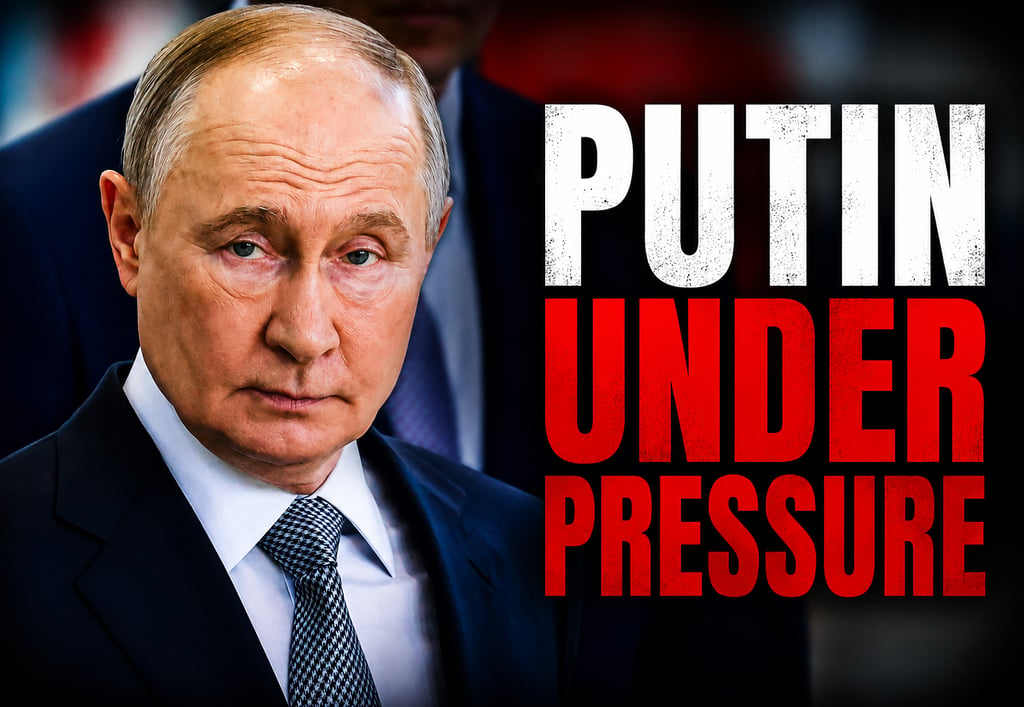
Growing Pressure Inside Russia to Intensify the War: The Full Story Behind Ukrainian Attacks, the Failure of U.S. Diplomacy, and Rising Internal Pressure on the Kremlin
A new debate is gaining traction in Moscow's power circles. Following Ukraine's deep drone strikes within Russian territory, the apparent failure of U.S.-mediated diplomatic efforts, and the war heading into its fourth year, Russian nationalists are urging President Vladimir Putin to abandon negotiations and escalate the conflict more than ever. Influential hardline analysts, nationalist bloggers, and several powerful figures are now claiming that the current strategy is not bringing Russia a clear victory and that Moscow must adopt tougher military actions against Ukraine.
These demands are not new. Since the war began in 2022, nationalist circles have consistently called for full military mobilization, direct strikes against government centers in Kyiv, attacks on factories in Europe accused of making drones for Ukraine, and even discussions about using tactical nuclear weapons as part of a more aggressive approach. However, the recent Ukrainian attacks in June 2026 have intensified this pressure.
According to Reuters, Ukrainian drone strikes have extended beyond border areas, targeting sensitive locations across Russia, including Moscow, Saint Petersburg, and Crimea. Russian officials reported that passenger buses were hit in two separate incidents, leading to casualties. A fire at an oil refinery near Moscow last week sparked widespread public anger and concern among nationalists. These events have raised an uncomfortable question: why is one of the world's largest countries struggling to protect its territory from ongoing drone attacks?
Prominent Russian nationalist investor and media figure Konstantin Malofeev responded strongly, questioning when Russia would start fighting what he called a "real war." He argued that war means achieving victory at all costs, while Ukraine is fully utilizing its capabilities. He suggested that Soviet-era nuclear weapons were developed to counter threats like this and that Russia should consider using them if necessary. Although the government has not supported this view, such statements show growing frustration and anxiety among nationalists.
Several nationalist bloggers have also criticized ongoing diplomatic contact with the United States. The military-focused blog "Obsessed by War," which claims over 650,000 followers, called for sustained bombing campaigns against Ukraine's major cities to make them uninhabitable. Meanwhile, nationalist analyst Yuri Baranchik, who has about 90,000 followers, wrote on Telegram that organized aerial attacks on Moscow could not have occurred without Washington's approval. He claimed U.S. President Donald Trump effectively allowed Ukraine to carry out such strikes.
Baranchik also pointed to a recent U.S. agreement with Iran, suggesting that Tehran pressured Washington into compromising. He believes Russia now has two options: gain leverage over the United States or allow the U.S. to impose its conditions.
Interestingly, sources close to the Kremlin indicate that President Putin does not actively suppress nationalist rhetoric. Over the past twenty-six years, he has built a powerful and centralized political system where nationalist bloggers can express their views as long as they don't cross state-defined lines. However, analysts warn that if hardline narratives continue to gain traction, they could pressure the government to launch more aggressive military operations, complicating any future diplomatic settlement.
While hardline groups demand an end to negotiations with the U.S., the Kremlin has not taken that step yet. This week, three senior Russian officials acknowledged that discussions with Washington have not led to significant progress. They accused the U.S. of failing to act on peace proposals discussed during last year's meeting between Putin and Trump in Alaska. Despite these frustrations, Moscow has not completely closed the door to diplomacy.
At the same time, Russia has taken actions seen by Western observers as potential military signals. In April, the Russian Ministry of Defence published locations of factories in Europe that Moscow claims are involved in making drones for Ukraine. While no attacks occurred against these sites, analysts viewed this as a clear warning.
Moreover, last month, the Russian Foreign Ministry announced it would conduct "systematic strikes" on military targets in Kyiv, leading to an increase in Russian air attacks. During these assaults, damage occurred to Kyiv's nearly one-thousand-year-old historic monastery, drawing international attention.
Despite the pressure, Putin's stance seems unchanged. Speaking to graduating officers from military academies on Tuesday, he stated that Russian forces were close to capturing Kostiantynivka, a key city in eastern Ukraine. He emphasized its importance for securing full control over the Donbas region.
Putin also claimed that anti-Russian political forces in Europe are weakening, while leaders willing to restore relations with Moscow are starting to emerge. He stated, "Those who want to restore normal relations with Russia and end the constant strategic defeats are now coming forward. In the end, everything will be fine."
The ongoing debate in Russia reflects the reality that the war is shaping Moscow's domestic politics, public expectations, military strategy, and diplomatic decisions. While Ukrainian drone attacks raise new questions about Russia's internal security and defense capabilities, nationalists demand a much stronger response from the government.
The Kremlin is trying to maintain a delicate balance: increasing military pressure while keeping diplomatic channels open. The next few weeks could determine whether Russia succumbs to rising domestic pressure for escalation or continues its current strategy of balancing military operations with diplomatic engagement.
Stay informed with the latest national and international news.
© 2026. All rights reserved.