
Russia’s Secret Armenia Election Operation 2026: Imported Voters, Fake News Campaigns and the West’s Growing Influence
A detailed analysis of Russia’s alleged covert operations in Armenia’s 2026 election, including voter transport plans, disinformation campaigns, and rising Western influence under Prime Minister Nikol Pashinyan.
Raja Awais Ali
5/29/20265 min read
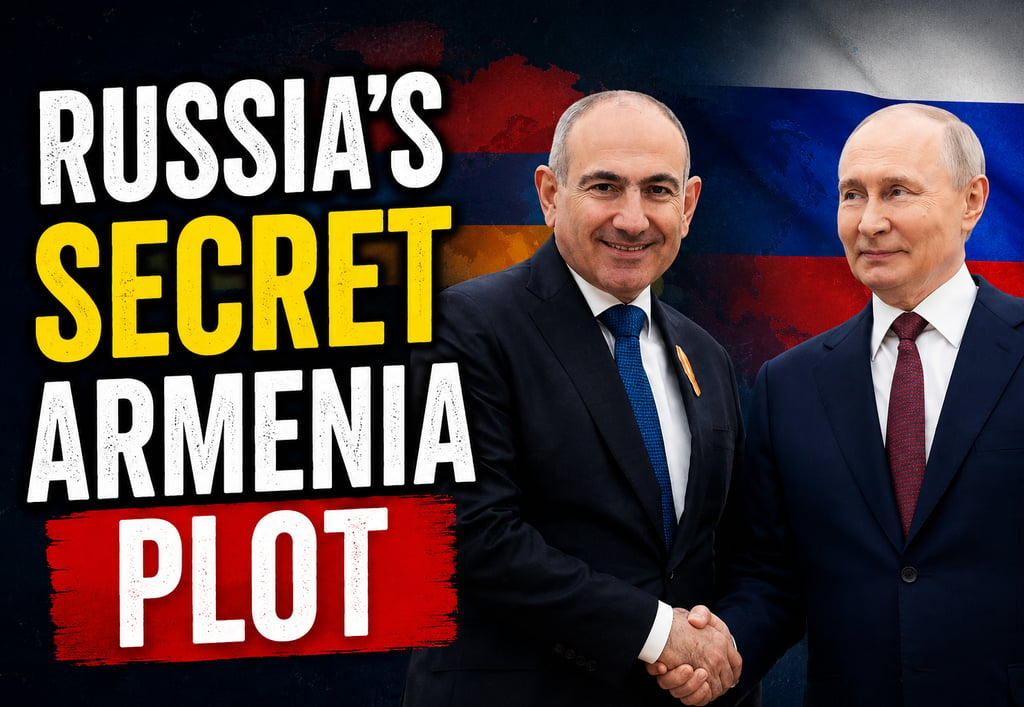

Russia’s Secret Armenia Election Operation 2026: Imported Voters, Fake News Campaigns and the West’s Growing Influence
Armenia’s upcoming June 2026 election is no longer seen as just a national political contest. It has now become part of a much larger geopolitical struggle between Russia and the West. According to recent international reports and intelligence claims, Russia is allegedly increasing covert efforts to stop Armenian Prime Minister Nikol Pashinyan from winning re-election because Moscow fears his victory could permanently shift Armenia closer to the United States, Europe, and NATO.
The growing tension has placed Armenia at the center of global attention. For decades, the small South Caucasus nation remained closely connected to Russia politically, economically, and militarily. But under Pashinyan’s leadership, Armenia has slowly started moving away from Moscow’s traditional influence and building stronger ties with Western countries. That change is now creating one of the most serious political confrontations in the region since the collapse of the Soviet Union.
According to Western intelligence officials cited in recent reports, Russia’s alleged operations include online disinformation campaigns, support for pro-Russian political figures, fake media platforms, and even discussions about transporting thousands of Russian-Armenians into Armenia to influence the election result.
Armenia is a landlocked country with a population of nearly 3 million people. Since the Cold War era, Russia has maintained strong control in the region through military presence, energy supplies, and security agreements. Russian troops are still stationed in Armenia, and for years Moscow was considered Yerevan’s most important ally.
However, the relationship began changing after Nikol Pashinyan came to power in 2018 following large anti-government protests. Since then, he has gradually improved relations with Europe and the United States while reducing Armenia’s dependence on Russia.
The shift became more visible after the 2023 Nagorno-Karabakh conflict, when Russian peacekeepers failed to stop Azerbaijan from taking control of the disputed region. Many Armenians felt abandoned by Moscow, and public trust in Russia sharply declined. That moment pushed Armenia even closer toward Western partnerships.
In recent months, Armenia has increased cooperation with NATO, strengthened diplomatic ties with the European Union, and suspended participation in a Russia-led regional security alliance. Earlier this month, Armenia even hosted NATO’s chief during a European leaders summit, a move that reportedly angered the Kremlin.
The United States has also become more active in Armenia. U.S. Secretary of State Marco Rubio recently traveled to Yerevan and signed major agreements related to minerals and transport infrastructure. One of the key projects is the “Trump Route for International Peace and Prosperity,” a proposed trade corridor through Armenia that could improve Western access to Central Asia and reduce Russian influence in the region.
The route is strategically important because it would connect trade flows toward Central Asia while also giving Azerbaijan direct access to its exclave of Nakhchivan and to Turkey. The project could reshape economic and political connections across the South Caucasus.
Western officials believe Russia sees this development as a direct threat to its long-standing dominance in the region. Moscow reportedly fears that if Armenia fully joins the Western sphere of influence, Russia could lose one of its last reliable partners in the South Caucasus.
In response, Russia has recently increased economic pressure on Armenia. Moscow warned that Armenia could lose access to cheap Russian natural gas if it continued moving toward the West. Russian authorities also restricted imports of Armenian products, including fruits, vegetables, flowers, and the country’s famous brandy exports.
According to intelligence sources, Russia established a new department in October 2025 called the “Directorate for Strategic Cooperation and Partnership.” The unit is allegedly responsible for coordinating influence operations in Armenia ahead of the June 7 election.
One of the most controversial allegations involves a plan to transport Russia-based Armenians into Armenia to vote against Pashinyan’s government. Armenia does not allow citizens living abroad to vote remotely, but officials claim Moscow discussed flying large numbers of people directly into the country before election day.
Russia is home to one of the world’s largest Armenian diaspora communities, with estimates suggesting more than 2 million Armenians live there. Intelligence officials reportedly calculated that transporting around 100,000 voters could cost nearly $50 million.
Sources claim Russian regional administrators were given quotas for how many Armenian voters each area should send to Armenia. Preparations and logistical planning were reportedly discussed by mid-May 2026. Although there is currently no public proof that the operation has actually begun, Western officials say the possibility is being taken very seriously.
The claims are especially significant because flights between Russia and Armenia operate daily, making large-scale travel possible within a short period of time.
Despite the controversy, current polling still shows Nikol Pashinyan leading comfortably ahead of his political opponents. Surveys conducted earlier this month suggest his Civil Contract party could receive around 30 percent of the vote.
Meanwhile, Samvel Karapetyan, a wealthy Armenian-Russian businessman who is viewed by some officials as Moscow’s preferred candidate, remains far behind in the polls with support around 6 percent.
Karapetyan is currently facing charges related to allegedly calling for the overthrow of Armenia’s government, although he strongly denies the accusations. His lawyer has also rejected claims that Russia is secretly supporting his political activities.
At the same time, concerns about political stability and security inside Armenia continue to grow. In May 2026, a threatening video circulated online showing masked men speaking in Armenian and warning they would kill Prime Minister Pashinyan. Armenian authorities later launched an investigation, although it remains unclear who created the video or whether the threat was real.
Several Western officials have reportedly expressed serious concerns about Pashinyan’s safety. According to sources familiar with the matter, elements within the U.S. government, including the CIA, have quietly supported the Armenian leader’s security in recent years by sharing intelligence about possible threats.
Neither the White House nor the CIA publicly commented on those reports.
Alongside political pressure, online disinformation campaigns are also becoming a major issue in Armenia’s election environment. Western officials claim Russian-linked networks are spreading false information designed to weaken public trust in Pashinyan and strengthen pro-Russian narratives.
One reported campaign falsely accused Pashinyan of involvement in a corrupt land deal connected to U.S. senators Jeanne Shaheen and Thom Tillis. No evidence supporting the allegations has been publicly presented.
European officials say the disinformation efforts involve a Kremlin-linked bot network known as “Storm-1516,” which has previously been connected to attempts to interfere in elections and online political discussions in multiple countries.
Intelligence sources also claim Russia used political consulting groups and think tanks, including the Social Design Agency, an organization already sanctioned by the European Union and the United Kingdom for spreading pro-Kremlin propaganda linked to the war in Ukraine.
Documents reviewed by international reporters allegedly described plans for creating a Russian-language media platform called “Yerevan1.” The purpose of the project was reportedly to influence Armenian communities in Russia and promote the idea that Armenia can only survive under Russian protection.
The documents also suggested that Russian-Armenian voters could play a decisive role in the election if turnout among them became high enough.
The political battle over Armenia is now becoming much bigger than domestic politics. For Russia, losing influence in Armenia would represent another major geopolitical setback after years of tensions with the West. For the United States and Europe, Armenia offers an opportunity to expand political and economic access into the South Caucasus and Central Asia.
If Pashinyan wins another term, analysts believe Armenia will likely continue strengthening relations with Western countries while reducing Russian influence step by step. That could also help advance the U.S.-brokered Armenia-Azerbaijan peace agreement and the new regional transport corridor.
However, if pro-Russian political forces manage to regain influence, the direction of Armenia’s foreign policy could change once again, potentially slowing or reversing Western involvement in the region.
As election day approaches, Armenia is becoming one of the most closely watched political battlegrounds in the world. The June 7 vote is no longer only about Armenia’s next government. It has become a major test of influence between Russia and the West, with consequences that could shape the future of the South Caucasus for years to come.
Stay informed with the latest national and international news.
© 2026. All rights reserved.