
Pound Falls as Andy Burnham's Economic Plan Faces Investor Scrutiny After Keir Starmer Resignation
The British pound experienced its largest monthly drop since March as investors reacted to political uncertainty after Keir Starmer's resignation and awaited Andy Burnham's economic plans. Learn why sterling is falling, why investors are betting against the pound, and what this means for the UK economy in 2026.
Raja Awais Ali
6/29/20265 min read
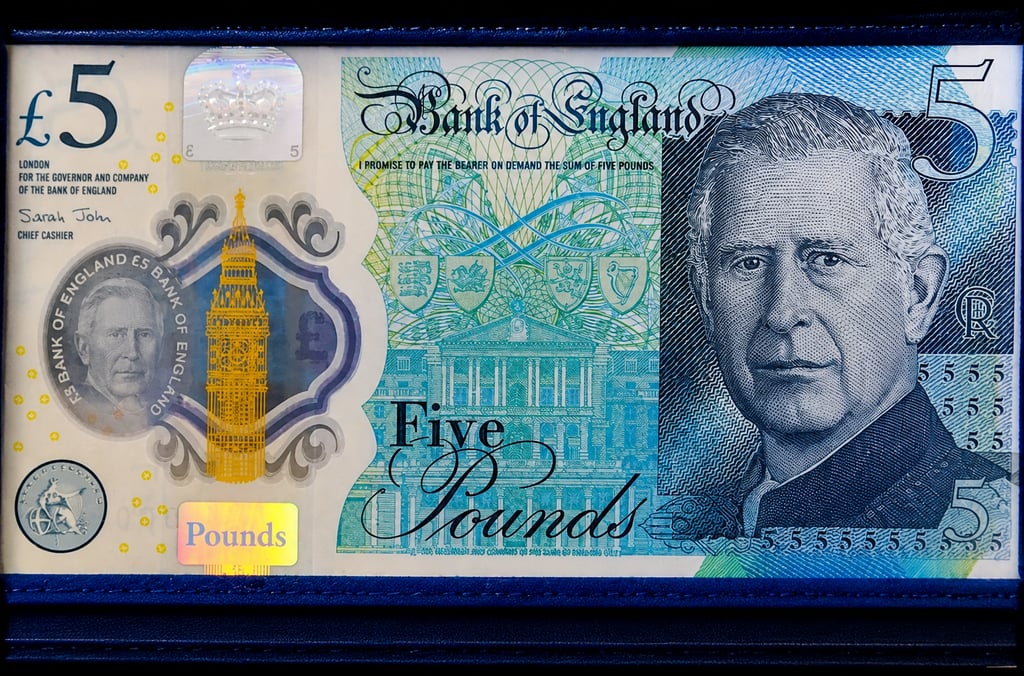
Pound Slides Toward Worst Month Since March as Investors Await Andy Burnham's Economic Vision Following Keir Starmer's Resignation
The British pound is facing a tough time in 2026. Political uncertainty in the United Kingdom, combined with a stronger U.S. dollar, is putting significant pressure on sterling. Investors worldwide are closely watching Andy Burnham's upcoming economic speech. Burnham is expected to become Britain's next prime minister after Keir Starmer's resignation.
Sterling is on track for its largest monthly drop since March, having lost 1.7 percent against the U.S. dollar in June 2026. On Monday, the pound traded near $1.322, close to its weakest level in about seven months. Domestic political instability has played a major role in this decline, while global factors have also boosted the U.S. dollar and increased pressure on the British pound.
The U.S. dollar has risen to its highest level in nearly a year after a temporary peace agreement regarding the Iran conflict and a shift in investor expectations about American interest rates. As views on U.S. monetary policy changed, international capital returned to dollar-denominated assets, strengthening the greenback against most major currencies, including sterling.
Meanwhile, the political climate in Britain has added further uncertainty for financial markets. Prime Minister Keir Starmer resigned just two years after leading the Labour Party to a significant parliamentary victory. While markets had little immediate reaction to his exit due to preexisting political pressure, investors quickly turned their attention to the future leadership of the country and its economic policy under a potential Burnham administration.
Andy Burnham recently returned to Westminster after winning a parliamentary seat earlier this month. He is the only officially declared candidate to replace Starmer and could enter 10 Downing Street in the coming weeks. His upcoming economic speech is seen as one of the most significant political and financial events in Britain this summer.
Currency traders, institutional investors, and bond markets will scrutinize every detail of Burnham's economic message for hints on taxation, public spending, government borrowing, and growth policies. Financial markets are particularly concerned about how a future Burnham government will aim to boost economic growth while keeping a tight grip on finances, especially given Britain's strained public finances.
Burnham is known for advocating more expansive fiscal policies and increased government investment to stimulate growth nationwide. Supporters argue that more public spending on infrastructure, housing, regional development, and industrial investment could help revive Britain's sluggish economy and reduce regional inequality.
However, critics caution that Britain has little room for additional borrowing or major spending programs. Government debt is high, and borrowing costs have surged in recent years. Since the pandemic, yields on British government bonds have significantly increased, effectively doubling borrowing costs for the government in just a few years.
Investors in British government bonds, often called gilts, are particularly wary of any hints at unfunded spending commitments or aggressive fiscal expansion. Their anxiety is shaped by memories of the financial turmoil that followed the economic plan introduced by former Prime Minister Liz Truss in 2022.
At that time, the announcement of billions in unfunded tax cuts led to a severe crisis in the British bond market. Government borrowing costs spiked, and financial instability escalated to the point where the Bank of England had to step in to stabilize the markets and prevent a broader financial crisis.
Analysts believe that Burnham's choice of finance minister could become one of the most crucial decisions of his political career. Investors will interpret this appointment as a signal of whether the new administration plans to focus on fiscal responsibility or pursue a more aggressive growth strategy that relies on additional borrowing.
Market strategist David Stritch of Caxton notes that the behavior of gilt yields since the pandemic and Britain's ongoing budget deficits suggest that another round of spending promises without proper funding would be very risky for financial stability.
He warned that the last time a British government tried to stray from traditional economic policy without adequate funding, it resulted in a market disaster. Many analysts think Burnham should avoid repeating the mistakes that previously damaged market confidence.
The rising uncertainty regarding Britain's political and economic future is already visible in the currency markets. Recent data from the Commodity Futures Trading Commission shows that speculators have taken the most significant bearish position against sterling since 2015.
Investors currently hold short positions against the pound worth about $8.72 billion, indicating they believe sterling will continue to weaken. This figure represents the largest negative position against the British currency since June 2015 and nears the all-time record short position of $9.567 billion recorded in May 2015.
These figures illustrate the level of caution and concern surrounding British assets and suggest that international investors remain doubtful about the country's short-term economic outlook.
Despite these worries, Burnham has sought to present a vision focused on economic growth across the country, not just in London and the South East. His economic strategy is expected to emphasize regional investment, housing development, infrastructure projects, and increased economic powers for local authorities.
Burnham has previously advocated for distributing economic opportunity more evenly throughout Britain and reducing London’s dominance in national economic policy. Supporters believe that this approach could foster stronger long-term growth and improve productivity across the wider economy.
Nonetheless, financial markets are likely to evaluate his proposals based on concrete numbers and fiscal responsibility rather than political slogans. Investors want clear answers on how these policies would be financed and whether they would mean higher taxes, more borrowing, or cuts in spending elsewhere.
If markets believe Britain is heading toward another phase of excessive borrowing or unfunded spending commitments, pressure on sterling could grow, and government borrowing costs may keep rising. Conversely, if Burnham can persuade investors that economic growth and fiscal discipline can work together, confidence in British assets might start to improve.
The political uncertainty in Britain is unfolding during a crucial week for global financial markets. Investors are also bracing for the latest U.S. employment report, which could significantly impact expectations for American interest rates and the dollar's future direction.
Additionally, newly appointed Federal Reserve Chair Kevin Warsh is set to give a closely watched speech alongside other global central bankers at the European Central Bank's annual gathering in Sintra, Portugal.
Any signals about future monetary policy from major central banks could directly affect currency markets worldwide and influence the outlook for the pound.
Ultimately, the current weakness in sterling reflects more than just a currency shift. It shows growing investor concern over Britain's political transition, the sustainability of its public finances, the future direction of economic policy, and the country's ability to achieve long-term growth in a challenging global environment.
The coming weeks may be crucial not just for Andy Burnham's political future but also for the trajectory of the British economy and the pound's value. Financial markets are now looking for signs that Britain's next government can promote economic growth while maintaining fiscal credibility because that answer may determine whether sterling stabilizes or continues to decline in the months ahead.
Stay informed with the latest national and international news.
© 2026. All rights reserved.