
Pentagon Fails Eighth Audit, Sets 2028 Target for Clean Financial Report – Latest 19 Dec 2025 News
On 19 December 2025, the Pentagon failed its eighth straight audit, highlighting deep accounting issues. The Department of Defense now aims for a clean audit by 2028. Read full details.
Raja Awais Ali
12/19/20252 min read
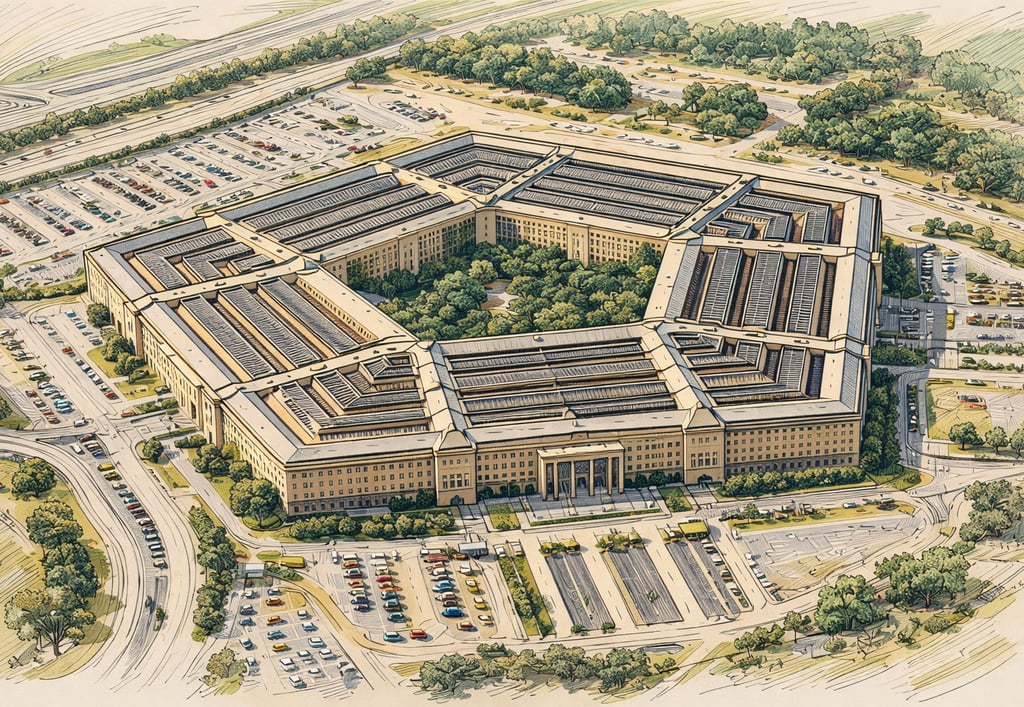
Pentagon Fails Eighth Audit, Aims for Clean Financial Report by 2028
On 19 December 2025, the U.S. Department of Defense — widely known as the Pentagon — publicly confirmed that it has failed its annual financial audit for the eighth consecutive year since audits were first mandated in 2018. The announcement highlights persistent accounting and internal control challenges in the world’s largest defense organization.
This year’s audit, covering the Pentagon’s Fiscal Year 2025 financial statements, revealed 26 material weaknesses and 2 significant deficiencies in its internal financial controls. A material weakness is the most serious audit finding, indicating failures in systems that could lead to substantial errors in financial reporting.
The Pentagon oversees vast financial resources — managing approximately $4.65 trillion in assets and $4.73 trillion in liabilities across thousands of locations both domestically and internationally. Despite decades of conducting audits, no Cabinet‑level U.S. agency has yet earned a “clean” financial audit opinion, and the Department of Defense remains the only major agency still struggling to meet that standard.
Secretary of Defense Pete Hegseth emphasized that these audit failures stem partly from longstanding challenges such as decades of war, aging infrastructure, complex accounting systems, and the growing national debt. He noted that financial accountability and transparency are critical for public trust and responsible stewardship of taxpayer dollars.
To address these systemic problems, the Pentagon has set a new target: achieve a clean audit opinion by the end of 2028. This timeline aligns with congressional requirements under recent defense legislation. In support of this goal, the Department has initiated remediation plans that include updating technology, streamlining financial processes, and retiring outdated systems that currently hinder accurate accounting.
The repeated audit failures have drawn bipartisan criticism from lawmakers and financial accountability advocates. Critics argue that continuous failure to pass audits undermines public confidence and makes it difficult for analysts, legislators, and taxpayers to understand how defense funds are managed. Some experts have pointed to ineffective enterprise systems and unclear tracking of assets as core issues that must be resolved for the Department to succeed.
President Donald Trump signed the nearly $901 billion defense policy bill earlier in December 2025, marking one of the largest annual defense budgets in U.S. history. The legislation continues to fund the Pentagon’s operations while also reinforcing mandates around audit accountability.
Despite the eighth audit failure, Pentagon officials have stressed that progress is being made in some areas. Independent auditors have recognized improvements in certain financial systems and have recommended actionable steps to accelerate reform. However, the scale and complexity of the Department’s operations mean that meaningful change will require sustained effort and investment over the next few years.
Passing a clean audit would not only fulfill legal requirements but also strengthen financial discipline within the U.S. defense apparatus. It would demonstrate that the world’s largest military bureaucracy can effectively track and account for its resources — an outcome both policymakers and the public have demanded.
As the Pentagon works toward its 2028 clean audit goal, all eyes will remain on the Department’s ability to modernize its financial systems, close gaps in internal controls, and build trust through transparent financial reporting.
Stay informed with the latest national and international news.
© 2026. All rights reserved.