
Pakistan Nears $1.5 Billion Weapons and Fighter Jet Deal with Sudan | Exclusive
Pakistan is close to a $1.5 billion defence deal with Sudan to supply weapons, fighter jets and drones amid the country’s ongoing conflict.
Raja Awais Ali
1/9/20262 min read
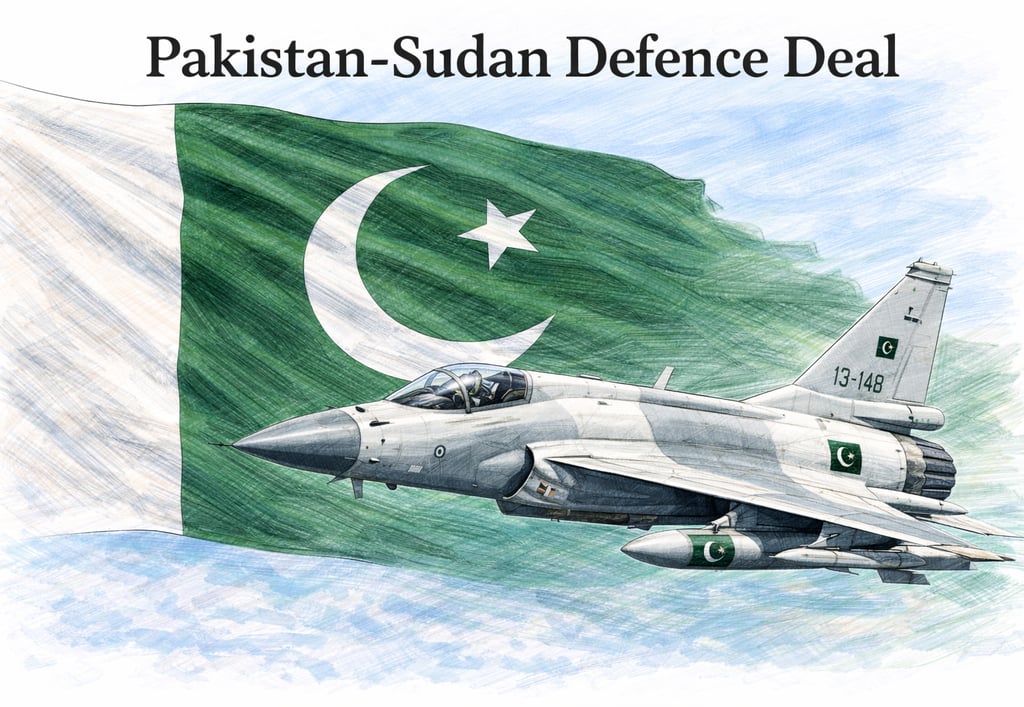
Exclusive: Pakistan Nears $1.5 Billion Defence Deal with Sudan, Sources Say
Pakistan is close to finalising a major defence agreement with Sudan worth approximately $1.5 billion, according to sources familiar with the negotiations. If completed, the deal would rank among Pakistan’s largest defence export agreements and comes as Sudan continues to face a prolonged and devastating internal conflict.
Sources say discussions between Islamabad and Khartoum have reached an advanced stage, with both sides now working through final approvals and delivery arrangements. The proposed package is expected to include a wide range of military equipment, such as aircraft, drones and ground-based weapon systems, aimed at strengthening Sudan’s military capabilities.
Sudan has been locked in a violent civil war between the Sudanese Armed Forces (SAF) and the Rapid Support Forces (RSF), a conflict that has displaced millions and severely weakened the country’s defence infrastructure. As fighting continues, Sudan’s military leadership is seeking external support to rebuild its air and ground strength, particularly in response to the growing use of drones and air power on the battlefield.
Pakistan has emerged as a key option due to its cost-effective military technology, operational experience and expanding defence production capacity. Defence analysts note that Pakistan’s ability to supply both equipment and training makes it an attractive partner for countries facing urgent security challenges.
According to informed sources, the deal could include Pakistan-manufactured Super Mushshak trainer aircraft, light attack platforms, surveillance and strike drones, and potentially JF-17 Thunder fighter jets, which are jointly developed by Pakistan and China. While final quantities and delivery timelines have not been disclosed, negotiations are said to be progressing steadily.
For Pakistan, the agreement holds significant economic importance. The country is currently operating under an International Monetary Fund (IMF) programme, and defence exports are increasingly viewed as a crucial source of foreign exchange. Officials believe that large-scale arms exports can help ease economic pressure while expanding Pakistan’s presence in global defence markets.
There are also indications that regional players may be quietly facilitating the agreement. Some observers suggest that Gulf states, including Saudi Arabia, could play a financial or diplomatic role, given their long-standing ties with both Pakistan and Sudan. However, no official confirmation has been issued regarding third-party involvement.
Neither Pakistan’s Ministry of Defence nor Sudanese authorities have publicly confirmed the details of the proposed deal. Officials on both sides have declined to comment, and the discussions remain confidential. Defence insiders, however, describe the agreement as close to completion, with only final political and financial clearances pending.
If finalised, the $1.5 billion deal would mark a major milestone for Pakistan’s defence sector and further establish the country as a competitive arms exporter in Africa and the Middle East. For Sudan, the acquisition of new military equipment could influence the balance on the ground, although international concerns persist regarding the humanitarian impact of continued military escalation.
The coming weeks are expected to be critical as decisions are made on financing, delivery schedules and political approvals. For now, the potential agreement highlights Pakistan’s growing role in the global defence market and Sudan’s urgent search for military reinforcement during a period of deep national crisis.
Stay informed with the latest national and international news.
© 2026. All rights reserved.