
Pakistan Offers Peace Talks in Iran–US–Israel War | Full Analysis, Casualties, Costs & Global Impact (March 24, 2026)
Pakistan offers to host peace talks as Iran–US–Israel war enters week 4. Full analysis of casualties, war costs, oil crisis & global impact – March 24, 2026.
Raja Awais Ali
3/24/20266 min read
Pakistan’s Peace Offer to End the Iran–US–Israel War: A Deep Analysis (March 24, 2026)
As of March 24, 2026, the ongoing war in the Middle East between Iran, United States, and Israel has entered a phase where each passing day is bringing new uncertainty not only to the battlefield but also to global politics, economic stability, and energy markets. In this context, the offer by Shehbaz Sharif to host peace talks has emerged as a significant diplomatic development, providing a possible pathway toward de-escalation. However, the success of this initiative depends on several complex and interconnected factors that must be carefully understood.
The conflict escalated openly on February 28, 2026, when the United States and Israel launched coordinated airstrikes against Iran. These attacks targeted Iran’s nuclear program, missile installations, and military infrastructure. The United States justified its actions by stating that diplomatic efforts had failed to produce meaningful results. Iran, however, condemned the strikes as a violation of its sovereignty and responded swiftly and forcefully.
Iran launched ballistic missiles and drones targeting multiple Israeli cities, while also striking U.S. military bases and energy facilities across the Gulf region. This retaliation transformed what initially appeared to be a limited military operation into a full-scale regional war, drawing in multiple actors and expanding the scope of the conflict.
From the beginning of the war on February 28 to March 24, 2026, the human cost has risen steadily and dangerously, turning the conflict into a full-scale humanitarian crisis. According to aggregated international estimates, Iran has been the most heavily affected, with over 1,500 deaths reported. A significant number of these casualties are civilians, as airstrikes have not only targeted military objectives but also energy infrastructure and urban areas, resulting in damage to hospitals, residential buildings, and essential services.
In Lebanon, where Hezbollah has actively joined the conflict, the death toll has surpassed 1,000. Intense clashes in border regions have caused widespread destruction, forcing large numbers of civilians to flee their homes.
In Israel, Iranian missile and drone attacks have killed at least 15 civilians and injured dozens more. Although Israel’s Iron Dome has successfully intercepted a large number of incoming threats, several missiles have managed to strike populated areas, resulting in casualties and widespread fear.
The United States has also suffered direct losses in the conflict. Attacks on U.S. military bases in the region have resulted in the deaths of at least 13 personnel, with several others injured. This clearly indicates that the war is no longer indirect but has evolved into a direct confrontation involving major global powers.
Additionally, countries such as Iraq and Syria have experienced indirect impacts through proxy clashes and sporadic strikes, leading to further casualties. Maritime incidents have also been reported, affecting international shipping crews, although exact figures remain unclear.
Overall, when all fronts are considered, total fatalities are estimated to be between 2,500 and 3,000, with thousands more injured and millions displaced. The destruction, particularly in Iran and Lebanon, has severely disrupted access to basic necessities such as water, electricity, and healthcare. This situation clearly demonstrates that the conflict has evolved beyond a military confrontation into a widespread humanitarian crisis.
One of the most critical strategic dimensions of this war is the situation in the Strait of Hormuz, widely regarded as the lifeline of global energy supply. Iran has effectively exerted control over this key maritime route, disrupting global markets. Approximately 20% of the world’s oil and gas passes through this corridor, making it one of the most strategically vital chokepoints in the world.
Due to escalating tensions, oil tanker movements have been severely affected. Insurance costs have surged, and several shipping companies have altered their routes, resulting in significant disruptions to global supply chains. Consequently, the global economy has been pushed into a state of heightened uncertainty.
The impact on energy markets has been immediate and severe. Brent crude oil prices have remained between $100 and $104 per barrel, briefly exceeding $110. Experts warn that if disruptions in the Strait of Hormuz continue for an extended period, prices could surge to $150 per barrel, potentially triggering the largest energy shock since the 2008 global financial crisis.
Furthermore, according to international energy assessments, more than 40 major energy infrastructure sites across the Middle East have been damaged, increasing the risk of long-term supply shortages and raising serious concerns about global energy security.
The natural gas sector is also under significant pressure. Qatar’s LNG supply, a crucial source for Europe and Asia, has been partially disrupted. This has led to rising gas prices, particularly affecting countries that had shifted away from reliance on Russian energy and become dependent on Middle Eastern supplies. The consequences are now being felt in industrial production and electricity supply.
On the diplomatic front, the situation remains highly complex. Donald Trump has claimed that “very positive and productive” discussions between the United States and Iran are ongoing, which led him to postpone planned strikes on Iranian power plants. However, Iran has categorically rejected these claims, labeling them as “fake news.”
According to Mohammad Bagher Ghalibaf, Iran is not engaged in any direct negotiations. This contradiction highlights a deep lack of trust between the parties, which remains one of the biggest obstacles to any meaningful peace process.
Iran’s negotiation strategy is firm and uncompromising. Tehran insists that any negotiations must begin only after a complete cessation of hostilities. It also demands guarantees against future attacks, compensation for war damages, and refuses to accept any restrictions on its missile or defense programs.
On the other hand, the United States and Israel are focused on limiting Iran’s nuclear and missile capabilities, which lie at the core of the conflict. This fundamental disagreement continues to make diplomatic progress extremely difficult.
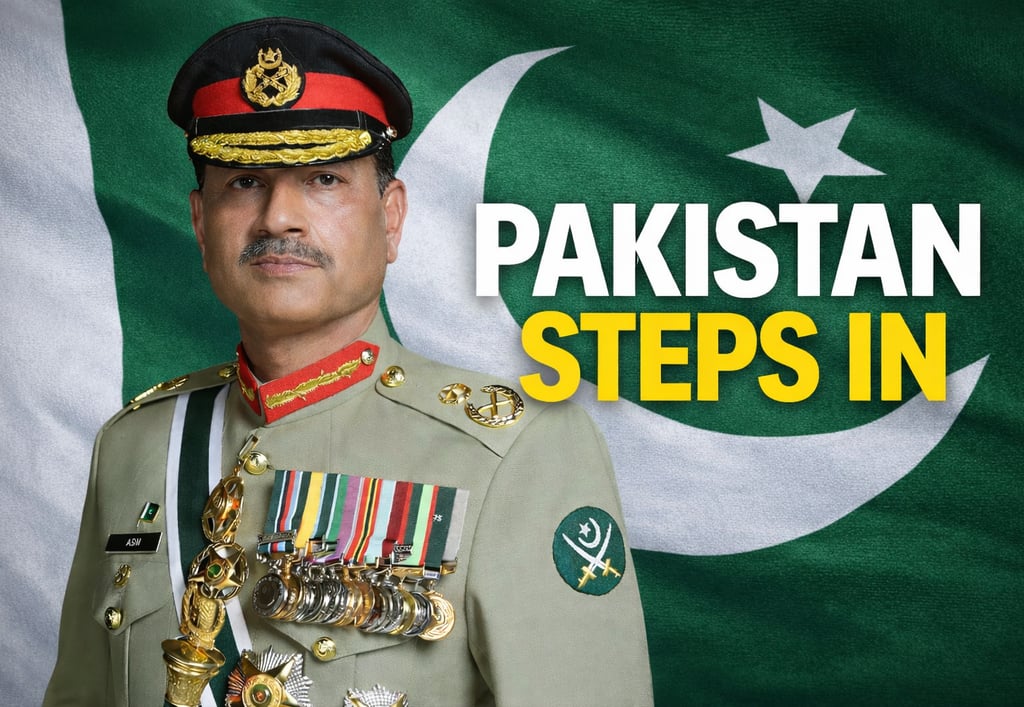
In such a complex environment, Pakistan’s offer to host peace talks presents a significant diplomatic opportunity. Shehbaz Sharif has clearly stated that Pakistan is ready to provide a neutral platform for negotiations, provided both sides agree.
Pakistan’s role is particularly important because it maintains balanced relations with Iran, Gulf countries, and the United States. Unlike many other actors, Pakistan is not openly aligned with any one side, which strengthens its credibility as a neutral mediator.
Pakistan’s peace efforts are not limited to a public statement. Diplomatic sources suggest that Islamabad has facilitated backchannel communications between Washington and Tehran, allowing indirect exchanges of messages. The involvement of Asim Munir in high-level contacts further indicates that Pakistan is actively stepping into a mediation role.
Moreover, Pakistan has offered itself as a potential venue for formal negotiations, positioning Islamabad as neutral ground. The emphasis on a “meaningful and conclusive settlement” shows that Pakistan is advocating for a comprehensive and long-term solution rather than a temporary ceasefire.
Pakistan’s strategy of balanced diplomacy is clearly visible. While expressing concern over attacks on Iran, it has simultaneously maintained its strategic relationship with the United States. This balance makes Pakistan a unique and potentially acceptable mediator for all sides.
At the same time, Pakistan has not overlooked its internal and defensive preparations. Measures have been taken to secure maritime routes, which are vital for the country’s energy imports. Additionally, Pakistan has increased diplomatic coordination with countries such as Turkey, Qatar, and Egypt to build collective pressure for de-escalation.
Although several countries are attempting mediation, Pakistan’s role stands out because it maintains active communication with both the United States and Iran. While no formal negotiations have yet begun, increased diplomatic activity suggests that a potential framework for talks is gradually taking shape.
From an economic and military perspective, the cost of the war has been enormous. Between February 28 and March 24, 2026, the United States is estimated to have spent between $35 billion and $45 billion on military operations. This includes airstrikes, naval deployments, missile systems, and logistical support, with daily expenditures exceeding $1 billion.
Israel is also under significant financial pressure, with total war costs estimated between $7 billion and $10 billion during the same period. Major expenses include missile defense through the Iron Dome, air operations, and the mobilization of reserve forces. Continuous attacks have caused these costs to rise rapidly.
Combined, the total military expenditure of the United States and Israel has approached $50 billion within just a few weeks, highlighting the immense financial burden of the conflict.
The broader economic impact is equally severe. Global stock markets are under pressure, inflation is rising, and energy prices remain highly volatile. Developing countries, particularly those dependent on energy imports, are among the most affected.
Countries like Pakistan face serious challenges, as a large portion of their energy needs depends on Gulf imports. Any disruption in supply directly impacts domestic economies, leading to rising inflation and economic strain.
Global shipping and trade have also been significantly disrupted. Increased risks in the Strait of Hormuz have driven up shipping costs and insurance premiums, while delays in supply chains are contributing to higher global prices.
In conclusion, the Iran–US–Israel war has reached a critical turning point where military actions and diplomatic efforts are unfolding simultaneously. Pakistan’s peace initiative has emerged as a key source of hope in this crisis. If successful, it could not only help end the conflict but also elevate Pakistan’s role in global diplomacy.
However, the outcome remains uncertain. The coming days will determine whether diplomatic efforts can lead to meaningful results or whether the world is heading toward a prolonged and even more destructive conflict.
Stay informed with the latest national and international news.
© 2026. All rights reserved.