
Netanyahu Presses Trump Over Iran Diplomacy in Washington Talks 2026
11 Feb 2026 latest news: Netanyahu urges Trump for tougher Iran strategy covering nuclear program, missiles, proxies and regional security. Full Washington update.
Raja Awais Ali
2/11/20263 min read
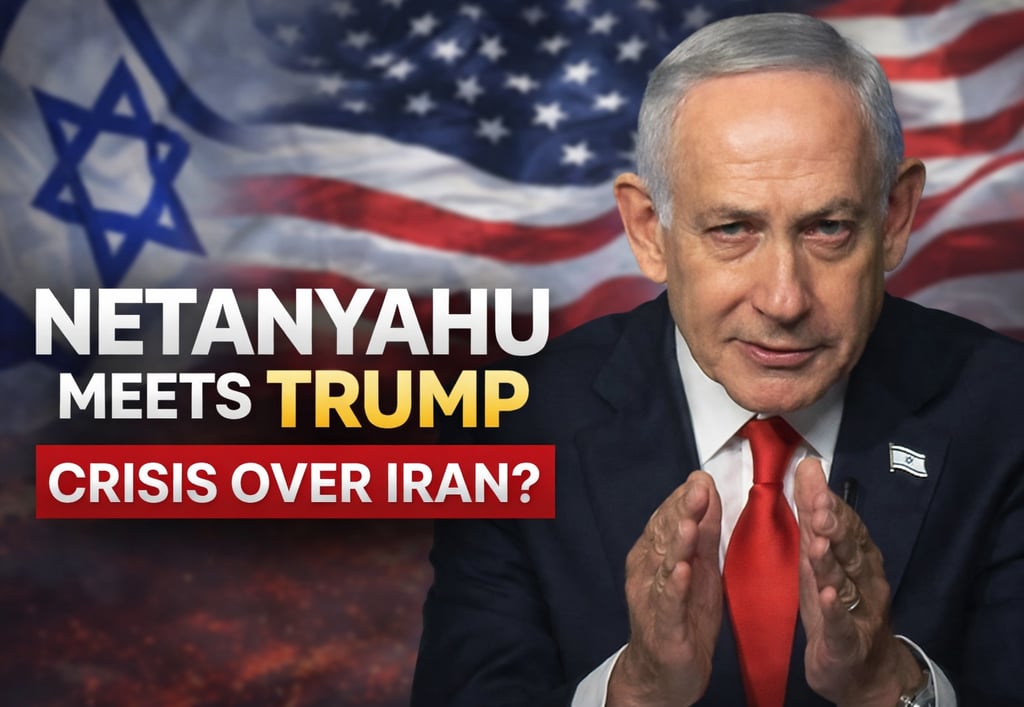
Netanyahu in Washington: Expected Pressure on Trump Over Iran Diplomacy
Israeli Prime Minister Benjamin Netanyahu arrived in Washington on 11 February 2026 for a highly significant meeting with U.S. President Donald Trump. The talks are being viewed as a decisive moment in Middle Eastern diplomacy, with Iran at the center of the agenda—its nuclear ambitions, ballistic missile program, and continued backing of armed proxies across the region. Netanyahu argues that earlier diplomatic efforts focused too narrowly on the nuclear file, enabling Tehran to expand its missile capabilities and regional influence. He is now seeking a tougher and broader American approach.
President Trump has recently made it clear that the United States wants a deal in which Iran has “no nuclear weapons and no missile program.” He warned that if Tehran refuses meaningful cooperation, Washington will increase economic and military pressure. The U.S. has already strengthened its naval presence in the Gulf, and reports suggest Trump is considering deploying an additional aircraft carrier strike group if diplomacy fails. American officials insist the goal is not war, but an agreement that guarantees long-term regional security.
Netanyahu is expected to present firm demands. Israel wants any future deal to include a complete halt to Iranian funding and arming of groups such as Hamas, Hezbollah, and other regional militias. Israeli intelligence estimates that Tehran has invested billions of dollars in these networks, intensifying anti-Israel fronts in Lebanon, Syria, Iraq, and Gaza. Tel Aviv fears that even if the nuclear issue is addressed, an unchecked missile program would still allow Iran to threaten Israel directly with long-range precision weapons.
Iran has reacted cautiously and critically. Tehran officially warned Washington not to allow Netanyahu to derail potential U.S.–Iran talks, calling Israeli interference “destructive to diplomacy.” Iranian leaders insist their nuclear program is peaceful and that missile development is a non-negotiable element of national defense. President Masoud Pezeshkian stated that Iran would not accept any “humiliating or excessive” conditions and that negotiations must be based on equality and respect. The Iranian Foreign Ministry accused the U.S. and Israel of being the main sources of instability in the region.
Domestic unrest inside Iran has added further complexity. Over recent months, protests over inflation, unemployment, and political repression have spread across major cities. Human rights groups report thousands of arrests and significant casualties after a severe government crackdown. Iranian authorities blame the unrest on foreign plots, while Western governments describe it as a genuine public uprising. This internal pressure has weakened Tehran’s international position and increased the urgency of diplomacy.
U.S. Senator Marco Rubio, an influential voice on foreign policy, has supported a hard line. He argues that the Iranian regime is at its weakest point in decades and that Washington should seize this moment. Rubio insists any agreement must rest on three pillars: strict oversight of the nuclear program, verifiable limits on ballistic missiles, and an end to Tehran’s sponsorship of militant groups. He also emphasized that ignoring human rights abuses in Iran would be both morally and strategically wrong.
Another important backdrop is the frequency of Netanyahu–Trump coordination. This visit marks their seventh direct engagement since Trump’s return to office, underscoring the close alignment between Washington and Tel Aviv on Iran policy. Israeli officials believe this is the best opportunity in years to reshape the regional balance against Tehran.
Analysts believe upcoming U.S. Senate discussions around 18 February 2026, where Rubio and other lawmakers will speak, will further define American strategy. There is growing perception that the Trump administration intends to adopt a far more assertive posture than previous governments, while Israel seeks to convert this moment into lasting security guarantees.
The outcome of this meeting could determine whether 2026 brings confrontation or compromise. Arab states such as Saudi Arabia and the UAE are watching closely, sharing Israeli concerns over Iran’s expanding influence. If Washington and Tel Aviv agree on a united front, pressure on Tehran will intensify rapidly. If diplomacy prevails, a broader agreement could open a rare window for stability.
This visit is therefore more than routine diplomacy—it is a strategic crossroads. The decisions taken in Washington this week may either ignite a new cycle of escalation or lay the foundation for a comprehensive Middle East settlement.
Stay informed with the latest national and international news.
© 2026. All rights reserved.