
NATO Ankara Summit 2026: Major Arms Deals, Turkey F-35 Return and Saab GlobalEye Win
Explore NATO's Ankara Summit 2026, major defense deals, Turkey's possible F-35 return, Saab GlobalEye aircraft purchase, Ukraine aid, and Europe's rising military spending.
Raja Awais Ali
7/7/20266 min read
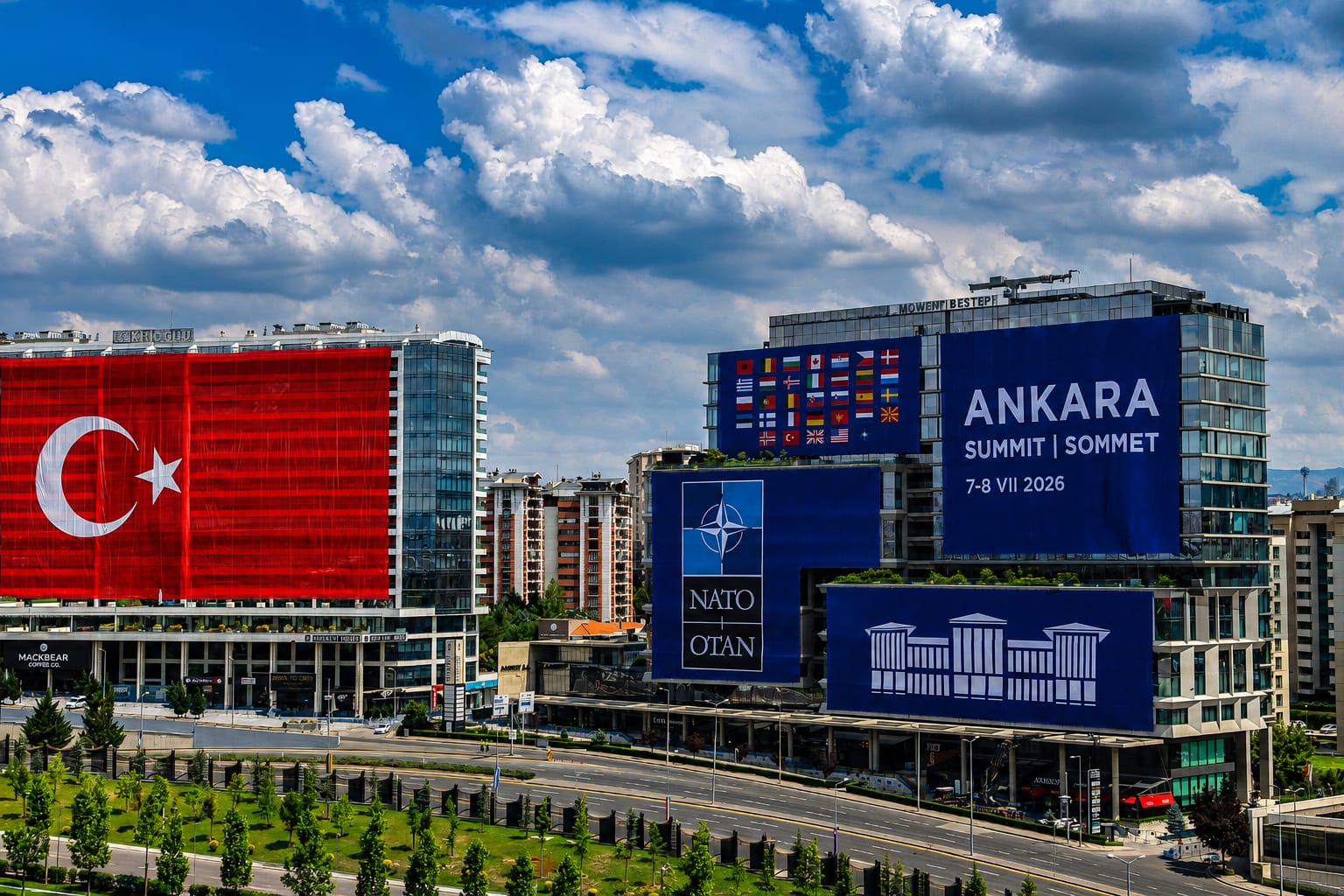
NATO’s Ankara Arms Push: Billion-Dollar Defense Deals, Turkey’s F-35 Comeback, Saab’s GlobalEye Win, and the Future of European Security
NATO leaders gathered in Ankara for one of the alliance’s most important summits in recent years. They used this opportunity to announce several major defense agreements worth tens of billions of dollars. They sent a clear message to U.S. President Donald Trump that Europe is increasing its military commitments and taking on more responsibility for its own security. These announcements came during a high-profile defense industry forum before the formal NATO summit. At this forum, alliance leaders, defense companies, and government officials presented plans to strengthen military readiness against growing threats from Russia, China, North Korea, Iran, and new technologies like drone warfare.
NATO Secretary General Mark Rutte, speaking at the forum, called for what he referred to as a “defense industry revolution” across the alliance. He argued that NATO cannot afford to waste time. It must quickly increase military production and procurement to respond to a more dangerous security environment. Rutte noted that Russia continues to invest heavily in its military while other geopolitical rivals are enhancing their defense capabilities. He emphasized that NATO members need to move beyond slow bureaucratic processes. They must accelerate defense investments, production capacity, and long-term military planning. His comments reflected a broader shift in the alliance as European governments seek to strengthen their armed forces after years of underfunding.
The Ankara forum aimed to underline NATO’s commitment to military modernization before leaders met for formal summit discussions. Several important defense deals, which had mostly remained undisclosed, were revealed together to maximize their political and strategic impact. One of the most notable announcements was the acquisition of advanced surveillance drones from Northrop Grumman, a major American defense company, by several European nations. NATO also spotlighted new industrial partnerships and weapons programs meant to improve the alliance’s readiness for future conflicts.
A significant industrial agreement announced in Ankara involved U.S. defense contractor Lockheed Martin and Germany’s Rheinmetall. They signed a preliminary deal to produce ATACMS missiles together in Germany. If finalized, this would be the first time this short-range ballistic missile is made outside the United States. This project shows Europe’s growing desire to boost domestic defense production while still cooperating closely with American defense technology providers. It also highlights the increasing focus on missile capabilities after lessons learned from the war in Ukraine.
Another major announcement was about counter-drone capabilities. Rutte disclosed that NATO allies plan to invest over $40 billion in the next five years into systems designed to detect, track, and destroy drones. The rising importance of anti-drone technology has become clear as conflicts around the globe, particularly in Ukraine and the Middle East, show how inexpensive drones can threaten costly military equipment, infrastructure, and lives. NATO’s planned investment reflects how quickly drone warfare has changed modern military strategy.
The underlying aim of these announcements was to show that NATO members are responding to long-standing criticism from President Trump about defense spending. For years, Trump has stated that European allies depend too much on the United States for their security while not contributing enough to collective defense. Before he arrived in Ankara, Trump again urged European nations to boost military spending and take more responsibility for the continent's security. NATO leaders wanted to demonstrate that they are making significant progress in this direction.
Mark Rutte reported that NATO’s European members and Canada increased defense spending by about $90 billion in real terms in 2025 compared to 2024. Combined defense expenses exceeded $570 billion, marking one of the largest annual increases in the alliance’s history. Much of this spending surge has been driven by concerns over Russia following its invasion of Ukraine in 2022, but NATO officials also recognize that Trump’s ongoing pressure has played a significant role in boosting defense investments across Europe.
A closely watched development surrounding the summit is Turkey’s possible return to the F-35 stealth fighter program. Sources familiar with the discussions say that President Trump is likely to inform Turkish President Recep Tayyip Erdogan that Washington is ready to allow Turkey to rejoin the program. This shift would represent a major change in U.S.-Turkey relations. Turkey was removed from the F-35 program and faced U.S. sanctions after buying Russia’s S-400 air defense system in 2019. Since then, this issue has been a contentious point in bilateral relations. If Turkey rejoins the program, it could significantly enhance defense cooperation between the two NATO allies and strengthen Turkey’s role within the alliance.
Despite the show of unity in Ankara, tensions still exist within NATO. Relations between the United States and several European allies soured after American military actions against Iran earlier this year. Trump repeatedly criticized NATO members for what he saw as inadequate support during the conflict and renewed threats to reduce America’s commitment to the alliance. European governments argue that they fulfilled their obligations by allowing the use of airspace and military bases, but they contend they were not sufficiently consulted before decisions with major economic and political impacts for Europe. This disagreement revealed deeper concerns about strategic coordination within the alliance.
Additional uncertainty has emerged from Washington’s decision to pull some troops from Europe and conduct a six-month review of its military presence across the continent. European officials worry that future changes in U.S. policy could affect NATO’s long-term security arrangements. Many governments view increased defense spending and industrial cooperation as crucial steps toward reducing vulnerabilities and enhancing Europe’s own military capabilities.
One of the most important procurement decisions announced during the summit was NATO’s choice of Saab’s GlobalEye surveillance aircraft to replace the alliance’s aging Airborne Warning and Control System, known as AWACS. The program is valued at around $4.5 billion and may include the purchase of up to ten aircraft. This decision is a significant win for Sweden’s defense industry and a notable loss for Boeing, whose E-7 Wedgetail had been a strong competitor for the contract.
The existing AWACS fleet dates back to the Cold War and is known for its distinctive rotating radar dome mounted on the aircraft. NATO officials believe that a replacement is necessary to address modern threats, including drone swarms, advanced missiles, and more sophisticated electronic warfare systems. Saab’s GlobalEye system is based on Bombardier Global 6500 business jets and combines airborne surveillance, early warning, and command-and-control functions in a more modern platform.
While Trump has consistently encouraged allies to buy American military equipment, Rutte stressed that the GlobalEye program remains a success involving contributions from European, Canadian, and American industries. He stated that the aircraft represents a NATO-wide capability rather than just a national project. Saab’s Chief Executive Micael Johansson noted that deliveries could start in 2030 if negotiations move quickly. He estimated that each aircraft could cost around $400 million to $450 million, with the total program potentially reaching $4.5 billion depending on the final number of aircraft ordered.
Current plans suggest that the first GlobalEye aircraft will not initially include aerial refueling capability, but that feature is expected to be added in a future upgrade. Current AWACS can be refueled in flight, a capability that has proven valuable during surveillance missions near Ukraine. NATO planners continue to evaluate how future operational needs may shape final specifications.
Defense spending also became a sensitive political issue for the United Kingdom ahead of the summit. Former NATO Secretary General George Robertson criticized Prime Minister Keir Starmer’s government for not presenting a clear plan to spend 3.5% of gross domestic product on core defense. Robertson, who helped draft Britain’s Strategic Defence Review, cautioned that NATO allies might react negatively to London’s lack of long-term commitment to the alliance’s spending goals.
Robertson claims that security threats facing NATO are developing more quickly than anticipated when Britain’s defense review was created. Although the government announced an additional £15 billion, roughly $20 billion, for military modernization, he argues that this investment is still insufficient given the scale of emerging challenges. NATO members agreed last year to aim for 3.5% of GDP on defense and an additional 1.5% on broader national security measures by 2035. Britain’s failure to lay out a clear path to meet this goal has raised concerns among allies.
The future of Ukraine is a key topic at the summit. NATO members are expected to reaffirm their support for Kyiv and promise about €70 billion, or around $80 billion, in aid for 2026. The discussions come as Russia continues to ramp up missile and drone attacks against Ukrainian cities. A recent major strike in the Kyiv region killed at least 28 people and highlighted Ukraine’s increasing shortage of U.S.-made air-defense interceptors. This situation has strengthened arguments among NATO officials that ongoing military aid is crucial for Ukraine to defend itself against Russian attacks.
The announcements made in Ankara show that NATO is undergoing a significant transformation. Large investments in anti-drone systems, new missile production facilities, improved surveillance aircraft, increased military spending, and renewed support for Ukraine all indicate a broader effort to enhance collective defense capabilities. Meanwhile, talks about Turkey’s possible return to the F-35 program and concerns over future U.S. commitments show that political issues are just as important as military ones. The Ankara summit represents more than just a gathering of allied leaders; it is a critical moment in NATO’s effort to respond to a rapidly changing security situation while maintaining unity within the alliance, which is facing some of the toughest challenges since the Cold War ended.
Stay informed with the latest national and international news.
© 2026. All rights reserved.