
Macron Urges National Calm After Political Activist’s Death in France – Detailed Analysis
A comprehensive analysis of the fatal beating of a 23‑year‑old French activist that escalated political tensions, President Macron’s call for restraint, reactions from political parties, and the implications for France’s social fabric and the 2027 election.
Raja Awais Ali
2/15/20263 min read
France’s Political Tensions Deepen After Activist’s Death and Macron’s Call for Calm
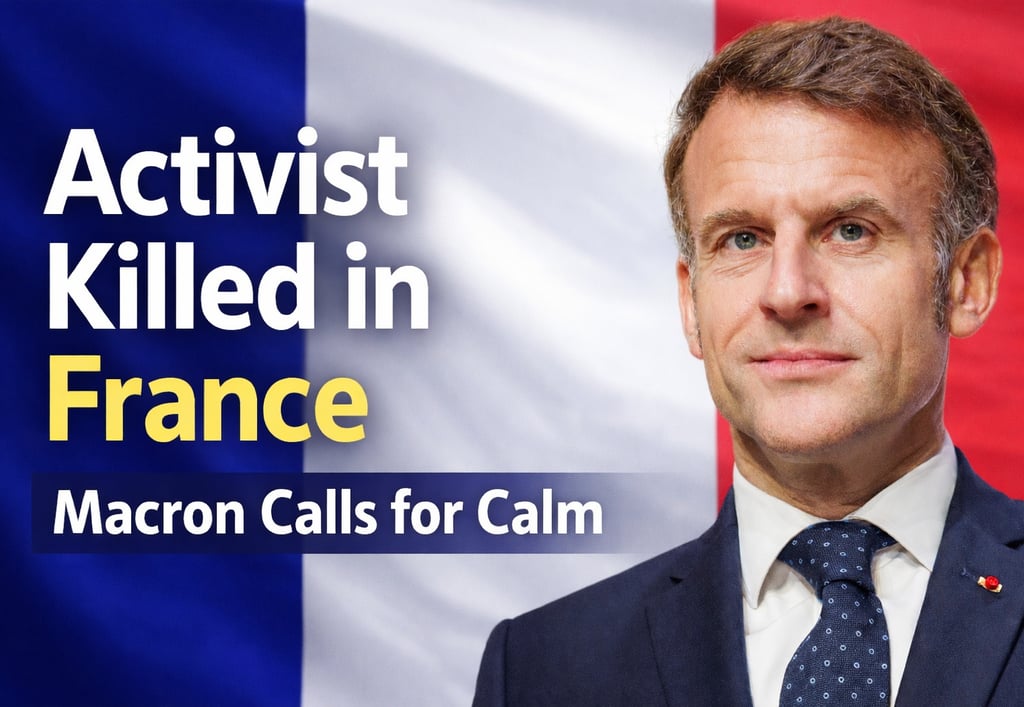
The political climate in France has been sharply jolted by the tragic death of a 23‑year‑old activist, an event that has quickly become a flashpoint in national politics. French President Emmanuel Macron has appealed for calm and restraint, stressing that hatred and violence have no place in the country as political divisions intensify ahead of the 2027 presidential election.
Over the weekend, authorities confirmed that the young activist, identified only as Quentin, died on Saturday from injuries sustained during a violent beating outside a political gathering earlier in the week. The incident occurred on Thursday during a demonstration in Lyon, where two opposing political groups clashed. Quentin reportedly fell into a coma after suffering severe trauma and later succumbed to his injuries.
President Macron addressed the nation and social media followers, expressing deep concern over the fatal beating and emphasizing the need for national unity and respect for the rule of law. He described the attack as an “unprecedented outburst of violence” and stated that “hatred that kills has no place among us.” Macron reiterated that those responsible must be identified, prosecuted, and convicted according to French law, while urging citizens to refrain from revenge or escalation.
The prosecutor’s office in Lyon has launched an investigation into suspected aggravated manslaughter. However, authorities have not yet named any suspects or detailed the exact circumstances leading to the confrontation. The uncertainty surrounding the case has allowed political narratives and accusations to proliferate across the media and public discourse.
Quentin had reportedly been part of a group providing security for members of a right‑leaning collective named Nemesis, which was protesting outside a conference featuring a far‑left political figure. The demonstration reflected the deep polarization that currently exists in French politics.
Almost immediately after news of the young activist’s death spread, political leaders from across the spectrum responded, each framing the event through their ideological lenses. Conservative leader Bruno Retailleau, who is also a declared candidate for the 2027 presidential race, attributed responsibility to radical left‑wing elements, asserting that escalating street politics and intolerance have dangerous consequences.
At the other end of the political spectrum, Marine Le Pen, a prominent figure on the far right and a key contender in future elections, demanded that those involved in the attack be brought to justice “with the utmost severity.” Her statement highlighted how quickly political rhetoric can escalate following such incidents, pushing existing divisions into the foreground of public debate.
Meanwhile, leaders of France’s far-left movement expressed alarm about increasing threats to their supporters and institutions. Jean-Luc Mélenchon and other left-wing activists reported that several party offices experienced attacks in the aftermath of the incident, further underscoring the tense atmosphere that has gripped the country.
Social media platforms have erupted with commentary, videos, and claims from both sides. Some users shared footage allegedly showing a group assaulting an individual, while others warned about misinformation circulating online. This dynamic illustrates how modern political conflicts often unfold not only in the streets but across digital spaces as well, shaping perceptions and deepening divides.
Beyond the immediate reactions, many social commentators and ordinary citizens have expressed concern that the killing reflects more profound issues within French society. Questions about political extremism, national identity, and public safety are now dominating conversations. Some argue that political dialogue has degenerated into hostility rather than constructive debate.
Observers also note that France has seen increasing public unrest over recent years, including large protests and clashes involving labor reforms, immigration policies, and political leadership. The latest tragedy underscores the fragility of social cohesion in a nation where ideological disagreements have sometimes turned heated and even violent.
President Macron’s appeal for calm came as a critical reminder that democratic societies depend on civil discourse and adherence to legal processes to resolve differences. He urged the public, political parties, and media to avoid inflaming tensions further, especially given the proximity of another high-stakes election year. Macron stressed that only through respect for democratic norms and peaceful engagement can France navigate through this period of heightened political tension.
Legal experts and analysts have also weighed in, stating that the investigation’s progress will be crucial in restoring public confidence. If law enforcement can provide transparency and hold perpetrators accountable in a fair judicial process, it might help temper the intense public reaction. Conversely, delays or perceived bias could fuel further mistrust and protest.
The tragic death of the young activist has reignited broader debates about political violence, youth involvement in street politics, and the limits of protest in democratic societies. For many, the incident serves as a stark warning about the dangers of allowing ideological conflicts to escalate beyond peaceful discourse. As France moves forward, leaders and citizens alike are being called upon to reassert the values of dialogue, respect, and the peaceful resolution of differences.
In summary, the activist’s death has not only prompted a national investigation but also amplified existing political divisions. President Macron’s call for calm reflects both the urgency of maintaining public order and the need to uphold democratic principles in the face of growing polarization. With the 2027 presidential election on the horizon, how France responds to this crisis may have lasting implications for its political landscape and social unity.
Stay informed with the latest national and international news.
© 2026. All rights reserved.