
JD Vance Claims Some Israeli Officials Tried to Influence U.S. Opinion on Iran Deal as Policy Rift Emerges
U.S. Vice President JD Vance says some Israeli government figures sought to sway American opinion against the Iran deal. Explore the growing U.S.-Israel policy divide, concerns about Iran, and regional implications.
Raja Awais Ali
7/16/20264 min read
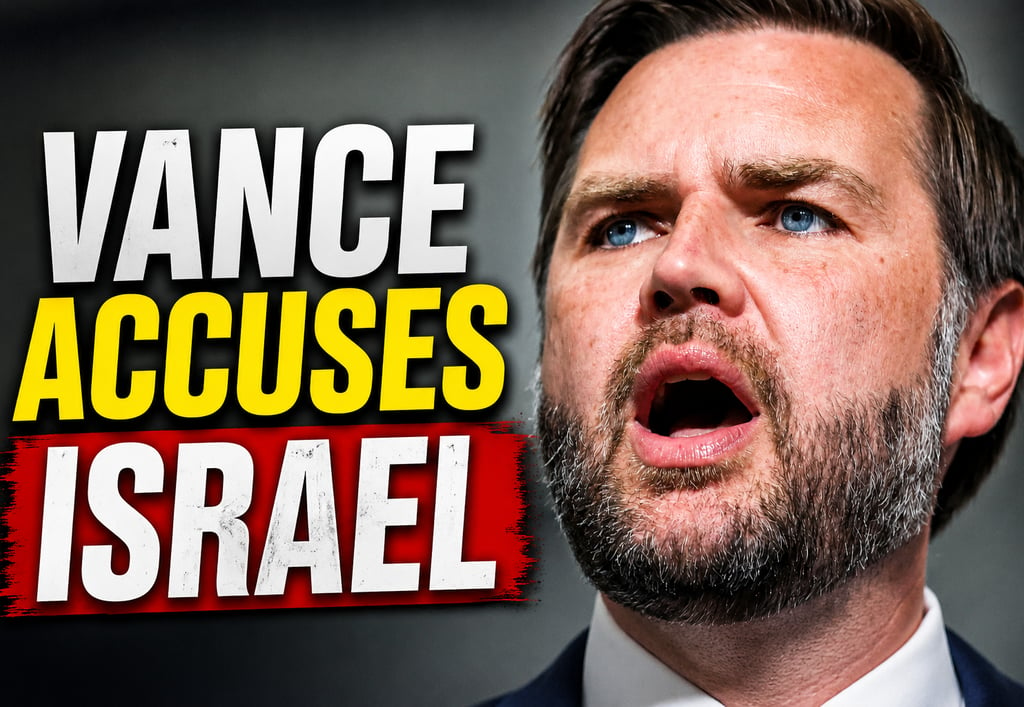
JD Vance Claims Some Israeli Officials Tried to Influence U.S. Opinion on Iran Deal as U.S.-Israel Policy Differences Grow
The relationship between the United States and Israel has long been seen as one of the strongest partnerships in modern international politics. However, comments made by U.S. Vice President JD Vance in July 16 2026 highlighted policy disagreements between the two allies. In a recent interview, Vance alleged that some individuals within the Israeli government attempted to sway American public opinion and policy discussions to weaken a U.S.-backed agreement with Iran and maintain military pressure on Tehran. His remarks have sparked fresh debate about the future of U.S.-Israel relations and American policy in the Middle East.
The controversy revolves around a diplomatic agreement reached last month that aimed to reduce tensions between Iran and Israel and prevent the region from spiraling into a broader conflict. After months of heightened instability and military confrontations, the agreement was seen as an opportunity to de-escalate tensions and create space for diplomacy. While supporters called it a necessary step toward regional stability, critics argued that it did not address several critical security concerns facing Israel.
According to JD Vance, some people within the Israeli political system wanted the military campaign against Iran to continue. They sought to shape American public opinion to undermine support for the agreement. Vance stated he was convinced such efforts occurred and argued that influence campaigns aimed at Washington are common in international politics. He noted that both allies and adversaries regularly try to influence U.S. policy, but he stressed that concerns arise when these efforts impact American political judgment and decisions.
His comments are important because Vance is seen as one of the most influential figures in the current Republican administration and a potential future presidential candidate. Over recent years, he has been linked to a growing foreign policy movement that favors limiting long-term U.S. involvement in overseas conflicts while emphasizing domestic priorities. His latest remarks reflect that broader perspective, suggesting that American decisions should primarily be guided by U.S. national interests rather than external pressure from allies or rivals.
Israeli leaders and security officials have voiced concerns about the agreement since it was announced. Their main criticism is that it does not adequately address Iran's ballistic missile program or provide a clear path to dismantling Iran's nuclear infrastructure. Many Israeli policymakers believe that Iran continues to pose the most serious long-term security challenge to the country. From their perspective, any agreement that leaves questions about Tehran's military capabilities risks creating future security threats.
Critics of the deal also argue that it limits Israel’s ability to respond to regional threats. Some analysts believe the agreement could restrict Israel’s flexibility in addressing Iran-backed groups operating across the Middle East, including Hezbollah in Lebanon. These concerns have stirred debate within Israeli political and security circles, where many officials continue to advocate for a tougher stance toward Tehran.
The Trump administration has defended the agreement and rejected claims that it jeopardizes regional security. President Donald Trump and Vice President JD Vance argue that diplomacy can achieve goals that prolonged military campaigns cannot. They maintain that preventing Iran from acquiring a nuclear weapon is the central aim of U.S. policy, and diplomatic engagement should not be dismissed if it can help achieve that goal without escalating military conflict.
Vance has repeatedly expressed that he strongly opposes Iran obtaining nuclear weapons. At the same time, he contends that military action should not be viewed as the only solution. He believes effective foreign policy requires balancing deterrence, diplomacy, and national interests while avoiding unnecessary wars that could burden the United States and its allies.
The debate over the agreement has also highlighted broader divisions within American politics. While many policymakers support close cooperation with Israel and view the alliance as a cornerstone of U.S. Middle East strategy, an increasingly influential group of political leaders believes Washington should be more selective in its overseas commitments. This emerging viewpoint doesn't necessarily oppose supporting allies but calls for a careful assessment of how international conflicts align with American priorities.
During the interview, Vance was asked whether the United States would have been involved in the recent confrontation with Iran if there was no Israeli influence. He replied that President Trump independently believes Iran should never be allowed to obtain a nuclear weapon and that this belief would remain key in American policy regardless of outside influence. Nonetheless, Vance maintained that U.S. decisions should ultimately depend on American interests and strategic considerations.
In Israel, reactions to the controversy have been mixed. Some commentators argue that disagreements over specific policies do not change the fundamental strength of the U.S.-Israel partnership. Security cooperation, intelligence sharing, and defense collaboration remain deep-rooted and continue to serve important interests for both countries. Others, however, see the dispute as evidence of a broader shift in political thinking within parts of American leadership.
The situation is unfolding against the backdrop of a rapidly changing Middle East. Regional power dynamics involving Iran, Israel, Hezbollah, Gulf states, and the United States continue to evolve. Concerns about maritime security, global energy markets, regional stability, and Iran's nuclear ambitions remain central issues in international diplomacy. Thus, any disagreement between Washington and Tel Aviv carries implications that extend far beyond their relationship.
The controversy has raised important questions about the future direction of American policy in the region. If advocates for restraint and a reduced military footprint gain more influence in Washington, future administrations could adopt a different approach to Middle Eastern conflicts. At the same time, Israel remains deeply troubled by Iran’s regional influence and military capabilities, making it unlikely that these strategic disagreements will resolvequickly.
For now, the debate over the Iran agreement reflects a broader conversation about how the United States should engage with its allies, manage regional conflicts, and balance diplomacy with security concerns. JD Vance's remarks have drawn attention not only to the specifics of the agreement but also to the changing nature of the U.S.-Israel relationship and the challenges facing policymakers in one of the world’s most volatile regions.
The coming months will be crucial in determining whether the agreement succeeds in reducing tensions or becomes another source of friction in an already complex geopolitical environment. What is clear is that Vance’s comments have opened a new chapter in the discussion surrounding U.S. policy toward Iran, Israel, and the broader Middle East. The outcome of this debate could affect diplomatic strategies, regional security decisions, and the future of one of the most significant alliances in international politics.
Stay informed with the latest national and international news.
© 2026. All rights reserved.