
Israel Strikes Iran Petrochemical Plant as Trump Pushes for Ceasefire Deal
Israel launched new strikes on Iran’s Mahshahr petrochemical complex despite Donald Trump urging restraint. Rising oil prices, Iran missile attacks, Lebanon tensions and Red Sea threats are increasing fears of a wider Middle East war.
Raja Awais Ali
6/8/20265 min read
Israel Strikes Iran Petrochemical Plant as Trump Pushes for Ceasefire Deal
The Middle East has entered another dangerous phase as tensions between Israel and Iran continue to expand beyond military borders and begin affecting global energy markets, international shipping routes and diplomatic negotiations. In the latest escalation, Israel launched strikes on a major petrochemical complex in Iran’s southwestern city of Mahshahr, raising fears that the conflict could move into a much broader regional war involving energy infrastructure and international trade.
The strike is being viewed as a major turning point because it marks the first direct attack on an Iranian energy site since the ceasefire announced in April. Israeli military officials said the operation targeted military-related infrastructure and Iranian air defense systems that Tehran had recently deployed. According to Israel, the goal of the attacks was to weaken Iran’s defensive capabilities and limit future missile launches toward Israeli territory.
Iranian officials, however, confirmed that several production lines at the Mahshahr petrochemical complex were damaged. Iranian state media reported that five production units at the facility have now been affected since the wider Iran conflict began on February 28. Authorities in the region ordered workers to evacuate parts of the facility while damage assessments continued.
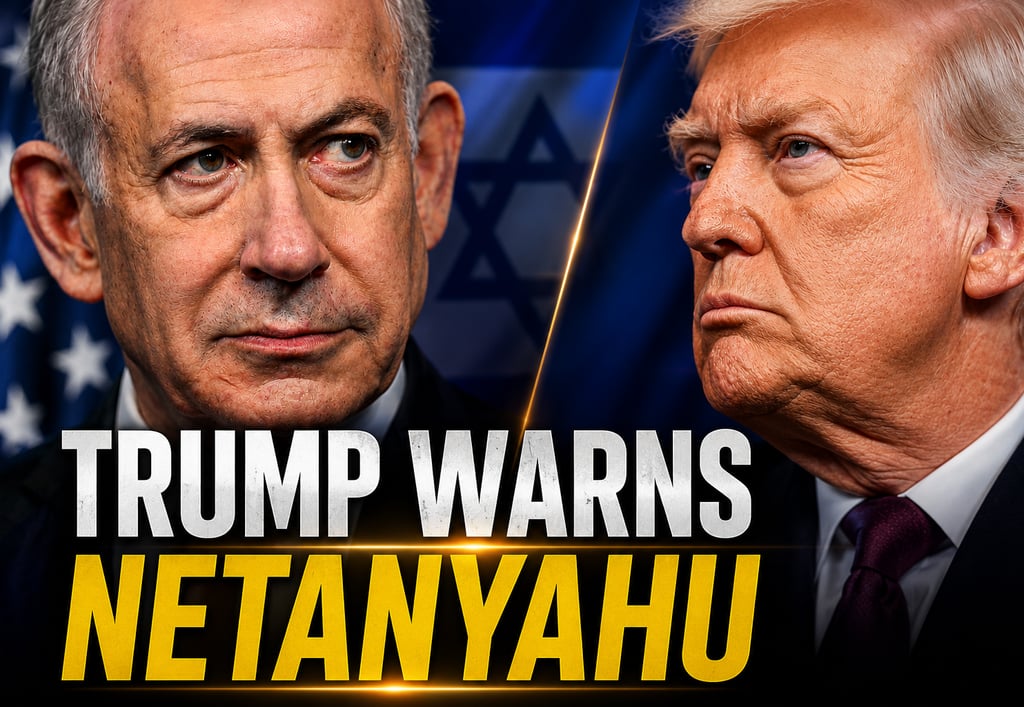
The latest escalation comes at a sensitive moment for diplomacy in the region. U.S. President Donald Trump reportedly held a direct phone call with Israeli Prime Minister Benjamin Netanyahu and urged him to avoid further strikes against Iran. According to multiple media reports, Trump told Netanyahu that Washington was close to securing a broader agreement with Tehran and that continued military escalation could destroy ongoing diplomatic efforts.
Speaking to the Financial Times, Trump said, “I call the shots. He doesn’t call the shots,” referring to Netanyahu. The statement immediately highlighted growing tensions between Washington and the Israeli government over how the conflict should be managed moving forward.
The disagreement between the United States and Israel is becoming increasingly visible. While Washington appears focused on preventing a wider regional war and protecting ongoing negotiations with Tehran, Israel continues to insist that operations against Iran, Hezbollah and other Iranian-backed groups must continue until long-term security threats are eliminated.
Iran’s Islamic Revolutionary Guard Corps, known as the IRGC, blamed the United States for the latest Israeli attacks and warned that future strikes on non-military and energy-related targets would carry major economic consequences for the world. The IRGC later claimed responsibility for retaliatory missile attacks targeting an industrial site in the Israeli city of Haifa.
Iranian military officials also stated that missiles were launched toward the Ramat David air base near Nazareth, one of Israel’s important military facilities. Israeli defense systems reportedly intercepted multiple incoming missiles, though tensions on both sides continued to rise throughout the day.
Israeli Ambassador to Washington Yechiel Leiter said Iran had fired 11 ballistic missiles toward Israeli territory during the latest exchange. Israeli defense forces claimed that most projectiles were intercepted before reaching their intended targets. Meanwhile, Iranian media reported explosions in Tehran and claimed that air defense systems successfully shot down a drone over the capital.
The conflict is no longer limited to Israel and Iran alone. Yemen’s Iran-aligned Houthi movement also entered the situation by announcing that it would move to block Israeli maritime navigation in the Red Sea. The Houthis claimed responsibility for launching the first missile attack against Israel since the ceasefire and warned that further operations could follow.
The Red Sea and the Strait of Hormuz are among the most strategically important shipping routes in the world. Any military escalation in these waters immediately affects international trade, oil transportation and energy security. Global shipping companies are already monitoring the situation closely as fears of wider disruption continue to grow.
The economic impact of the latest attacks was felt almost immediately across global markets. Brent crude oil prices jumped nearly 5%, moving back above $97 per barrel as investors reacted to the growing risk of supply disruptions in the Middle East.
Analysts warn that continued attacks on energy infrastructure could trigger another major global energy shock similar to previous oil crises. The Strait of Hormuz alone handles nearly one-fifth of the world’s crude oil and liquefied natural gas shipments. Iran has already restricted much of the shipping traffic through the area while the United States has maintained pressure on Iranian ports and trade networks.
Rising oil prices could create serious inflation pressure across developing economies that are heavily dependent on imported fuel. Countries such as Pakistan, India and Bangladesh may face increased fuel costs, transportation expenses and broader economic strain if instability in the Gulf continues for an extended period.
At the same time, tensions on the Lebanon front continue to intensify. Although the United States recently proposed a ceasefire framework for Lebanon, Israel launched fresh strikes on Hezbollah strongholds in Beirut over the weekend. Iran has repeatedly stated that any wider peace agreement with Washington depends on a stable ceasefire in Lebanon as well.
Iranian Parliamentary Speaker Mohammed Baqer Qalibaf warned that American bases and Israeli assets remain legitimate targets because Israel continues military operations inside Lebanon despite diplomatic negotiations taking place elsewhere in the region.
Hezbollah has also made clear that it will not disarm unless Israeli forces fully withdraw from Lebanese territory. Since the beginning of Israel’s operations in Lebanon earlier this year, thousands of people have reportedly been killed while hundreds of thousands have been displaced from their homes.
The broader conflict has now evolved into a regional power struggle involving Israel, Iran, Hezbollah, the Houthis and the United States. Every new military strike increases the possibility of a larger confrontation that could destabilize not only the Middle East but also the global economy.
One of the biggest questions now is whether the United States can still prevent a wider war. Trump continues to insist that a preliminary agreement with Iran remains possible and that negotiations could eventually reopen the Strait of Hormuz and stabilize the region. However, the reality on the ground suggests that military escalation is still outpacing diplomacy.
Iran’s reported demands in negotiations include sanctions relief, the release of frozen assets and recognition of its strategic influence over regional waterways. On the other side, the United States and Israel continue to demand guarantees that Iran will not develop nuclear weapons capabilities.
This fundamental disagreement remains the core obstacle preventing a long-term ceasefire from holding. Every temporary pause in fighting has quickly collapsed under renewed military operations and retaliatory strikes.
Israel’s latest attacks on Iranian energy infrastructure have also raised fears that the conflict is entering a new phase where oil facilities, shipping networks and industrial centers become regular targets. If that happens, the consequences could extend far beyond the Middle East and impact fuel prices, aviation costs, food supply chains and international financial markets.
The current crisis shows that the Israel-Iran conflict is no longer a limited military confrontation. It has become a complex regional struggle involving diplomacy, energy security, economic pressure and strategic alliances. With each passing day, the chances of a broader Middle East conflict continue to rise, and global leaders are now facing increasing pressure to prevent the situation from spiraling further out of control.
Stay informed with the latest national and international news.
© 2026. All rights reserved.