
Israel-Lebanon Airstrikes 2026: 250+ Dead, Ceasefire Collapse & Oil Crisis Impact
April 9, 2026 breaking news: Israel airstrikes kill 250+ in Lebanon, Iran tensions rise, Strait of Hormuz crisis disrupts oil supply, jet fuel prices surge, and global markets react.
Raja Awais Ali
4/9/20264 min read
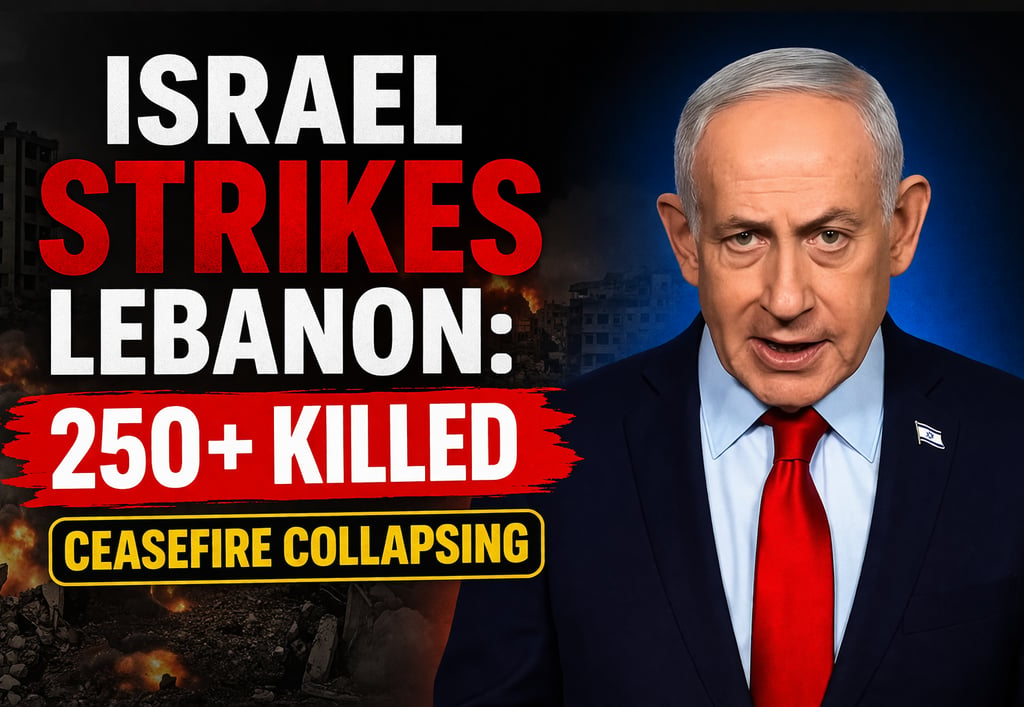
Israel Lebanon Airstrikes 2026: 250+ Killed, Iran Ceasefire Breakdown, Hormuz Oil Crisis, Jet Fuel Surge & Global Shock (April 9 Full Report)
On April 9, 2026, the situation in the Middle East once again took an extremely dangerous turn when Israel launched fresh and intense airstrikes on Lebanon, resulting in more than 250 deaths. These strikes came at a critical moment when the ceasefire announced just two days earlier by Donald Trump had not yet fully stabilized. Israel has clearly stated that this ceasefire does not apply to Lebanon, while Iran maintains that no peace is possible unless Lebanon is included in the agreement. To address the escalating dispute, Pakistan has taken a mediating role, and an Iranian delegation is set to travel to Pakistan, where they will meet a United States delegation led by Vice President JD Vance on Saturday for negotiations, although at present there are limited signs of any meaningful breakthrough.
Across Lebanon, Israeli airstrikes caused extensive destruction, particularly in the southern suburbs of Beirut, where Hezbollah has strong influence. Additional strikes also targeted multiple towns and villages across southern Lebanon. The attacks were carried out in two waves — late at night and again in the early morning hours. According to Lebanese media reports, many strikes occurred without any prior warning, giving civilians no opportunity to evacuate. As a result, casualties rose rapidly, hundreds were injured, and dozens remain trapped under the rubble. Rescue teams continued operations throughout the night attempting to extract survivors, while hospitals declared emergency status and many facilities faced severe blood shortages. A local resident described the devastation, saying: “This was my home, I lived here for 50 years, everything is gone,” which reflects the scale of the humanitarian disaster unfolding in the region.
If viewed in full context, the April 8, 2026 strikes form the core foundation of this escalation, when Israel carried out extremely intense and coordinated air operations described as the largest and fastest escalation of the conflict so far. This operation was referred to in some reports as “Operation Eternal Darkness,” under which approximately 100 airstrikes were launched within minutes. At least 254 people were killed, more than 1,100 were injured, and within just 48 hours total deaths exceeded 500. Most of the strikes targeted civilian areas, causing massive human losses and triggering strong international reactions.
The Israeli military claims it eliminated a close relative and personal assistant of Naim Qassem, while some international reports also suggest that Hezbollah’s leadership was targeted, including claims about the group’s top leadership, although these remain unverified. Israel also stated that it destroyed bridges, roads, and infrastructure used by Hezbollah in order to disrupt supply routes and operational movement. On the other hand, Hezbollah, which initially showed restraint following the ceasefire announcement, has now re-entered active conflict and stated that it will continue operations as long as Israeli strikes continue. Reports also indicate that despite the ceasefire, rocket attacks were launched toward northern Israel, suggesting that the ceasefire is effectively collapsing on the ground.
Iran strongly condemned the Israeli attacks, calling them a “serious violation” of the ceasefire, and stated that no agreement can succeed unless Israel stops its strikes on Lebanon. Iranian officials also emphasized that any ceasefire excluding Lebanon is unacceptable. At the same time, Iran has maintained its blockade of the Strait of Hormuz, which has now turned into one of the world’s most severe energy crises. The blockade, ongoing for nearly one and a half months, has disrupted approximately 20% of global oil supply and experts warn it could become the largest energy crisis since the 1970s. Nearly 200 oil tankers are currently stranded in the Strait of Hormuz carrying an estimated 130 million barrels of crude oil and 46 million barrels of refined fuel. Global oil prices have surged sharply, reaching nearly 150 dollars per barrel in physical markets, while Brent crude is trading between 102 and 105 dollars per barrel and WTI between 98 and 101 dollars per barrel as of April 9, 2026.
Due to the ongoing energy crisis, the aviation sector is also under severe pressure, as jet fuel prices are estimated at a global average of 132 to 145 dollars per barrel equivalent refined fuel index, while in high-demand regions they have reached close to 150 dollars per barrel. Experts warn that if the situation worsens, jet fuel costs could rise above 160 dollars per barrel, significantly increasing airline operational costs and directly impacting international flight prices and cargo rates worldwide.
Asian and European stock markets have declined, while oil prices are approximately 40 percent higher than pre-war levels, increasing inflationary pressure and global economic instability.
US President Donald Trump issued a strong statement warning Iran that further and more powerful strikes would follow if its policies do not change, while US military readiness has reportedly increased. However, on-ground reality suggests that the United States has not fully achieved its core objectives, as Iran still retains over 400 kilograms of highly enriched uranium and maintains advanced missile and drone capabilities.
Inside Iran, a major development occurred as nationwide mourning marked 40 days since the reported death of Supreme Leader Ali Khamenei. Large gatherings were held across Tehran, Kermanshah, Yazd, and Zahedan, where thousands of people took to the streets wearing black clothing and carrying Iranian flags and images of Khamenei, while images of his son and potential successor, Mojtaba Khamenei, were also prominently displayed. In Shiraz, the funeral prayer of senior Revolutionary Guard intelligence chief Majid Khademi, who was killed in recent strikes, was also held.
Overall casualty figures remain highly concerning, as Lebanon alone has recorded more than 250 deaths in recent strikes, while including the April 8 attacks total deaths within 48 hours have exceeded 500 with thousands injured. Over the six-week conflict period, Iran has reportedly suffered between 2,000 and 3,500 fatalities, while Israel has recorded at least 23 civilian and 11 military deaths.
Globally, the United Kingdom, France, and other allied nations have condemned the Israeli strikes on Lebanon and called for extending the ceasefire to include Lebanon, while the United Nations and other international organizations have also expressed deep concern over the rapidly escalating situation.
Overall, the situation as of April 9, 2026 reflects that the ceasefire remains fragile and unstable while core issues remain unresolved. Israeli strikes on Lebanon, Hezbollah’s response, Iran’s firm stance, the Strait of Hormuz blockade, rising oil prices, and increasing geopolitical tensions all indicate that the coming days may bring further escalation, and without urgent diplomatic intervention, this conflict risks evolving into a prolonged and highly destructive war with global consequences that could last for generations.
Stay informed with the latest national and international news.
© 2026. All rights reserved.