
Iran War Escalates: U.S. Says Iran’s New Supreme Leader Mojtaba Khamenei Wounded as Regional Tensions Rise
U.S. Defense Secretary Pete Hegseth says Iran’s new Supreme Leader Mojtaba Khamenei was wounded in recent strikes as the U.S.-Israel war with Iran intensifies. Over 6,000 targets hit and regional tensions grow across the Gulf.
Raja Awais Ali
3/13/20264 min read
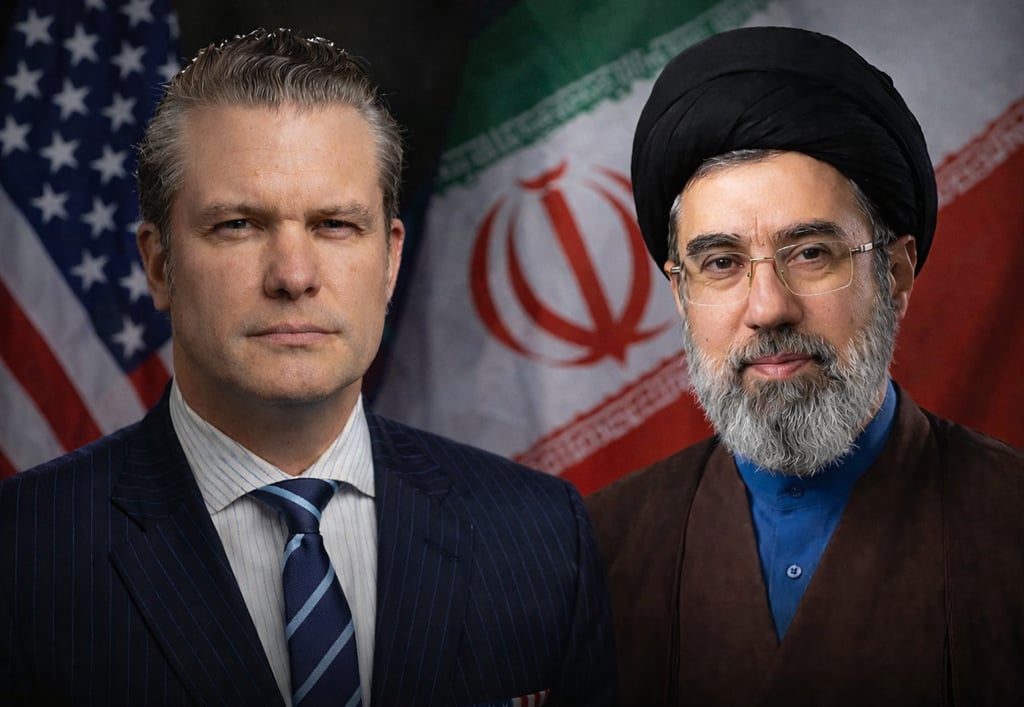
Iran War Escalates as U.S. Says New Supreme Leader Mojtaba Khamenei Wounded
The war in the Middle East has entered a dangerous new phase as the United States claims that Iran’s newly appointed supreme leader, Mojtaba Khamenei, has been wounded during recent attacks. The statement came from U.S. Defense Secretary Pete Hegseth during a press briefing in Washington on March 13, 2026, raising fresh questions about Iran’s leadership and the future direction of the conflict.
The claim comes nearly two weeks after the United States and Israel launched large-scale military strikes inside Iran, targeting missile systems, drone facilities and naval infrastructure. According to U.S. officials, the military campaign aims to significantly weaken Iran’s ability to conduct long-range attacks and disrupt its regional military network.
Questions Over Iran’s Leadership
According to Hegseth, the new Iranian leader may have suffered injuries during one of the early strikes that hit key leadership locations. He suggested that the absence of video or audio messages from Mojtaba Khamenei since the attacks raises questions about his physical condition.
In recent days, a statement attributed to Khamenei was released in written form through Iranian state channels. However, it was not accompanied by any visual or audio confirmation. Hegseth said the lack of a public appearance was notable given Iran’s extensive media infrastructure.
Iranian officials, however, dispute the U.S. assessment. An Iranian source told international media that Mojtaba Khamenei was only lightly injured and continues to oversee government and military decisions. Iranian state television has described him as “war-wounded” but has not released further details about his condition.
The leadership transition itself came after a dramatic escalation of the war. Iran’s previous supreme leader, Ali Khamenei, was reportedly killed in an Israeli strike during the early phase of the conflict, forcing Tehran to quickly appoint his son Mojtaba Khamenei as the country’s new leader.
Threat to Close the Strait of Hormuz
In the written statement attributed to the new leader, Iran vowed to continue resisting what it described as aggression by the United States and Israel. The statement also warned that Iran could take drastic measures if the conflict continues to expand.
Among the most serious warnings was the possibility of closing the Strait of Hormuz, one of the world’s most important energy shipping routes. Roughly a third of the world’s seaborne oil passes through this narrow waterway between Iran and the Gulf states.
Energy analysts say any disruption to the strait could trigger a major shock to global oil markets, potentially driving energy prices sharply higher and affecting economies worldwide.
Iran also warned neighboring Gulf states that host American military bases that their territory could become potential targets if those bases are used to launch attacks against Iran.
U.S. and Israeli Strikes Intensify
U.S. military officials say the joint U.S.-Israeli campaign has already struck more than 6,000 targets across Iran in the past two weeks. These targets include missile launch sites, drone bases, naval installations and military command centers.
Washington says the goal of the operation is to degrade Iran’s offensive capabilities and prevent further missile and drone attacks across the region.
Despite the scale of the strikes, Iran has continued to demonstrate its ability to operate militarily. Reports indicate that Iranian drones have recently been detected flying near several Gulf countries, including Kuwait, Iraq, United Arab Emirates, Bahrain and Oman.
Regional security officials say the presence of drones across multiple airspaces highlights the risk that the conflict could expand beyond Iran’s borders.
Rising Casualties on Both Sides
The humanitarian toll of the war is also growing. Reports indicate that nearly 2,000 people have been killed in Iran since the bombing campaign began, with thousands more injured. Several cities and military installations have suffered significant damage during the strikes.
The United States has also suffered losses. On March 13, four U.S. service members were killed when a military refueling aircraft crashed in western Iraq. American officials said the crash involved another aircraft but was not caused by hostile fire.
The incident brought the number of U.S. military fatalities since the conflict began to 11, highlighting the increasing risks facing American forces deployed in the region.
“No Mercy” Statement Sparks Legal Concerns
During the briefing, Hegseth adopted a firm tone regarding the ongoing military campaign, stating that the United States would continue to push forward against its enemies without hesitation.
However, his remarks drew criticism from some international legal experts after he used the phrase “no mercy” when describing the war effort. Under international humanitarian law, combatants must follow strict rules governing the treatment of surrendering forces and civilians.
Organizations such as the International Committee of the Red Cross have previously emphasized that statements implying no survivors or no surrender can raise serious legal concerns under the laws of armed conflict.
Growing Regional Uncertainty
Analysts say the war between the United States, Israel and Iran is increasingly shaping the geopolitical landscape of the Middle East. Rising tensions in the Gulf, fears over global oil supplies and growing military deployments across the region have heightened international concern.
Financial markets have also reacted nervously, with energy prices fluctuating amid fears that the conflict could disrupt critical supply routes.
For now, one of the biggest unanswered questions remains the condition of Iran’s new supreme leader. Until Mojtaba Khamenei appears publicly or releases verified video footage, speculation about his injuries and the stability of Iran’s leadership is likely to continue.
As the war enters its third week, the conflict is rapidly evolving into one of the most significant geopolitical crises in the region in years, with consequences that could extend far beyond the Middle East.
Stay informed with the latest national and international news.
© 2026. All rights reserved.