
Iran War Enters Fourth Month: US Lawmakers Press Marco Rubio as Oil Prices Rise and War Costs Grow
The Iran war has entered its fourth month as US lawmakers question Marco Rubio over strategy, rising oil prices, war costs, energy markets, and growing political pressure ahead of the 2026 elections.
Raja Awais Ali
6/2/20264 min read
Iran War Enters Fourth Month: US Lawmakers Press Marco Rubio as Oil Prices Rise and War Costs Mount
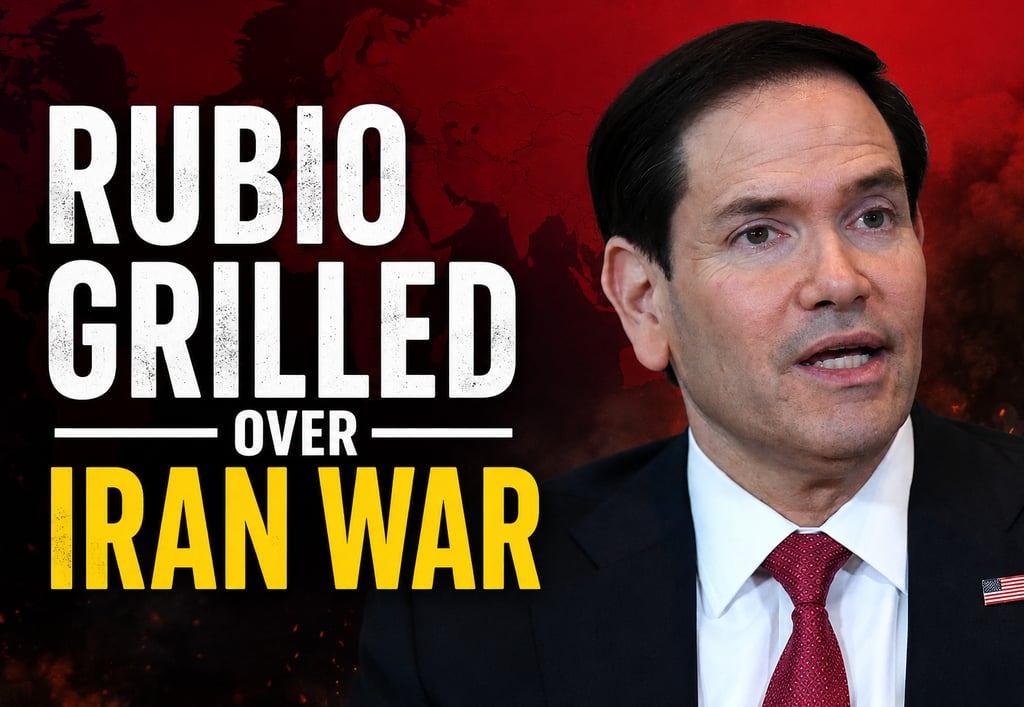
The war between the United States and Iran has entered its fourth month, bringing increasing political pressure in Washington, rising energy costs around the world, and growing questions about President Donald Trump’s strategy for ending the conflict. This week, Secretary of State Marco Rubio is expected to face some of the toughest public questioning of his tenure as lawmakers seek answers about the war, its financial burden, and the administration’s broader foreign policy direction.
Rubio, who also serves as Trump’s National Security Adviser, will testify before multiple congressional committees over two days. Officially, the hearings focus on the State Department’s budget request, but lawmakers from both parties are expected to use the opportunity to demand clarity on the Iran conflict, which began on February 28, 2026, when the United States and Israel launched military strikes against Iranian targets.
The hearings come at a critical moment. While Democrats have consistently questioned the conflict, concern is now growing among some Republicans as well. Many lawmakers argue that after four months of fighting, the administration has yet to present a clear roadmap for ending the war. Although senior officials have briefed Congress behind closed doors, Rubio has not publicly testified in detail about the conflict until now.
The Trump administration is simultaneously asking Congress to approve a major shift in federal spending priorities. Officials are seeking a 30% reduction in the foreign affairs budget while proposing a 50% increase in military spending. Supporters argue that stronger defense capabilities are necessary during a period of global instability. Critics, however, say the move weakens diplomacy at a time when diplomatic solutions are needed most.
One of the biggest concerns facing lawmakers is the economic impact of the conflict. The Iran war has placed enormous pressure on global energy markets, largely because of disruptions in the Strait of Hormuz, one of the world’s most important oil transit routes. Roughly one-fifth of global oil supplies normally pass through the narrow waterway, making any disruption a major concern for international markets.
As of June 2, 2026, Brent crude oil prices remain near $93 to $95 per barrel, while West Texas Intermediate crude trades around $90 to $91 per barrel. Although prices have eased slightly from recent highs, they remain significantly above pre-war levels. Energy analysts warn that if shipping through the Strait of Hormuz does not fully recover, oil prices could easily move back above $100 per barrel in the coming months.
The impact is already being felt by consumers. Higher oil prices have translated into more expensive gasoline, increased transportation costs, and rising prices for goods across multiple sectors. According to economic estimates, American households have collectively absorbed roughly $100 billion in additional costs since the conflict began. The average family has faced hundreds of dollars in extra expenses due to higher fuel and energy prices.
These economic pressures are becoming a growing political challenge for President Trump. With congressional elections approaching later this year, Republicans are increasingly concerned about voter frustration over inflation and fuel costs. Many lawmakers hope the administration can help restore normal shipping operations in the Strait of Hormuz and stabilize energy markets before voters head to the polls.
At the same time, Trump faces pressure from different factions within his own party. Some Republican lawmakers want a faster diplomatic solution to reduce economic damage. Others argue that the administration should maintain pressure on Tehran until it can guarantee that Iran will never obtain a nuclear weapon.
The White House continues to defend its approach. President Trump has repeatedly stated that the conflict will be justified if it permanently prevents Iran from developing nuclear weapons. He has also insisted that negotiations remain possible and that his administration can eventually secure a favorable agreement that ends the war while protecting American interests.
Despite those assurances, many members of Congress say they need more information. Questions continue to surround the administration’s long-term objectives, military strategy, and exit plan. These concerns became visible last month when the Senate voted to advance a war powers resolution that would require congressional authorization for the continuation of military operations against Iran. Shortly afterward, House leaders delayed a vote on a similar measure amid signs that it could receive enough support to pass.
Beyond Iran, Rubio is also expected to face questions regarding several other foreign policy issues. Lawmakers want updates on the situation in Venezuela following the January operation that resulted in the capture of President Nicolas Maduro. Although Maduro is no longer in power, uncertainty remains over the country's political future, leadership structure, and prospects for democratic elections.
Congress is also expected to examine ongoing US military operations off Venezuela’s coast. Administration officials describe these missions as anti-narcotics operations aimed at disrupting drug trafficking networks. However, reports of casualties and continued military engagement have raised concerns among some lawmakers who want greater transparency regarding the scope and objectives of the mission.
Another area likely to receive attention is Cuba. As the Trump administration increases pressure on the communist-led government in Havana, some analysts and lawmakers are expressing concern that tensions could escalate further. Questions remain about whether Washington intends to pursue additional sanctions, diplomatic measures, or more aggressive actions in the future.
Meanwhile, the broader global economy continues to feel the consequences of the Iran war. Asian economies that depend heavily on imported energy have been particularly vulnerable to rising fuel costs and supply disruptions. Countries across South Asia and Southeast Asia are facing additional economic pressure as businesses and consumers absorb higher energy bills.
The conflict has also created significant challenges for international shipping and trade. Reduced traffic through key energy routes has forced some companies to seek alternative transportation methods, increasing costs and delivery times. These disruptions have contributed to wider concerns about global economic growth during the second half of 2026.
For many lawmakers, the upcoming hearings represent one of the few opportunities to publicly examine the administration’s strategy and demand accountability. They want clear answers about how much the war is costing, what success would look like, and whether a realistic path to peace exists.
As Marco Rubio prepares to testify before Congress, the stakes are high not only for the administration but also for the global economy. The coming weeks could determine whether diplomatic efforts gain momentum or whether the conflict continues to drive higher energy prices, greater political divisions, and increased uncertainty across international markets.
With oil prices elevated, war costs rising, and public patience wearing thin, Washington is entering a decisive phase in its debate over one of the most consequential foreign policy challenges of 2026.
Stay informed with the latest national and international news.
© 2026. All rights reserved.