
Iran War 2026: Is the U.S. Really Withdrawing or Reshaping Global Strategy?
Iran War 2026 latest analysis: US strategy, Israel strikes, oil crisis, Strait of Hormuz tensions, and global impact explained in depth.
Raja Awais Ali
3/21/20266 min read
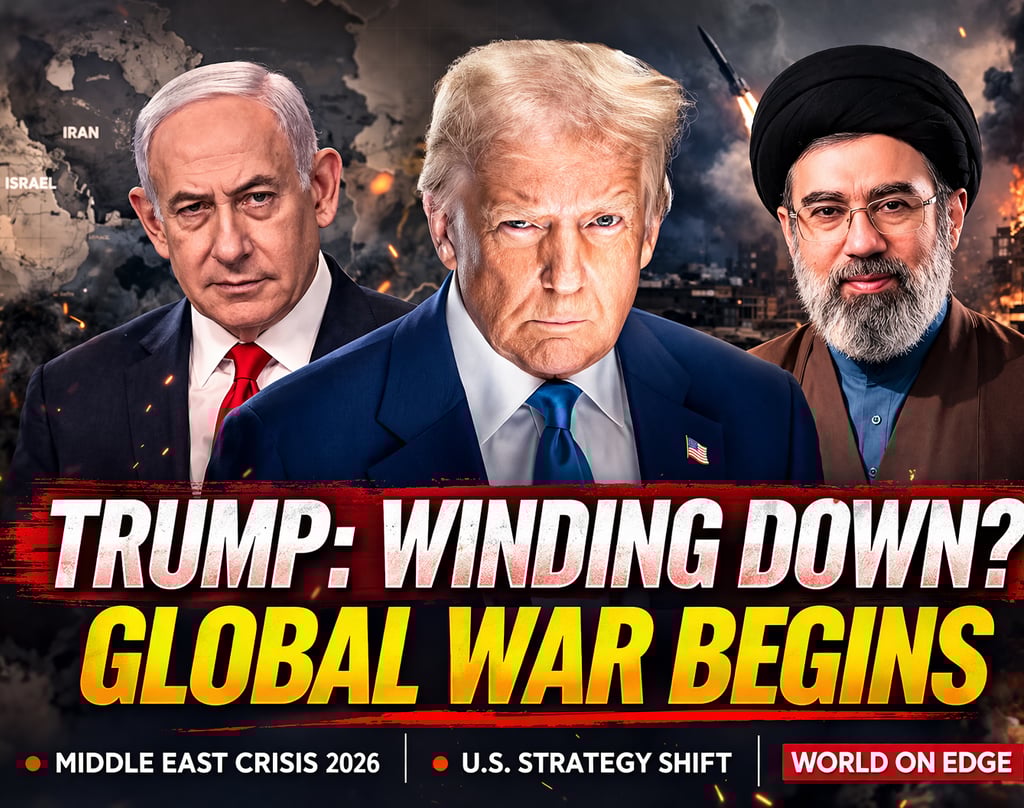
Iran War 2026: Is the U.S. Really Pulling Back or Quietly Reshaping Global Strategy?
The Middle East is currently going through an unprecedented crisis that has shaken not only the region but also global politics, the economy, and international security. As of March 21, 2026, the latest developments suggest that U.S. President Donald Trump has indicated that the United States is considering “winding down” its ongoing military operations against Iran. On the surface, this may appear to be a positive and de-escalatory move. However, a deeper analysis of the ground realities, military deployments, and global responses reveals a far more complex picture. In fact, many experts believe this statement is not a retreat, but a calculated strategic signal.
The conflict began on February 28, 2026, when the United States and Israel launched large-scale military operations against Iran. Since then, the conflict has escalated continuously and has now entered its fourth week. Initially perceived as a limited operation, it has rapidly evolved into a full-scale regional war involving Lebanon, Gulf states, and global powers at various levels. The nature of warfare has also transformed significantly. What began with airstrikes has now expanded into cyber warfare, intelligence operations, drone attacks, and proxy engagements. This shift has effectively turned the conflict into a hybrid war, where battles are fought not only on the battlefield but also in digital and economic domains.
One of the most critical and dangerous developments in this war is related to Iran’s nuclear program. According to Iranian media, the Natanz Nuclear Facility—a central hub for uranium enrichment—was targeted in an attack. Although Iranian officials claimed that no radiation leak occurred, the strike has triggered serious global concerns. Attacking nuclear infrastructure is considered highly dangerous, not only due to immediate human risks but also because of potential long-term environmental consequences. Experts warn that repeated strikes on such facilities could undermine global nuclear safety frameworks and challenge the credibility of institutions like the International Atomic Energy Agency.
At the same time, Israel has carried out airstrikes in multiple Iranian cities, including Tehran, Karaj, and Isfahan. These attacks have reportedly resulted in civilian casualties, including the death of three members of a single family. This indicates that the war is no longer confined to military targets. Civilian populations are increasingly being affected, deepening the humanitarian crisis. Critical infrastructure such as electricity, water supply, hospitals, and transportation systems is under immense pressure, severely disrupting daily life and overburdening healthcare systems.
In Lebanon, the situation has become one of the most dangerous aspects of the conflict. Israel has launched large-scale operations against Hezbollah, a key ally of Iran. Reports suggest that over a thousand people have been killed and more than one million displaced. This clearly demonstrates that the war has expanded into a full regional conflict with consequences far beyond national borders. Lebanon’s already fragile economy is now on the brink of collapse, while humanitarian organizations are struggling with limited resources.
Inside Israel, the situation remains extremely tense. Continuous missile attacks from Iran have forced millions into shelters, with sirens sounding frequently across the country. While large-scale casualties remain relatively limited so far, fear and uncertainty continue to rise. This has also increased political pressure within Israel, where questions are being raised about war strategy and outcomes, particularly concerning the leadership of Benjamin Netanyahu.
U.S. policy remains the most debated aspect of this conflict. On one hand, Donald Trump claims that American objectives are close to being achieved and that the war can be scaled down. On the other hand, the United States is expanding its military presence in the region. Reports indicate the deployment of thousands of Marines, advanced drone systems, and naval assets, including warships such as the USS Boxer and USS Tripoli. This clearly shows that rather than withdrawing, the U.S. is repositioning and strengthening its strategic footprint.
This apparent contradiction may actually reflect a broader strategic shift. The United States could be aiming to reduce direct military involvement while transferring greater responsibility to allies. This is particularly evident in Trump’s statements regarding the Strait of Hormuz. He has suggested that other nations should take responsibility for securing this vital passage. Approximately 20% of the world’s oil and gas supply passes through this route, making it one of the most critical chokepoints in global trade.
In reality, the Strait of Hormuz is nearly paralyzed, triggering a severe global energy crisis. Oil prices have surged by nearly 50%, while gas prices in Europe have increased by around 35%. This has placed immense pressure on both developing and developed economies. The energy crisis is now affecting transportation, industry, food supply, and global supply chains, contributing to rising inflation and increasing fears of a global recession.
To manage the crisis, the United States has taken extraordinary steps. It has temporarily eased sanctions on Iranian oil to boost global supply while simultaneously releasing oil from its strategic reserves. Additionally, pressure is being placed on OPEC countries to increase production. This creates a striking contradiction: the U.S. is engaged in conflict with Iran while simultaneously allowing its oil to re-enter global markets.
Iran has responded aggressively. Reports indicate an attempted strike on the Diego Garcia base in the Indian Ocean, although the attack was unsuccessful. Iran has also targeted energy infrastructure in Gulf countries, further disrupting global supply. Its strategy appears to focus on expanding the conflict and increasing economic pressure on adversaries—commonly described as asymmetrical warfare.
Statements from Iranian leadership have also intensified. Mojtaba Khamenei claimed that Iran had delivered a “surprising blow” to its enemies and urged national unity. His limited public appearances have raised further questions, especially amid claims regarding the death of Ali Khamenei. This leadership uncertainty has contributed to internal instability and potential power struggles within Iran.
On the international stage, the war has exposed divisions among major powers. While U.S. allies such as Japan and Canada have shown willingness to cooperate, European nations like Germany and France are adopting a more cautious approach, prioritizing de-escalation. This divergence highlights growing cracks within Western alliances and raises questions about the future role of NATO.
In the United Kingdom, Prime Minister Keir Starmer faces an extremely complex situation. While the UK is not directly engaged in combat, it has allowed the use of key military bases such as RAF Fairford and Diego Garcia, effectively aligning itself with U.S. operations. This has increased security risks and political pressure domestically.
Rising energy prices have become a major challenge for the UK. Fuel, gas, and electricity costs have surged, significantly affecting households. Emergency discussions with the Bank of England are underway to consider interest rates, subsidies, and economic support measures. At the same time, the government must accelerate decisions on taxation, energy imports, and renewable energy investments to address long-term risks.
Politically, Starmer is under intense pressure. Public opinion largely opposes the war, while maintaining strong relations with the United States remains essential. Protests across the UK are further complicating the situation and increasing political risks.
Russia’s position is also noteworthy. Vladimir Putin has expressed support for Iran but has provided limited direct assistance. This suggests that Russia is avoiding direct confrontation while attempting to benefit strategically, particularly in global energy markets.
Meanwhile, China is emerging as a key player. Although it has not openly supported any side, it has backed diplomatic efforts for a ceasefire. China’s primary concern is energy security, as it heavily depends on Middle Eastern oil. A prolonged crisis could significantly impact its economy, posing further risks to global stability.
A deeper analysis suggests that the U.S. “wind-down” narrative is part of a broader strategic transformation. Rather than direct engagement, the U.S. may be shifting toward a model where allies take on greater responsibility for maintaining regional stability—often referred to as a “burden-shifting strategy.”
However, this approach carries significant risks. If global powers fail to fill the resulting vacuum, energy shortages, economic instability, and security threats could escalate further. Early signs are already visible in volatile markets, declining stock indices, currency depreciation, and reduced investment flows.
On the humanitarian front, the war has already become a major tragedy. Thousands have been killed and millions displaced. Organizations like the United Nations are attempting to manage the crisis, but limited resources remain a major challenge. If the conflict continues, it could evolve into a long-term humanitarian disaster with consequences lasting decades.
Ultimately, it is clear that the Iran War 2026 stands at a decisive turning point. Donald Trump’s “wind-down” statement is significant, but the reality on the ground suggests that the conflict is far from over. The world has entered a period of deep uncertainty, and the coming days will determine whether this war de-escalates or escalates into something far more dangerous.
One thing is certain: this conflict is not only challenging the current global order but is also reshaping the future of geopolitics in profound and lasting ways.
Stay informed with the latest national and international news.
© 2026. All rights reserved.