
Iran War 2026: Netanyahu Gains Power, Trump Under Pressure, Gulf States Face Heavy Losses
A detailed analysis of the Iran War 2026 as of March 19: Netanyahu emerges stronger, Trump faces economic and strategic pressure, and Gulf states suffer major losses amid rising oil prices and regional instability.
Raja Awais Ali
3/19/20265 min read
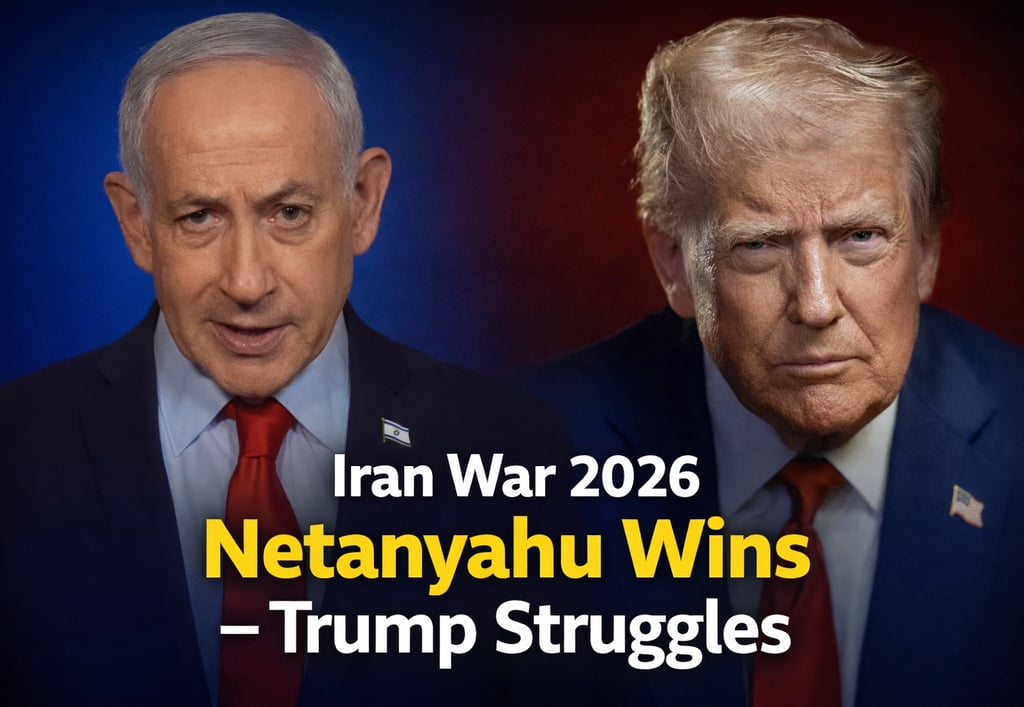
Iran War 2026: Netanyahu Strengthens, Trump Under Pressure, and Gulf States Hit the Hardest
As of March 19, 2026, according to the latest international media reports, the ongoing war between the United States, Israel, and Iran has significantly impacted the political, economic, and global balance of the Middle East. Early outcomes of the conflict present a clear picture: Israeli Prime Minister Benjamin Netanyahu is emerging politically and militarily stronger, while U.S. President Donald Trump is facing increasing pressure, economic challenges, and diplomatic complications. Meanwhile, Gulf states are emerging as the most affected parties in this conflict.
This war is no longer a limited military operation but has evolved into a full-scale regional crisis, with its effects being felt globally—particularly in energy markets, international trade, and security conditions. For Israel, Iran is considered an existential threat, which is why the war is being framed as a “war of necessity.” For the United States, however, it has become a complex political and strategic decision with no clear path to victory.
During the conflict, Israel has carried out large-scale airstrikes in western and northern Iran, targeting missile and nuclear facilities. At the same time, the United States has focused on eastern and southern regions, particularly the Strait of Hormuz, aiming to weaken Iran’s naval capabilities and influence global oil supply routes.
Israel has also targeted Iran’s senior leadership, including key security figures such as Ali Larijani and Intelligence Minister Esmail Khatib. Their deaths have temporarily disrupted Iran’s security structure, though the Iranian system has not collapsed. These actions demonstrate Israel’s military superiority and reinforce Netanyahu’s narrative that weakening Iran is essential for national security.
The biggest political advantage of this war has gone to Netanyahu, who has successfully shifted domestic focus away from internal issues—especially the situation in Gaza—toward Iran, where national consensus is stronger. This has strengthened public support for his leadership and security policies. Although surveys suggest his coalition still lacks a full majority, holding around 50 out of 120 Knesset seats, Israel’s economic resilience and stock market gains during the war have created a perception of stability. However, analysts warn that if Iran’s system survives, these gains may prove temporary.
On the other hand, President Donald Trump faces a much more difficult situation. He initially expected Iran to capitulate quickly, but instead, Iran has shown strong resistance and prolonged the conflict. Trump now faces three difficult choices: continue the war, declare victory and withdraw, or escalate further—none of which guarantees success. Additionally, the United States is dealing with rising defense costs, increasing oil prices, inflation, and global market instability, all of which are putting pressure on his economic agenda and domestic political standing.
Gulf states have emerged as the biggest casualties of this war. Iran has targeted energy infrastructure in Saudi Arabia, Qatar, Kuwait, and the United Arab Emirates, impacting not only their economies but also triggering a global energy crisis. Tensions in the Strait of Hormuz have made the situation even more critical, as nearly 20 percent of the world’s oil supply passes through this route. Any disruption here poses a major threat to the global economy.
Iran’s strategy appears to focus on limited but effective escalation rather than full-scale war. By targeting critical infrastructure, maritime routes, and regional allies, Tehran aims to pressure the United States and its partners into negotiations while seeking relief from sanctions. Through missiles, drones, and proxy networks, Iran continues to maintain its presence across the region, increasing the risk of a wider conflict.
Differences between the United States and Israel have also begun to surface during the war, particularly regarding strikes on energy infrastructure. While the U.S. president has denied prior knowledge of certain operations, Israeli sources suggest coordination, highlighting differences in strategic priorities. These divergences could have long-term implications for their alliance.
The energy sector has been one of the most visibly affected areas. Global oil prices have surged, reaching approximately $110 to $120 per barrel, while gas supplies have also been disrupted. This has intensified energy crises in Europe, Asia, and other regions, affecting industrial production and economic stability.
The humanitarian impact of the war has also been severe. Across Iran, Lebanon, Syria, and other affected areas, more than 3,000+ people have been killed so far, while millions have been displaced. Essential services such as water, electricity, and healthcare systems are under immense pressure, deepening the humanitarian crisis. International aid organizations have expressed serious concern over the situation.
At the global level, major powers are attempting to de-escalate the conflict through diplomacy. European countries, China, and other actors are calling for an immediate ceasefire and renewed negotiations, but no significant progress has been made so far. A key obstacle remains the lack of trust between the parties and their conflicting interests.
Economically, this war has become a major challenge for the global system. Stock markets are volatile, currencies are weakening, and trade routes are facing disruptions. Developing countries are particularly vulnerable, as their economies depend heavily on energy imports.
Overall, the current situation suggests that Israel holds a temporary advantage, the United States is under pressure, and Gulf states are bearing the greatest losses. However, the final outcome remains uncertain and largely depends on whether Iran’s system endures. If Iran weakens significantly, the regional balance of power could shift dramatically. But if it maintains its position, the conflict could turn into a prolonged and dangerous war with long-term global consequences.
This conflict serves as a reminder that modern wars are no longer confined to battlefields. Their effects extend across economies, politics, energy systems, and human lives. This is why the Iran War 2026 is being described as one of the most significant global crises of our time.
Looking deeper, the war has also put the global diplomatic system to the test. International organizations, including the United Nations, are actively trying to contain the crisis, but conflicting interests among major powers have prevented a unified response. The United States, Europe, and China each have different perspectives on the conflict, highlighting growing global divisions.
Russia has also responded cautiously, avoiding direct involvement while closely observing the balance of power in the region. If the war escalates further, the roles of Russia and China could become more prominent, potentially reshaping global geopolitics.
Another key dimension of this conflict is the use of cyber warfare and advanced technology. Reports suggest that both sides are conducting cyberattacks targeting banking systems, power grids, and communication networks. This reflects the evolving nature of modern warfare, where digital infrastructure has become as critical as physical territory.
Public opinion worldwide is also being influenced by the war. Protests have emerged in various countries, with people demanding an end to the conflict and a return to diplomatic solutions. In Western nations, public pressure is increasingly becoming a factor that governments cannot ignore.
Additionally, the war has stimulated the global defense industry. Demand for weapons has increased, and many countries are raising their defense budgets, leading to growth in the global arms market. This trend could contribute to further instability in the future.
In conclusion, it is clear that the Iran War 2026 is not just a regional conflict but a full-scale global crisis. Its consequences are likely to be felt for years to come. The war has the potential to reshape power dynamics and push the world into a new era where security, energy, and economic challenges become even more complex.
Stay informed with the latest national and international news.
© 2026. All rights reserved.