
Iran–US War Escalates: Fire at UAE Fujairah Oil Hub After US Strikes Iran’s Kharg Island – Gulf Energy Crisis Deepens
Iran–US war intensifies as a fire erupts at the Fujairah oil hub in the UAE following American strikes on Iran’s Kharg Island. Missile threats, Strait of Hormuz tensions, and global oil market fears grow on 14 March 2026.
Raja Awais Ali
3/14/20264 min read
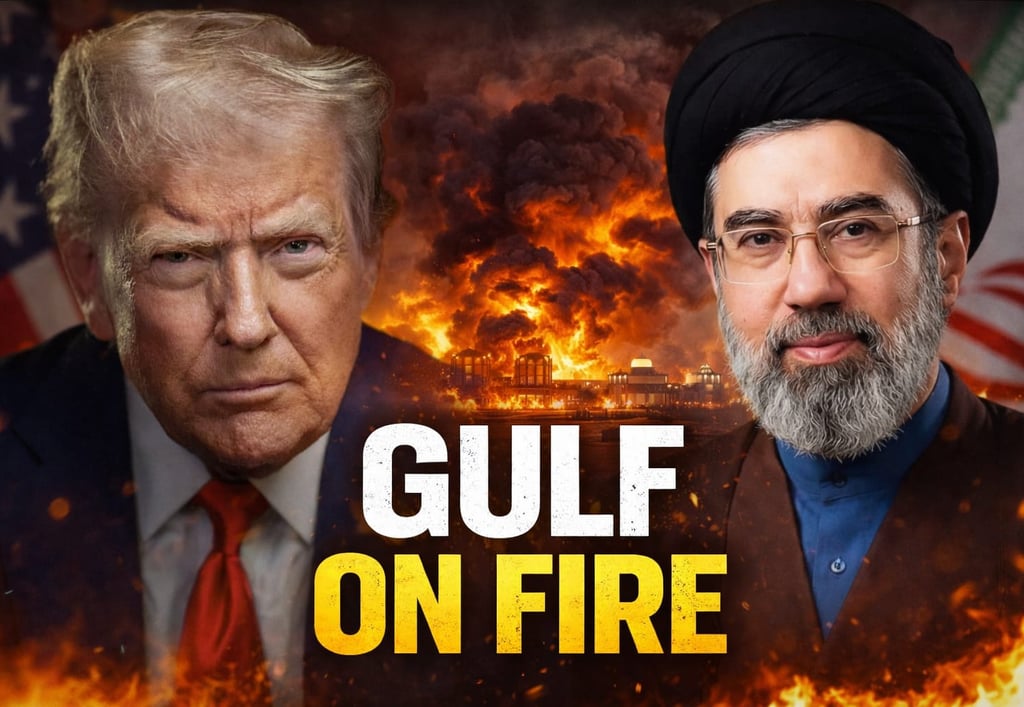
Iran–US War Escalates: Fire at UAE Fujairah Oil Hub After Strikes on Kharg Island
Tensions in the Middle East escalated dramatically on 14 March 2026 as the ongoing conflict between Iran, the United States, and Israel entered a new and potentially more dangerous phase. A fire broke out at the United Arab Emirates’ key oil hub in Fujairah following drone and missile activity in the region, just hours after the United States launched a large-scale strike against Iranian military targets on Kharg Island, the country’s most important oil export facility.
The developments highlight how the war, which began less than three weeks ago, is rapidly expanding beyond Iran and Israel and increasingly threatening the wider Gulf region and global energy security.
US Strikes Iran’s Strategic Oil Export Hub
The latest escalation began when the United States carried out major military strikes on Kharg Island, a strategic facility that handles the majority of Iran’s crude oil exports. According to the U.S. military, more than 90 Iranian military targets were hit during the operation.
Officials from U.S. Central Command said the strikes destroyed several key installations, including missile storage bunkers, naval mine depots, and military infrastructure linked to Iran’s maritime operations.
US President Donald Trump stated that the strikes had “totally obliterated” military targets on the island, describing the operation as a decisive response to Iranian attacks on shipping routes in the Persian Gulf.
Kharg Island plays a critical role in Iran’s economy. The terminal is responsible for approximately 90 percent of the country’s oil exports, making it one of the most strategically significant energy facilities in the Middle East.
However, Iranian officials downplayed the scale of the damage and insisted that oil exports from the island were continuing despite the attack.
Iran Issues Warnings to Gulf States
In response to the U.S. strike, Iran warned that any country hosting American forces or facilitating attacks against Iranian territory could face retaliation.
A spokesperson for Iran’s Revolutionary Guard said Tehran considers it a legitimate right to strike locations used by the United States in the Gulf region. The statement included warnings to civilians in the United Arab Emirates to avoid areas near key ports and infrastructure.
Iran specifically mentioned Jebel Ali Port, Khalifa Port, and the Port of Fujairah as potential targets.
Shortly after the warning, regional defense officials reported that nine ballistic missiles and 33 drones had been launched from Iranian territory toward the UAE.
Air defense systems intercepted several incoming threats, but debris from one intercepted drone reportedly fell near industrial facilities in Fujairah, sparking a large fire.
Fire Disrupts Operations at Fujairah Oil Hub
Images and television footage showed thick black smoke rising above the Fujairah energy complex, one of the world’s largest oil storage and bunkering centers.
Industry sources reported that some oil loading operations were temporarily suspended as emergency teams worked to contain the fire and assess damage to nearby facilities.
The Fujairah hub plays a critical role in the global oil trade. Located outside the Strait of Hormuz, the port allows the UAE to export crude oil without relying entirely on the narrow maritime chokepoint that Iran has repeatedly threatened to block.
The facility handles roughly one million barrels of oil per day, representing about 1 percent of global oil demand. Even limited disruption there can quickly ripple through global energy markets.
Strategic Importance of the Strait of Hormuz
The Strait of Hormuz remains at the center of the growing conflict. The narrow waterway connects the Persian Gulf to international waters and carries nearly 20 percent of the world’s oil supply.
Iran’s new Supreme Leader Mojtaba Khamenei has previously suggested that closing the strait could be used as leverage against Western pressure.
The possibility of disruption to this critical shipping route has raised alarm across global markets. In response, the United States has indicated it may assemble an international naval coalition to ensure the strait remains open.
President Trump said several countries—including China, Japan, South Korea, Britain, and France—could potentially participate in joint naval operations to protect commercial shipping.
Regional War Expands Across the Gulf
The current war began on 28 February 2026, when the United States and Israel launched coordinated airstrikes against Iranian military sites. Iran responded with waves of missile and drone attacks targeting American bases and allied infrastructure across the region.
Since then, the conflict has expanded significantly. Iran has launched attacks toward multiple Gulf states hosting U.S. military assets, raising fears that the war could transform into a broader regional confrontation.
Gulf governments have expressed growing frustration at being drawn into a conflict they neither initiated nor supported but are now facing the consequences of economically and militarily.
Diplomatic adviser to the UAE president, Anwar Gargash, criticized Iran for attempting to shift the battlefield toward Arab states rather than confronting American and Israeli forces directly.
Humanitarian and Economic Impact
The humanitarian toll of the war continues to rise. Estimates suggest that around 2,000 people have been killed since the conflict began, most of them inside Iran, though casualties have also been reported in Lebanon and several Gulf states.
Millions of civilians have been displaced as missile strikes and air raids spread across multiple countries.
The economic consequences are also becoming increasingly severe. Global oil prices have experienced sharp fluctuations as markets react to each new development in the conflict.
Shipping insurance costs have surged, tanker routes are being adjusted, and energy infrastructure across the Gulf is now operating under heightened security conditions.
Energy analysts warn that continued attacks on oil infrastructure could trigger the most serious global supply shock since the oil crises of the 1970s.
What Comes Next
Analysts believe the events of 14 March could represent a major turning point in the war. By targeting each other’s energy infrastructure and economic lifelines, both Iran and the United States appear to be entering a new phase of escalation.
If attacks on major oil terminals continue—or if the Strait of Hormuz becomes effectively closed—the consequences could be felt far beyond the Middle East.
For now, the region remains on edge. With military strikes continuing and threats escalating on all sides, the risk of a wider regional war involving multiple Gulf states appears greater than at any time since the conflict began.
Stay informed with the latest national and international news.
© 2026. All rights reserved.